As an Amazon Associate, we earn from qualifying purchases. Some links on this site are affiliate links at no extra cost to you. Our recommendations are based on thorough research and editorial judgment.


When Is The Right Time To Tune RC Military Vehicles?

The right time to tune RC military vehicles is after assembly, when components change, or with shifting environmental conditions. Initial Tuning should follow assembly, and we adjust based on Ride Height, affecting handling. We monitor for Indicators like sagging springs or leaking shocks, which signal the need for maintenance. After swaps, we must reassess Camber, Toe, and Caster angles to guarantee proper balance. Adapting to Terrain conditions enhances traction and stability, maximizing performance potential as we tune. There’s more to optimize your vehicle’s capabilities.
Key Takeaways
- Tune RC military vehicles after assembly for optimal performance and reliability in various terrains.
- Begin fine-tuning adjustments once initial test runs highlight performance issues.
- Adjust suspension settings immediately after changing components, like shocks or springs.
- Regularly inspect for wear on suspension components to maintain handling balance and vehicle performance.
- Consider environmental factors, such as temperature and terrain, when planning suspension tuning.
Understanding Suspension Tuning Basics
When we engage in the world of RC vehicles, it’s essential to grasp the fundamental aspects of suspension. Suspension Types include shocks, springs, and suspension arms, all essential for impact absorption and maintaining tire contact with the ground. Understanding Tuning Techniques is crucial for optimizing performance. By adjusting shock oil viscosity, we can influence compression and rebound speeds—thicker oils slow movements, enhancing stability on uneven tracks. Suspension arms adjust wheel movement and geometry, affecting turning response. Modifying shock mounting positions can improve cornering stability or softens bumps, depending on preferences. Recognizing how these components work together empowers us to fine-tune our vehicles, ensuring they handle precisely the way we want, regardless of the terrain or conditions we face. Model designs like the ARRMA SENTON 4X4 BLX demonstrate how durable construction enhances stability and performance across diverse surfaces.
Key Indicators for Suspension Adjustment
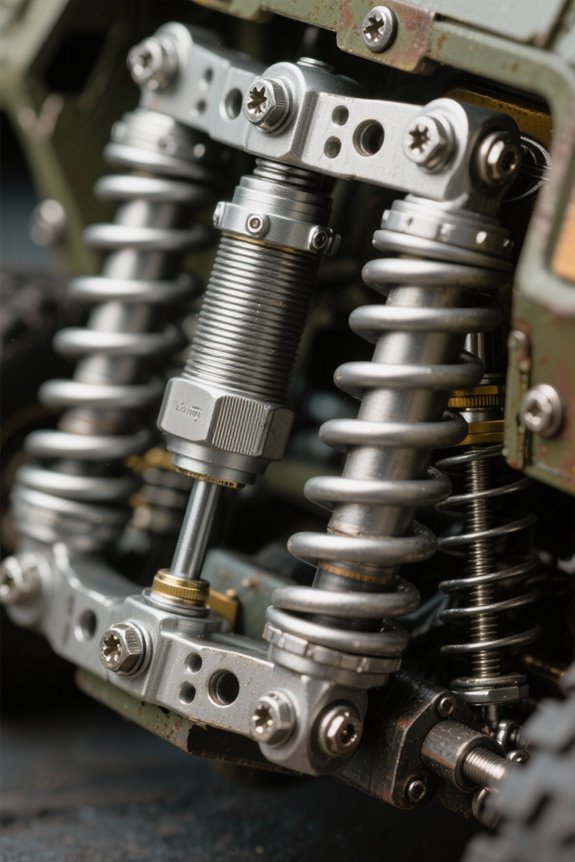
Observable Wear: If we see sagging springs or leaking shocks, these visible signs often point toward the need for retuning or replacement, ensuring we maintain proper handling balance and vehicle performance. Additionally, regular adjustments can help maximize your tank’s battery life, allowing for more extended playtime on the battlefield.
Timing for Initial Suspension Tuning
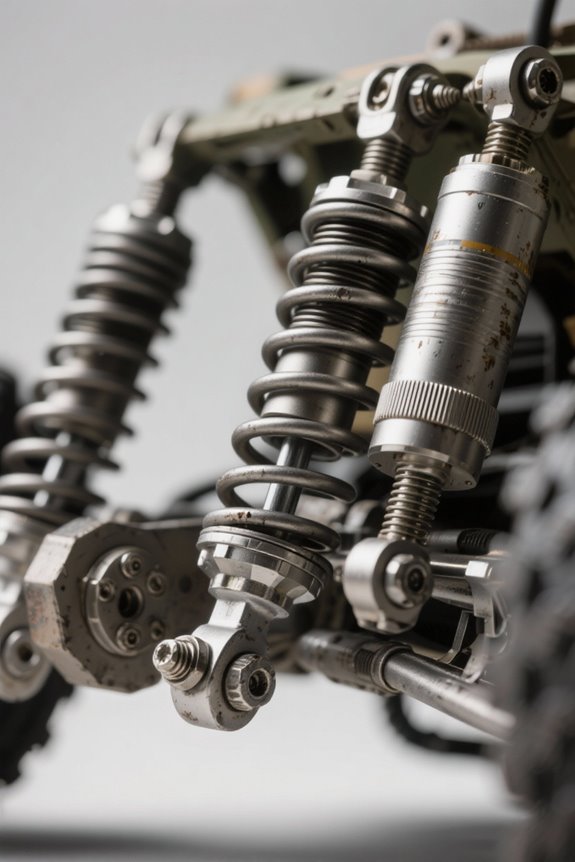
Initial suspension tuning should start right after we assemble the RC military vehicle. This is vital for establishing a reliable suspension setup. First, we set the ride height; this initial adjustment helps dictate vehicle behavior during our test runs. After completing a few runs on typical terrains, we’ll observe performance closely. From there, we can progress through various tuning phases, making incremental adjustments based on how the vehicle reacts. It’s essential to avoid excessive tuning right away, so we’ll begin with stock settings. Adjusting shock positions and spring rates comes after we’ve settled them into place, ensuring our vehicle is responsive and stable. This methodical approach allows us to refine our setup for peak handling and performance. Additionally, utilizing upgrades like functional 1.9 beadlock wheels can enhance grip and stability on varied surfaces.
Adjusting Suspension After Major Component Changes
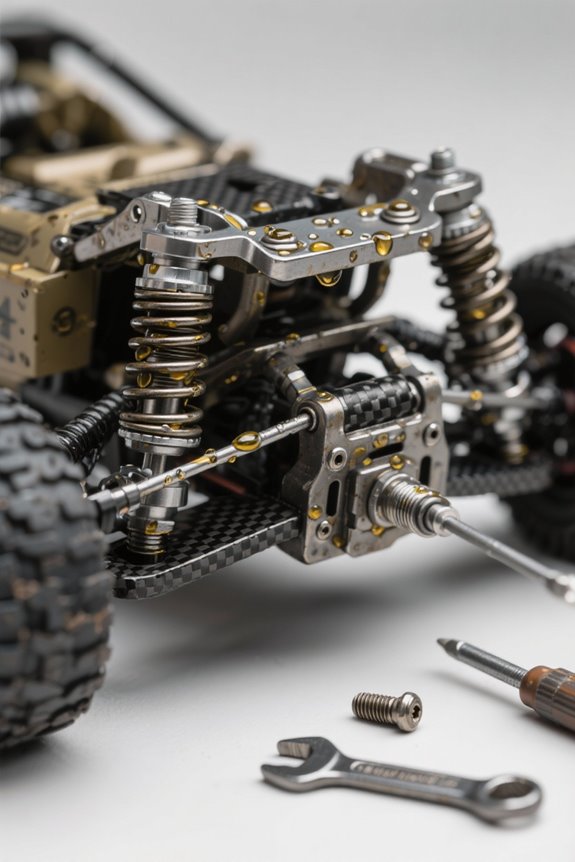
Adjusting suspension after major component changes is essential for optimizing vehicle performance, and it should be addressed immediately following any swap of shocks or springs. Shock and Spring Replacement Impact requires us to assess the new components’ characteristics, as different spring rates can considerably alter damping settings. We should guarantee balanced suspension dynamics by changing front and rear springs concurrently. Suspension Geometry Recalibration involves adjusting camber, toe, and caster angles to maintain tire contact and vehicle balance. Systematic Testing and Incremental Adjustments** allows us to change one variable at a time, guaranteeing we monitor effects carefully. By employing these tuning techniques, we improve our vehicle’s traction, stability, and overall control in various driving conditions. Additionally, considering models with 4WD systems** can further enhance traction in off-road scenarios.
Environmental Factors Affecting Suspension Tuning
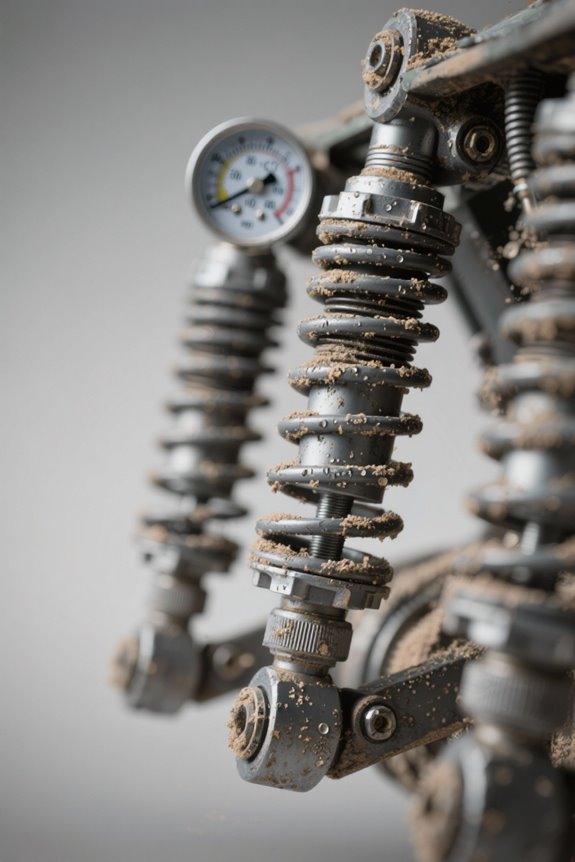
When we consider Environmental Factors Affecting Suspension Tuning, various elements substantially influence package performance and vehicle stability. Temperature Adjustments require us to monitor ambient conditions closely, as colder climates thicken shock oil, slowing response while warmer weather does the opposite. Terrain Analysis involves evaluating the ruggedness and surface type—softer suspension settings are essential for rough terrain, while stiffer settings benefit smooth tracks. Loose surfaces might need changes in spring stiffness to enhance traction, and hard-packed ground necessitates different damping rates. Rain can reduce traction, demanding further adjustments for stability. By understanding these factors, we can guarantee our RC military vehicles perform effectively in diverse conditions, maintaining both control and durability. Additionally, the use of durable materials in construction can enhance the overall resilience of your vehicle against environmental impacts.
Maintenance Schedules for Optimal Performance
Maintaining ideal performance for our RC military vehicles relies heavily on establishing Maintenance Schedules that guarantee various systems operate efficiently. Regular maintenance intervals, based on runtime and usage intensity, help us prevent performance degradation. Basic inspections and cleaning should occur after every use, removing debris and moisture. Tuning techniques for drivetrain efficiency recommend fluid checks every 2.5 run hours or 10 battery packs. Additionally, suspension and shock absorber maintenance is essential every 20 runs to sustain handling quality. Electronic systems also require thorough inspections to prevent failures. By adhering to these schedules, we enhance our vehicles’ reliability and extend their service life, ultimately ensuring we’re always ready for action when it counts. Regularly monitoring battery life specifications is crucial for optimal operation and performance consistency.
Preparing for Effective Suspension Tuning
We should also consider shock springs’ rates, as firmer springs provide better stability under load, while shock oil viscosity affects damping, impacting response times. Finally, balancing front and rear ride heights guarantees we maintain ideal traction and minimize body roll, ultimately enhancing vehicle stability across diverse environments. Additionally, understanding battery life expectations is crucial for ensuring optimal performance during extended play sessions.
Impact of Track Conditions on Tuning Frequency
Impact of Track Conditions on Tuning Frequency****
When we assess track conditions, it’s crucial to understand how they impact our tuning frequency for maximum tire management and shock performance. Dirt tracks require frequent tuning, as shifts in soil compactness and moisture can dramatically change handling. Conversely, smooth asphalt tracks demand less frequent adjustments, though regular checks on oil and spring settings are essential due to temperature variations. It is understood that bumpy surfaces require softer shock oil for responsive handling, enforcing more regular tuning. Additionally, grip level changes—from low to high—demand continual adjustments to shock oil viscosity and spring stiffness. By monitoring these variables closely, we can maintain our vehicle’s performance and overall racing consistency. Moreover, these tuning strategies are critical in maximizing performance capabilities to ensure a rewarding racing experience.
Frequently Asked Questions
How Do I Choose the Right Shock Oil Weight?
To choose the right shock oil weight, we consider our vehicle type, terrain, and temperature. We’ll tweak the shock oil viscosity during our tuning sessions, adjusting every few runs to perfect our setup and performance.
Can Tuning Improve Fuel Efficiency of My RC Military Vehicle?
Yes, tuning can greatly improve our RC military vehicle’s fuel consumption. By employing effective tuning techniques, we can optimize performance and make our driving experience smoother and more efficient, maximizing both fuel savings and fun.
What Tools Are Essential for Suspension Tuning?
For our suspension upgrades, we’ll need precision tools like shock stands, camber gauges, and corner weight scales. With the right tuning techniques, we can enhance stability and performance, ensuring our vehicles excel in any environment.
How Often Should I Inspect My Shocks During Races?
We’re not racing wizards, but we sure know shock performance matters! We should inspect our shocks every 2–3 runs, and after tough sessions, to keep everything in tip-top shape. Consistency is key, friends!
Is It Necessary to Tune After Every Run?
No, it isn’t necessary to tune after every run. We should adjust tuning frequency based on performance impact and track conditions, ensuring our vehicles respond ideally without overdoing it after each session.


