As an Amazon Associate, we earn from qualifying purchases. Some links on this site are affiliate links at no extra cost to you. Our recommendations are based on thorough research and editorial judgment.


Are Brushless Motors Worth The Upgrade Cost?

Brushless motors offer superior efficiency, achieving up to 97.61%, which results in lower operational costs. Their longevity comes from reduced wear and lower heat generation, minimizing maintenance needs. While the initial investment is higher due to advanced components, long-term savings on electricity can offset costs. Additionally, their noise reduction capabilities and flexibility in design make them suitable for varied applications. Overall, the benefits justifiably outweigh the upgrade costs. Continue with us to explore practical examples and future trends.
Key Takeaways
- Brushless motors offer higher efficiency, leading to significant energy savings and lower operational costs over time.
- The initial higher cost is offset by reduced maintenance and longer lifespan due to less heat generation and wear.
- Consistent performance at varying speeds enhances productivity, making brushless motors cost-effective in demanding applications.
- Noise and vibration reduction features improve user experience and are beneficial for sensitive electronic devices.
- Future trends indicate ongoing improvements in efficiency and technology, further increasing the value of investing in brushless motors.
Efficiency and Performance Benefits
When we consider Motor Efficiency Improvements, it’s clear that brushless motors provide significant advantages over their brushed counterparts. Their efficiency metrics typically range from 85-90%, compared to 75-80% in brushed motors, thanks to reduced friction and heat loss. Performance Benchmarks reveal that some brushless designs achieve up to 97.61% efficiency. Additionally, these motors sustain higher rotational speeds, allowing for faster acceleration and deceleration rates, which enhances the performance of applications. They excel at maintaining consistent torque across a wide speed range, reducing performance degradation under load. By utilizing modern algorithms, optimized brushless motors can reach average efficiencies of 94.48%, ensuring prolonged high performance and better energy use, making them a valuable upgrade for various uses. The durability features of brushless motors further enhance their lifespan, contributing to overall efficiency.
Longevity and Maintenance Considerations

Maintenance Techniques: Regular cleaning and inspection help keep these motors free from contaminants that can harm internal parts. Proper lubrication of bearings reduces wear and friction, enhancing motor life.
Additionally, adhering to manufacturer-specified voltage and cooling requirements guarantees peak performance, preventing premature failure. By using effective maintenance techniques, such as contamination control and appropriate mounting, we can maximize the operational life of brushless motors, confirming their longevity advantage over brushed designs. It’s also beneficial to consider the performance of different tire options, as they can greatly influence a vehicle’s overall handling capabilities.
Initial Investment vs. Lifetime Costs
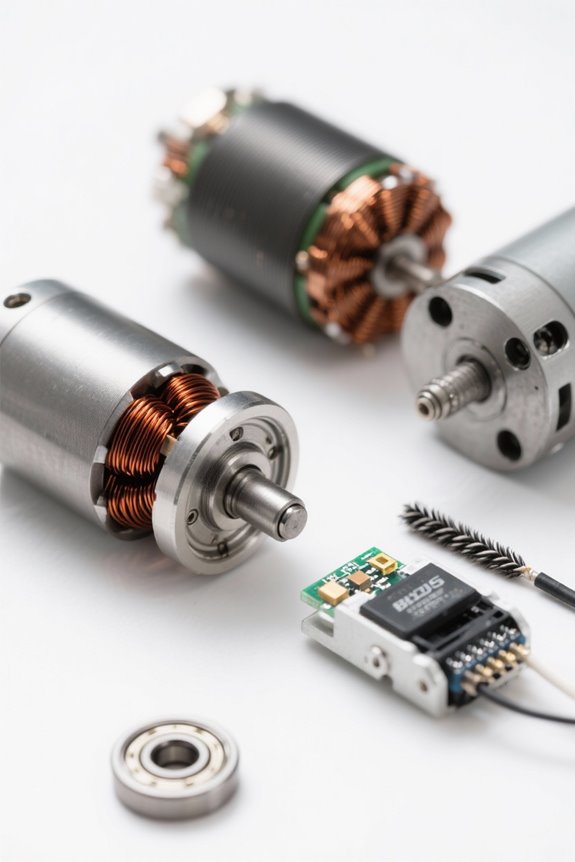
While considering the Initial Purchase Cost, we find that brushless motors typically demand a higher upfront investment than their brushed counterparts. This initial cost arises from the integration of permanent magnets and complex electronic controllers, similar to building a small computer into the device. However, Long-Term Savings can greatly offset this initial expense. Brushless motors operate with higher energy efficiency, converting a larger percentage of electrical input into mechanical power. This efficiency not only reduces operational electricity costs but also extends the motor’s lifespan due to lower heat generation. Consequently, facilities can anticipate minimized maintenance and downtime expenses, further enhancing the cost-effectiveness of brushless motors over their lifetime, making the higher initial costs worthwhile in many applications. Additionally, the durability of the motor ensures consistent performance over time, minimizing the need for frequent replacements.
Noise Reduction and Vibration Control

Noise Reduction Techniques: In brushless motors, substantial noise reduction is achieved through various engineering innovations. The absence of brushes eliminates electrical arcing noise, a common issue in brushed motors. We utilize noise mitigation techniques, such as optimizing pulse width modulation switching frequency above 20 kHz, which shifts electromagnetic noise beyond human hearing. Low-electromagnetic interference drivers and advanced motor controllers reduce emissions that contribute to noise disturbances. Mechanical noise and vibration control are enhanced with high-quality bearings, dynamic rotor balancing, and precise shaft alignment, all significant for minimizing vibration. Additionally, regular lubrication of bearings decreases friction-induced noise, improving quiet operation. Collectively, these features guarantee a smoother, quieter experience, making brushless motors particularly valuable in noise-sensitive applications like medical devices and HVAC systems. Furthermore, the efficiency and torque characteristics of brushless technology contribute to overall improved performance in comparison to traditional motor systems.
Flexibility in Design and Applications
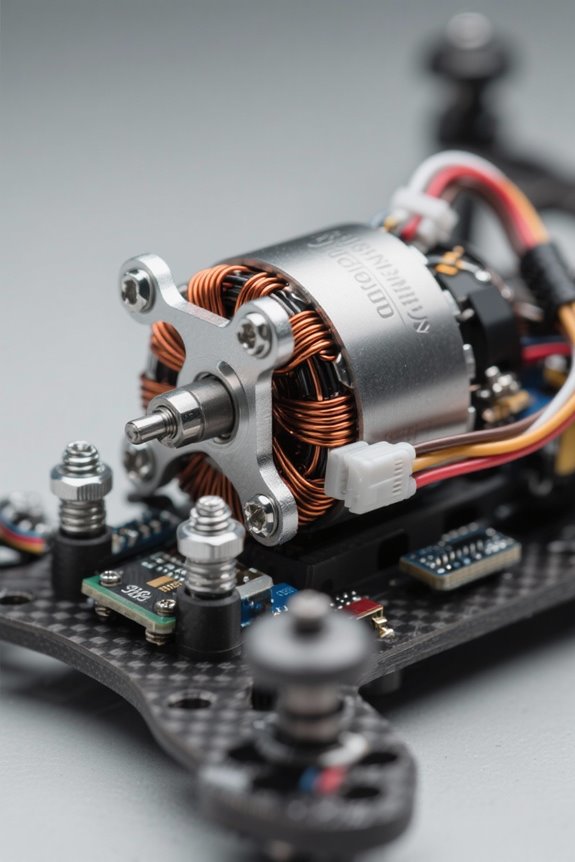
Their compact size supports portable devices like drones and medical instruments, while low electromagnetic interference guarantees seamless integration into sensitive electronics. Overall, brushless motors enhance product design and functionality across multiple industries. Additionally, their ability to improve motor performance makes them a valuable choice for enthusiasts seeking enhanced speed and reliability in their vehicles.
Energy Consumption and Environmental Impact
Brushless motors not only improve design and functionality, but they also play a significant role in energy consumption and environmental impact. Energy Consumption Reduction is a key benefit, as brushless motors cut power usage and CO2 emissions by around 69% annually compared to traditional induction motors in variable speed and torque applications. By maintaining higher efficiency across varying operating points, they enhance sustainability metrics in various applications. In addition, the optimized energy use of BLDC motors leads to significant energy savings, extending battery life and reducing recharge frequency. Their efficient design also decreases transportation energy use and raw material consumption, contributing to a reduced carbon footprint. Ultimately, upgrading to brushless motors aligns with our collective goal of a more sustainable future. Furthermore, models like the DEERC 1/10 Brushless RC Car showcase how high-speed performance can be achieved while also focusing on efficiency.
Comparison With Brushed Motors
When comparing motor types, it’s essential to evaluate Mechanical Design and Commutation. Brushed motors use mechanical brushes and commutators that create friction, leading to wear. In contrast, brushless motors utilize electronic controllers for motor control, eliminating wear on components. This shift results in quieter operation and enhanced torque characteristics due to more efficient energy transfer. Additionally, the high-torque brushless motors provide quick acceleration, which is beneficial for achieving impressive speeds in high-performance RC trucks.
Next, consider Performance. Brushless motors provide higher speeds and acceleration thanks to lower rotor inertia. They also maintain torque across various speeds more effectively than brushed motors, which struggle under load.
Finally, regarding Durability and Maintenance, brushless motors greatly outlast brushed models, with fewer maintenance requirements. This reliability enhances operational efficiency, making brushless motors a worthwhile investment in the long run.
Real-World Use Cases and Applications
In numerous industries, the advantages of brushless motors have led to their adoption across a range of real-world applications. Aerospace Applications showcase reliability, with brushless motors powering Apollo spacecraft life support blowers, ensuring oxygen circulation under extreme conditions. Industrial Automation benefits from maintenance-free operation, as these motors extend service life to nearly a decade, boosting productivity across manufacturing sectors. Marine Exploration leverages brushless motors in underwater drones, enabling research beyond diver limits, while Consumer Gadgets utilize them for enhanced performance, like quiet fans in audio devices. Finally, Medical Devices capitalize on precise control in equipment like surgical blood pumps, ensuring ideal functionality. Together, these applications highlight the versatile, efficient nature of brushless motors in today’s technology landscape. Furthermore, many RC military helicopters incorporate advanced features that rely on the efficiency of brushless motors for improved flight performance and control.
Future Trends in Motor Technology
As the landscape of motor technology evolves, energy efficiency and sustainability enhancements are emerging as critical focal points. energy efficiency: Brushless motors are projected to reach up to 92% efficiency by 2026, greatly reducing power consumption while enhancing performance in sectors like robotics and automotive racing. AI Integration: Artificial intelligence enables real-time monitoring and predictive analytics for optimizing motor operations, extending lifespan, and reducing downtime. Advanced Materials: Innovations in aerospace-grade materials enhance durability and energy savings, contributing to operational cost reductions through longer motor lifespans. Market Growth: The brushless DC motor market is expected to grow considerably, fueled by the demand in electric vehicles and advanced automation, showcasing a total cost of ownership that favors these upgraded systems.
Frequently Asked Questions
What Are Common Applications for Brushless Motors in Everyday Devices?
We find brushless motors in everyday devices like electric vehicles, drones, gaming consoles, industrial equipment, power tools, and household appliances, enhancing efficiency, reducing noise, and improving overall performance, making our lives more enjoyable and convenient.
How Do Brushless Motors Compare in Size to Brushed Motors for Similar Power?
When we consider motor efficiency and weight differences, brushless motors consistently prove smaller than brushed counterparts for similar power, enabling us to enjoy enhanced performance, improved handling, and greater versatility in our devices.
Are There Specific Brands Known for High-Quality Brushless Motors?
Absolutely, we’ve got high-performance brands like Traxxas and Castle Creations that every enthusiast trusts. Popular manufacturers like T-Motor and KDE Direct also deliver amazing reliability, giving us the edge we crave in our projects.
Can I Retrofit a Brushless Motor Into a System Designed for Brushed Motors?
Yes, we can retrofit a brushless motor into a brushed system, but we’ll face retrofit challenges. Motor compatibility is essential, so let’s make certain we have the right ESC and modifications for a successful upgrade.
What Role Does Controller Type Play in Brushless Motor Performance?
The controller type we choose greatly affects brushless motor performance. By enhancing controller efficiency and implementing strategies for performance optimization, we can achieve smoother operation and increased torque, making adjustments essential for our specific applications and needs.


