As an Amazon Associate, we earn from qualifying purchases. Some links on this site are affiliate links at no extra cost to you. Our recommendations are based on thorough research and editorial judgment.


What Advanced Materials Improve RC Vehicle Performance?

Carbon Fiber-Reinforced Composites provide outstanding tensile strengths of 1,500 to 2,500 MPa, which optimizes acceleration and handling. Advanced Polymers allow for lightweight structures via molding, enhancing design flexibility. Hybrid Composites mix carbon fiber with economical materials, improving impact resistance by 14-26%. Additionally, Additive Manufacturing creates custom parts that are up to 70% lighter, supporting dynamic performance. By using these advanced materials, we greatly enhance durability and response, leading to superior RC vehicle performance. You’ll discover more insights as we explore further.
Key Takeaways
- Carbon fiber-reinforced composites offer exceptional strength and rigidity while minimizing weight for optimized acceleration and handling in RC vehicles.
- High-strength steel alloys enhance structural integrity, providing lightweight yet durable chassis designs essential for safety and performance.
- Hybrid composites combine materials like carbon fiber and basalt, improving impact resistance while keeping overall weight lower.
- Aerodynamic shells made of lightweight materials like polycarbonate enhance speed and performance by reducing drag and improving grip.
- Advanced suspension materials, including aluminum alloys and silicone components, improve handling, heat dissipation, and overall vehicle stability.
Carbon Fiber-Reinforced Composites
When we consider the advantages of Carbon Fiber-Reinforced Composites (CFRC), their impressive mechanical strength and stiffness stand out remarkably. Tensile Strength: CFRC exhibits tensile strengths from 1,500 to 2,500 MPa, surpassing high-strength steel, which is essential for achieving superior durability. Modulus of Elasticity: With a modulus ranging from 70 to 295 GPa, CFRC guarantees fundamental rigidity in RC vehicle structures. Impact Resistance: The polymer matrix reinforces fibers for effective damage resistance during impacts, especially with woven composites reducing crack formation. Weight Reduction: CFRC dramatically lowers vehicle weight while enhancing performance. This strength-to-weight ratio is critical for optimizing acceleration and handling. Ultimately, advanced composite fabrication techniques enable precise customization, guaranteeing we meet specific design needs, allowing our vehicles to excel in both competition and recreation. Additionally, the integration of waterproof designs enhances durability in various weather conditions, further boosting the overall performance of RC trucks.
Advanced Polymers for Lightweight Structures
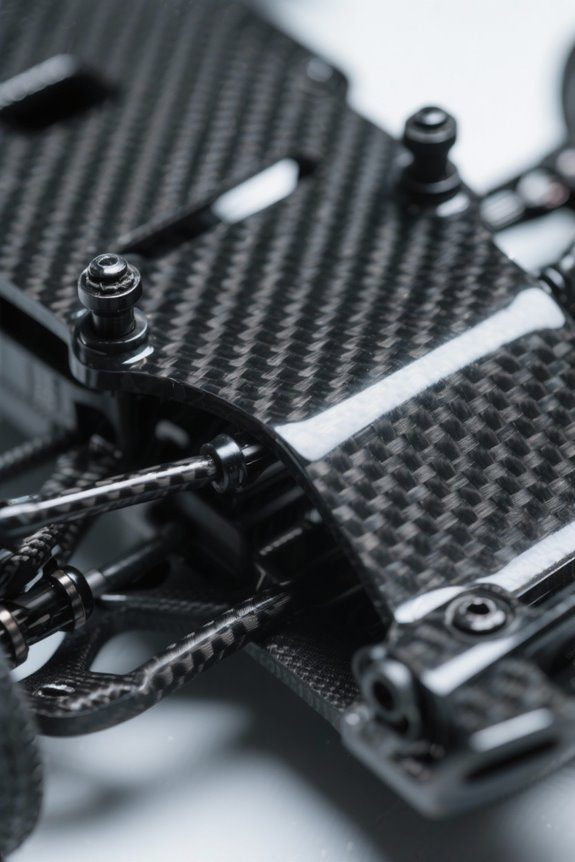
Thermoplastic Composites enable design flexibility by allowing intricate shapes through processes like injection molding and extrusion. These composites combine materials such as glass or carbon fiber, enhancing mechanical properties while minimizing weight. Ultimately, utilizing advanced polymers supports improvements in both performance and sustainability, making our RC vehicles more efficient and responsible choices. Furthermore, incorporating metal components from advanced materials increases durability, particularly in larger models like the Heng Long M1A2 Abrams RC Tank.
Durability Enhancements With Composite Materials
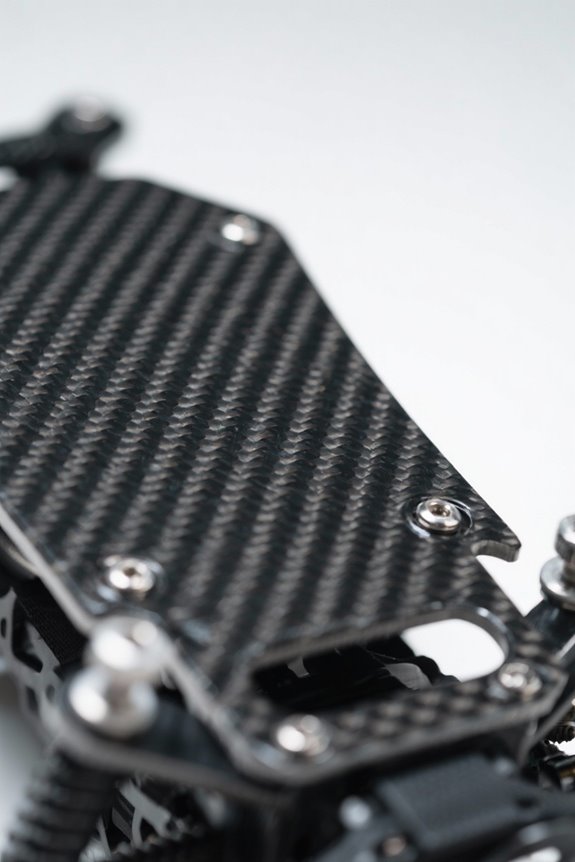
In short, the integration of composite materials empowers us to achieve outstanding durability in our RC vehicles. This is evident in models like the Traxxas X-Maxx with high-performance aluminum upgrades that enhance rugged use.
Hybrid Composites: Cost-Performance Balance
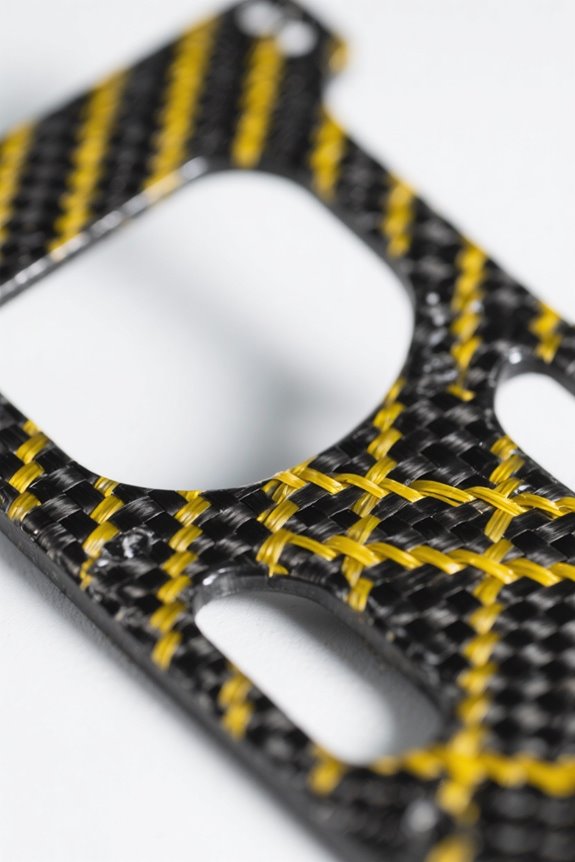
Cost-Performance Balance: Achieving an effective Cost-Performance Balance in hybrid composites is essential for enhancing RC vehicle capabilities. By utilizing cost-effective hybridization, we can combine carbon fiber with more affordable materials like basalt or natural fibers. This blend showcases improved impact resistance—absorbing 14-26% more energy than pure carbon fiber composites—while minimizing expenses. The strategic use of sustainable material optimization not only reduces costs but also aligns with eco-friendly practices. Including additives like nano silica enhances mechanical properties and extends service life. Additionally, using high-quality aluminum ensures enhanced strength and longevity, which can further improve the overall performance of RC vehicles. Ultimately, by tailoring fiber ratios and incorporating innovative materials, we guarantee our RC vehicles achieve high-performance standards, delivering the best of both durability and affordability without sacrificing structural integrity.
Composite Reinforcement in Suspension Components

Carbon Fiber Usage elevates suspension arms with superior stiffness-to-weight ratios, maintaining alignment under aggressive driving. This combination enables better traction through reduced unsprung mass, contributing to improved suspension response. Overall, these advanced composites enhance performance, durability, and control in RC vehicles. Additionally, brushless motors in RC trucks greatly benefit from these materials, as they reduce overall weight and improve power efficiency.
High-Strength Steel Alloys for Structural Integrity
High-strength steel alloys (HSS) play an essential role in enhancing the structural integrity of RC vehicles, providing a blend of superior strength and low weight. Advanced High-Strength Steels (AHSS) can reduce structural weight by up to 25%, allowing for lighter designs that improve overall performance. High Strength Applications include use in safety cage components and crumple zones, which notably enhance occupant protection during collisions. However, we face HSS Manufacturing Challenges; these alloys can be more expensive and require specialized processes, increasing production costs. Additionally, anti-corrosion treatments are critical since some HSS are prone to rust. Despite these challenges, utilizing HSS allows us to achieve vehicles that balance strength with reduced weight, optimizing both safety and efficiency. Furthermore, many modern RC trucks, such as those made from aluminum alloy, incorporate lightweight materials to enhance speed and maneuverability on various terrains.
Advanced Aluminum Alloys in Chassis Design
Aluminum Alloy Selection: Aluminum alloys present a high strength-to-weight ratio, enabling chassis designs that maintain durability without excessive mass. Alloys exceeding 1,000 MPa can replace steel without sacrificing strength.
Chassis Manufacturing Techniques: CNC machining guarantees micron-level precision for enhanced geometry, while forging and casting methods produce reinforced parts efficiently.
Performance Benefits: Reduced weight lowers the center of gravity and unsprung mass, improving stability and speed. Enhanced rigidity leads to better handling and responsiveness. Additionally, the integration of user-friendly controls can significantly enhance the operational experience of RC vehicles while utilizing advanced materials.
Metal Upgrades for Heat Dissipation
Aluminum Heat Sinks play a critical role in cooling as well. CNC-machined aluminum housings elevate heat dissipation, working in tandem with cooling fans to prevent overheating. The lightweight nature and thermal conductivity of aluminum guarantee consistent performance, especially in aggressive driving conditions. When we integrate these upgrades into our RC setups, we enhance not only motor longevity but also the overall performance and reliability of our vehicles. Additionally, using a reliable LiPo balance charger can further optimize battery life and performance during high-intensity racing.
Fatigue Resistance in High-Performance Metals
Additionally, understanding microstructural behavior under cyclic stress helps us predict maintenance needs and optimize designs. By selecting advanced materials equipped with these features, we can guarantee our RC vehicles perform better and last longer, with durable components ready to tackle any challenges on the track. Advanced sound effects also play a significant role in enhancing the overall realism and engagement during operation.
Specialized Housing for Electronic Protection
In order to enhance the durability of our RC vehicles, specialized housing for electronic protection plays a critical role. Electronic Shielding is essential; using high-quality covers protects ESCs and receivers from moisture intrusion during use. Moisture Barriers help by incorporating conformal coatings and liquid rubber paints, creating protective seals that withstand brief submersion while allowing for inspection. Durable Receiver Cases made from sturdy plastics extend the longevity of our components, reducing damage risks considerably. Custom-Fit Shrouds guarantee that our electronic pieces remain secure during operation, preventing displacements. These housings also use breathable, splash-proof materials that allow airflow, effectively managing heat while blocking dust. Additionally, implementing proper charging techniques can further protect these electronic components by preventing overheating during use. Altogether, these features create a reliable environment that keeps our vehicles performing at their best in various conditions.
Aerodynamic Shells and Lightweight Designs
Aerodynamic Shells are vital for enhancing the performance of our RC vehicles, allowing us to achieve faster speeds and better handling. Lightweight materials like polycarbonate (Lexan) offer an ideal balance between strength and weight, with thicknesses ranging from 0.5 to 2.0 mm. Thinner designs save weight but may flex; therefore, body stiffeners guarantee the shell retains its shape under high-speed airflow, critical for maintaining downforce. Aerodynamic Design features such as spoilers and multi-element wings improve grip and stability while minimizing drag. Additionally, precise Surface Textures and contours reduce turbulence, guaranteeing smooth airflow around the electronics. Together, these advancements not only enhance performance but also make our tuning processes more effective, contributing to a competitive edge in various disciplines.
Additive Manufacturing for Custom Parts
Following our focus on aerodynamic shells, we see the value of Additive Manufacturing (AM) for creating custom parts tailored for RC vehicles. Rapid Production allows us to create parts quickly, optimizing designs to enhance performance. This means errors can be corrected swiftly, improving safety. Design Freedom enables complex geometries, such as lattice structures, which reduce part mass by up to 70%, enhancing agility. Custom Design replaces obsolete components with unique, personalized parts, fitting niche vehicles perfectly. Material Optimization balances strength and weight, crafting components that are 10% lighter and stiffer than traditional methods. Ultimately, AM’s ability to produce lightweight parts on demand leads to improved dynamic responses, giving us a competitive edge in performance.
Advanced Suspension Materials for Improved Handling
Lightweight Aluminum Alloys for shock bodies effectively dissipate heat, maintaining ideal shock performance and improving overall agility. Together, these advanced materials not only strengthen connections but also create a responsive suspension system, enhancing overall handling and stability in diverse driving conditions.
Shock-Absorbing Materials and Vibration Control
Shock-Absorbing Materials are essential for enhancing the performance and durability of RC vehicles, especially when maneuvering rough terrain. Silicone and Rubber Components play pivotal roles, with silicone tubes regulating shock travel and offering exceptional vibration damping. Aluminum Alloy Shock Bodies provide lightweight durability, ensuring better heat dissipation and resistance to deformation, which is fundamental during rugged use. Nylon Parts enhance flexibility, reducing friction within shock assemblies and promoting smoother operations. Precision machined Shock Pistons control fluid flow for improved damping characteristics, allowing for customization of shock absorption techniques. Finally, Alloy Rear Shock Absorbers deliver strength, handling heavy loads and maintaining vehicle stability over challenging environments. Together, these elements markedly improve ride comfort and control.
Frequently Asked Questions
How Do These Materials Impact Battery Life in Electric RC Vehicles?
We’ve found that advanced materials greatly enhance battery life in electric RC vehicles by improving battery efficiency and thermal management. These innovations reduce weight, boost energy storage, and guarantee our vehicles perform at their best for longer runs.
Are There Specific Materials for Extreme Weather Conditions?
Like armor for our vehicles, weather-resistant coatings and thermal insulating materials shield us from extreme conditions. Together, we can guarantee our RC’s resilience and performance, no matter the weather we face. Let’s conquer the elements!
What Innovations Are Emerging in RC Vehicle Materials?
We’re excited by innovations in RC vehicle materials! Innovative composites and lightweight alloys are revolutionizing performance, making our vehicles faster and more durable, while enhancing our experience on and off the track. Let’s embrace the future together!
How Do These Materials Affect Repairability of RC Vehicles?
When considering repairability, we find that advanced materials like carbon fiber complicate repair techniques due to their rigidity and material compatibility issues. Yet, with practice, we can adapt and navigate these challenges together effectively.
Are There Environmental Considerations for Material Production?
Yes, we need to contemplate the environmental impact of material production. Emphasizing sustainable sourcing and improving recycling processes can considerably reduce pollution, making our hobby more eco-friendly and aligning with our shared values of sustainability.


