As an Amazon Associate, we earn from qualifying purchases. Some links on this site are affiliate links at no extra cost to you. Our recommendations are based on thorough research and editorial judgment.

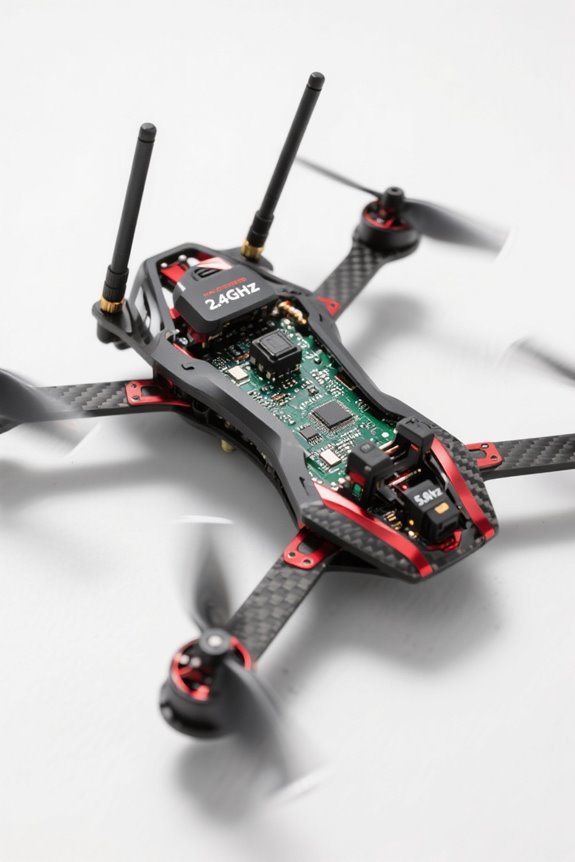
What’s The Difference Between 2.4GHz And 5.8GHz Systems?

The frequency band characteristics of 2.4GHz systems offer better range and penetration through obstacles, ideal for various environments. Conversely, 5.8GHz systems deliver superior audio quality and lower latency, under 5 milliseconds, making them suitable for live performances. Interference levels are higher in the 2.4GHz band but, with more channels available, 5.8GHz excels in crowded spaces. These distinctions help us choose the right system for our needs, so let’s explore further into these aspects.
Key Takeaways
- 2.4GHz systems offer longer range and better obstacle penetration, making them suitable for expansive areas.
- 5.8GHz systems provide superior audio quality, lower latency, and resistance to interference, ideal for live performances.
- The 2.4GHz band is more prone to congestion and dropouts in crowded environments, while 5.8GHz maintains stable connections.
- 2.4GHz systems are typically more affordable, starting around $30, compared to 5.8GHz systems beginning at $60.
- 5.8GHz systems have more channels available, reducing interference and improving overall performance in high-demand situations.
Frequency Band Characteristics
Frequency Range and Signal Characteristics**: We find that 2.4GHz operates in a lower frequency band than 5.8GHz, which allows for longer wave propagation. This results in better signal propagation, especially through solid obstacles, providing superior penetration abilities. In contrast, the shorter wavelength of 5.8GHz leads to higher attenuation, limiting its range in obstructed environments. Additionally, the control systems used in electric RC trucks** typically utilize the 2.4GHz frequency due to its advantages in range and reliability, making it a preferred choice for this application.
Coverage Advantages: With its frequency advantages, 2.4GHz generally offers greater coverage distance and more effective non-line-of-sight performance. However, we must consider the environmental impact; interference levels are higher in the 2.4GHz band, often affecting data transfer speeds.
Audio Quality and Latency
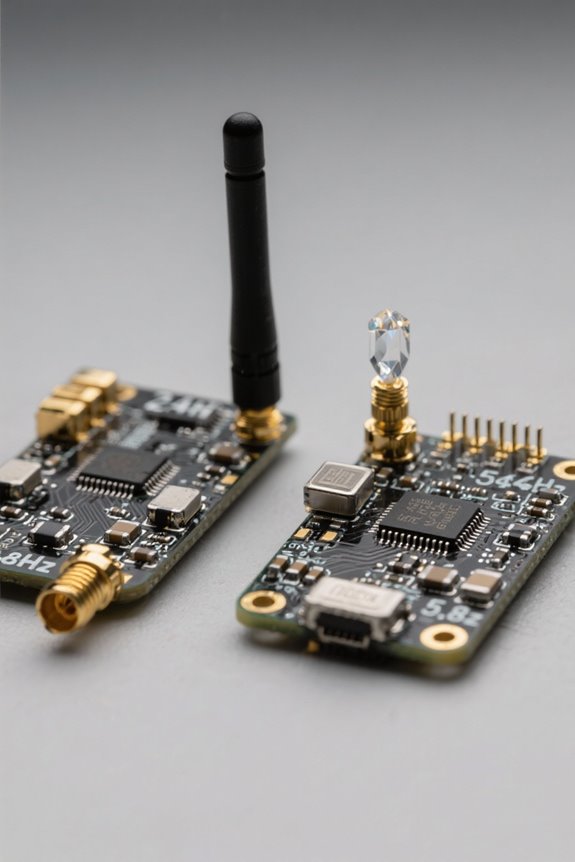
When we compare audio quality and latency, it’s clear that each frequency band has distinct advantages. audio quality: The 5.8GHz systems often deliver crystal-clear, digital audio with less signal distortion, offering high-fidelity sound and a wide frequency response that enhances tone quality. This results in superior audio fidelity, making it a preferred choice for live performances. latency: With 5.8GHz, latency typically remains under 5 milliseconds, ensuring ideal real-time performance for musicians and audio professionals. Conversely, 2.4GHz systems experience higher latency, sometimes exceeding 6 milliseconds, which can challenge latency sensitivity in demanding situations. While 2.4GHz offers decent sound quality, it risks audio dropouts in congested environments, making 5.8GHz the go-to for consistently excellent sound clarity and reliability. Additionally, similar to the waterproof designs in reliable RC trucks, the resilience of 5.8GHz systems against interference contributes to their superior audio performance.
Range and Reliability
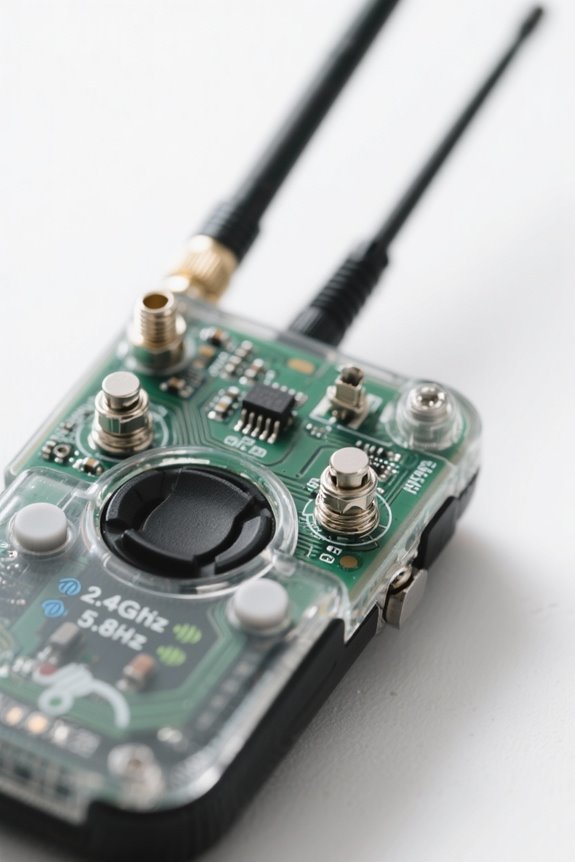
Having explored audio quality and latency, we can now focus on Range and Reliability in wireless systems. Range Characteristics play a significant role in performance, as 2.4GHz systems typically provide a longer range of about 30-40 meters, or up to 100 feet, allowing for greater freedom of movement. In a range comparison, the 2.4GHz band excels in penetrating walls and obstacles better than 5.8GHz, ensuring consistent connectivity in complex environments. However, reliability factors favor 5.8GHz due to its wider bandwidth of 125MHz, which reduces channel congestion and interference, particularly in urban settings. While 2.4GHz may face dropouts in crowded venues, 5.8GHz offers stable connections, especially in open or line-of-sight conditions, making it a reliable choice for diverse applications. Additionally, understanding ESC protection features can enhance overall system reliability in RC applications.
Usage Scenarios and Audience
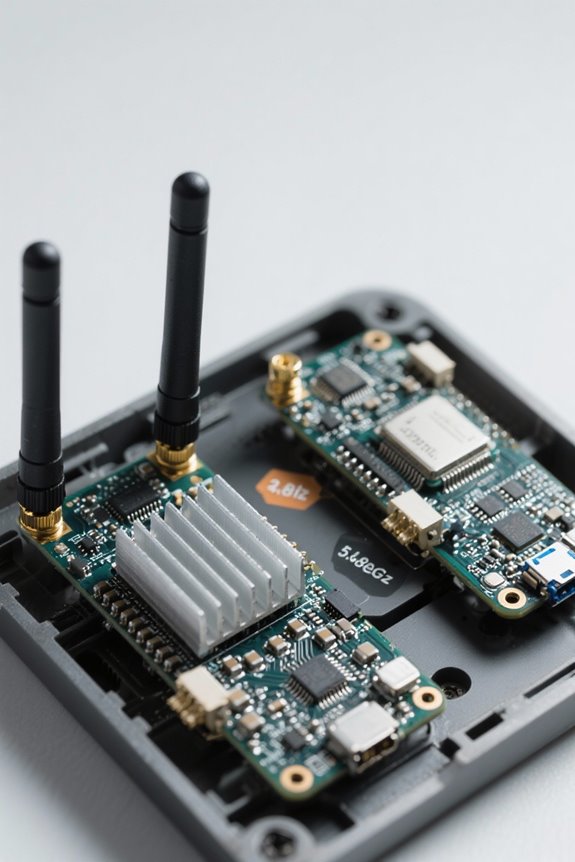
In the domain of wireless audio and data transmission, understanding usage scenarios is essential for maximizing the benefits of both 2.4GHz and 5.8GHz systems. Home and office applications highlight the distinctions between these frequencies; 2.4GHz is ideal for connecting multiple IoT devices, such as smart thermostats and cameras, due to its longer range and ability to navigate obstacles. In contrast, 5.8GHz caters to users needing high-speed connections, making it perfect for streaming and gaming. User preferences shift based on bandwidth requirements and performance needs, with 2.4GHz supporting everyday tasks and 5.8GHz targeting more demanding applications. Understanding these usage comparisons helps us select the right system for various activity types and application environments while ensuring suitable device compatibility. Additionally, multiple models operating simultaneously, such as in 15-channel functionality, can enhance control and improve overall user experience in remote operations.
Interference and Environment Impact
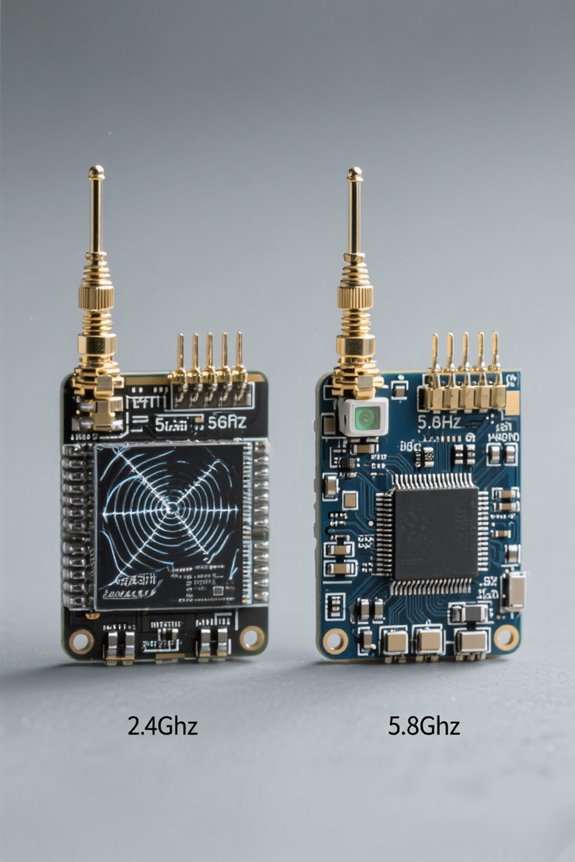
Understanding Interference Levels is essential when comparing 2.4GHz and 5.8GHz systems. The 2.4GHz band suffers from increased interference types due to its crowded spectrum, with many devices like Wi-Fi routers contributing to signal degradation. This results in audio dropouts and less reliable transmissions, especially in high urban density areas where channel overlap is common. Conversely, the 5.8GHz band offers frequency advantages with more channels available, considerably reducing interference and improving transmission stability. It performs better in environments needing clearer signals, providing higher data rates and lower latency. Ultimately, choosing between these systems depends on comprehending how environmental challenges and Interference Levels impact performance for your specific needs. Additionally, many RC models are designed to operate on 2.4GHz systems, enhancing their usability with multiple users.
Technical Features and Trends
When comparing 2.4GHz and 5.8GHz systems, we need to examine their technical features and trends that govern their performance and application in various environments. Data Transmission Speeds play a major role in application suitability; the 2.4GHz frequency typically supports speeds of 450 Mbps to 600 Mbps, which may not suffice for high-demand tasks. In contrast, the 5.8GHz band can achieve up to 1300 Mbps, meeting the requirements for gaming and streaming. Signal Strength declines with distance and obstructions on 5.8GHz, while channel availability with 23 channels reduces network congestion. Consequently, 5.8GHz enhances audio fidelity due to lower latency, making it ideal for real-time applications, though it requires careful placement near devices for performance. As with the option of upgrade compatibility, certain applications may also benefit from specific technical enhancements.
Cost Comparison
A clear understanding of cost comparison reveals significant differences between 2.4GHz and 5.8GHz systems that can affect our purchasing decisions. Price differences show that 2.4GHz wireless guitar systems typically retail for around $30, presenting a budget-friendly option for many. In contrast, 5.8GHz systems generally start at $60, with premium models exceeding $149. While the initial investment may be higher, these models often include features like multiple channels and rechargeable batteries, justifying the trade-offs. Long-term savings on battery costs and higher resale potential can make 5.8GHz systems appealing. In addition, warranty comparisons indicate that higher-priced systems typically offer better coverage, reducing maintenance costs. Ultimately, evaluating these factors helps us align with our consumer preferences and budget. Additionally, enthusiasts in RC hobbies often prefer higher performance features found in advanced models, which can influence their budget decisions.
Channel Capacity
Channel Utilization: The 2.4GHz band generally has fewer channels, allowing for lower data density, leading to potential signal degradation.
Bandwidth Allocation: With 5.8GHz, we can utilize wider channels, enhancing network efficiency and increasing throughput limits, crucial for data-heavy applications.
Access Point Deployment: Effective capacity planning becomes essential with 5.8GHz, as denser deployment maximizes spatial diversity, further enhancing overall performance metrics. Additionally, understanding the performance specifications of the systems can guide users in selecting the most suitable option for their needs.
Performance in Crowded Environments
With more available channels, 5.8GHz facilitates improved crowd management through effective performance monitoring, leading to low latency (under 5 ms). While 2.4GHz offers better range and penetration, its heavy traffic can impede the overall experience. Embracing 5.8GHz systems allows for greater device compatibility, ultimately supporting more reliable performance amid hectic venue acoustics and advancing technology. Additionally, the use of upgraded parts like suspension arms upgrades can enhance the overall stability of your system, facilitating better performance in crowded environments.
System Compatibility
Understanding System Compatibility is key when selecting between 2.4GHz and 5.8GHz systems. Device Compatibility with Frequency Bands reveals that most consumer wireless devices, such as Bluetooth headsets and baby monitors, typically operate on the 2.4GHz band due to its widespread adoption. Limited support for 5.8GHz means fewer consumer devices, restricting legacy compatibility. Signal Range and Penetration Compatibility shows that 2.4GHz systems provide better coverage for multi-room setups, while 5.8GHz excels in high-speed, close-proximity applications due to its performance standards. Additionally, Interference and Coexistence indicate that 5.8GHz performs better in crowded spaces, given its available channels. By considering device limitations and usage trends, we guarantee our choices meet current market demand effectively. Furthermore, understanding battery specifications can also influence device compatibility and performance in remote-control applications.
Best Practices for Setup
When setting up your wireless systems, Antenna Placement and Separation is vital to avoid interference and secure peak signal quality. We should maintain ideal distances, spacing devices around 10 feet from Wi-Fi routers and each other to enhance wireless distribution while reducing crosstalk. Receiver Placements are important, as positioning them higher, on stands, guarantees a clear line of sight with transmitters. Channel Selection is another key factor; using 5.8 GHz in RF-dense environments aids sound quality. We must also incorporate thorough Testing Procedures to identify any potential interference from environmental factors. By following these best practices, we can create effective setup configurations that support reliable performance during performances.
Future of Wireless Audio Systems
As wireless audio technology evolves, the adoption of 5.8GHz systems** is likely to increase due to their superior performance in environments with high RF traffic. Emerging technologies are driving future innovations, allowing for enhanced audio evolution. System enhancements in 5.8GHz facilitate greater connectivity improvements, providing robust options for professionals seeking clarity and low latency under 5ms. Observing current market trends, we see that users increasingly prioritize audio quality over range, favoring 5.8GHz systems for live performances. As these wireless advancements unfold, the emphasis on user experience grows, ensuring that musicians and audiophiles can rely on cleaner signals** and reduced interference. We’re heading toward a future where high-quality audio is easily accessible, thanks to these advancements.
Frequently Asked Questions
Which Frequency Is Better for Outdoor Performances?
For outdoor performances, we believe the 5.8GHz frequency has a clear advantage. Its reduced interference and superior sound quality make it the better choice for reliable, enjoyable experiences in crowded environments. Let’s elevate our performances together!
Can I Use Both Frequencies Simultaneously?
Absolutely, we can use both frequencies simultaneously! This frequency compatibility boosts our network performance and connectivity. By taking advantage of simultaneous usage, we optimize our devices’ connection based on their unique needs and range capabilities.
How Do Physical Barriers Affect Signal Strength?
Physical barriers really affect signal strength, don’t they? Materials like concrete and metal cause significant signal interference, leaving us scrambling for better connections. Understanding these barriers helps us navigate our shared digital spaces more effectively.
Are There Any Devices That Only Work on One Frequency?
Yes, there’re legacy devices that only work on one frequency, limiting frequency compatibility. While these simpler systems offer ease of use, they might not suit everyone’s needs, especially in mixed-frequency environments. Let’s explore more!
What Maintenance Is Required for These Wireless Systems?
To maintain our wireless systems, we need regular updates, visual inspections, and cleaning. Let’s manage signal interference and monitor battery health together, ensuring our equipment stays reliable and efficient for everyone in our community.


