As an Amazon Associate, we earn from qualifying purchases. Some links on this site are affiliate links at no extra cost to you. Our recommendations are based on thorough research and editorial judgment.


What Wiring Upgrades Improve RC Vehicle Performance?

To enhance RC vehicle performance, we should focus on Shorter and Thicker Wiring for reduced resistance and improved power delivery. Utilizing High-Quality Connectors** like XT60s guarantees strong connections, minimizing energy loss. Reducing Electromagnetic Interference through proper wire placements and ferrite beads keeps signals clean. Secure Wiring Arrangements prevent wear from vibrations, while Upgrading to Proper Wire Gauges**, such as 12 AWG, supports higher current efficiently. Each of these upgrades contributes markedly to our vehicle’s overall responsiveness and longevity. More insights follow.
Key Takeaways
- Use shorter, thicker wiring to reduce electrical resistance and enhance power delivery from the battery to the motor and ESC.
- Invest in high-quality connectors like Deans® or XT60/XT90 for secure electrical connections and efficient high current handling.
- Minimize electromagnetic interference by reducing loop areas in wiring and utilizing ferrite beads for better signal integrity.
- Secure wiring with methods like zip ties and protective heat shrink tubing to improve durability and reliability in performance.
- Upgrade to appropriate wire gauges, such as 12 AWG, to prevent overheating and ensure optimal current flow for enhanced vehicle response.
Importance of Shorter and Thicker Wiring
Importance of Shorter and Thicker Wiring****
Using shorter wiring reduces electrical resistance, which minimizes voltage drop in our RC vehicles. This means more power from the battery reaches the motor and ESC, enhancing electrical efficiency. In addition, shorter wires help save weight, which can greatly affect vehicle acceleration.
Improved Current Capacity with Thicker Wiring
Thicker wires offer lower resistance and can carry higher current loads without overheating. This supports powerful brushless motors and high-capacity ESCs, preventing performance loss. Additionally, using high torque ratings ensures efficient load management, allowing the vehicle to tackle demanding terrains more effectively.
Enhanced Motor and ESC Performance
Both motor and ESC benefit from a stable voltage supply, improving throttle response and component durability. With ideal wiring, we guarantee better torque and responsiveness while extending battery life for longer run times.
Utilizing High-Quality Connectors
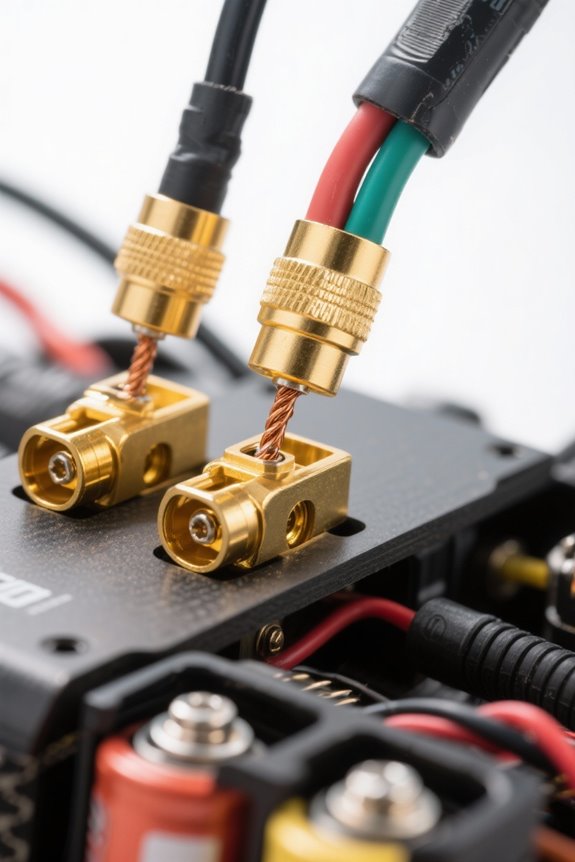
When we choose high-quality connectors for our RC vehicles, it’s essential to understand how they impact performance and reliability. Connector Design and Contact Quality plays a significant role, as connectors like Deans® offer precision engineering for secure electrical connections, reducing resistance and guaranteeing consistent power delivery. Investing in high current options like XT60 or XT90 connectors guarantees they can manage higher amperage without overheating, enhancing system efficiency. Material Quality is important; gold-plated contacts in EC connectors improve conductivity and prevent oxidation, promoting durability. Regular connector maintenance, such as checking for wear and confirming secure fittings, further boosts performance. By evaluating connector types and their design considerations, we can confidently elevate our RC vehicles’ reliability and efficiency on every ride. Additionally, understanding ESC protection features is vital, as these integrated safeguards enhance the overall safety and performance of our systems.
Reducing Electromagnetic Interference
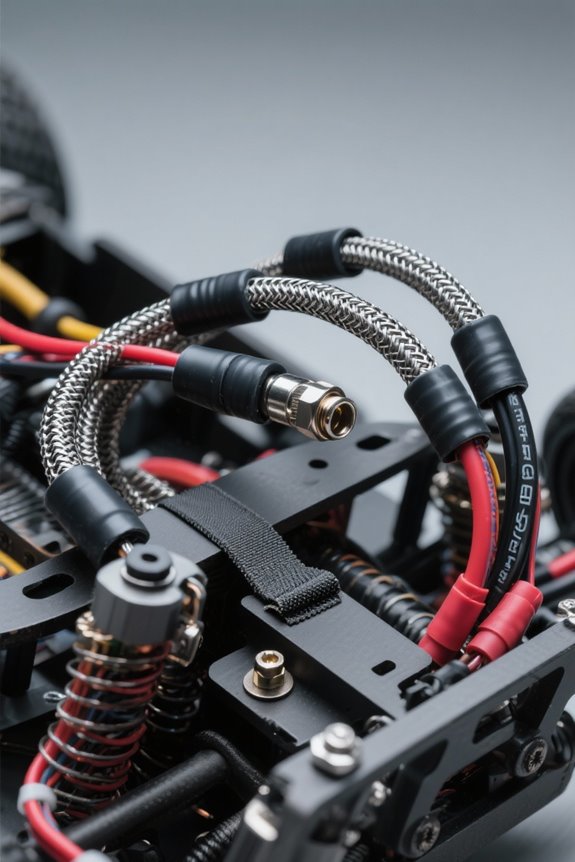
Reducing electromagnetic interference (EMI) is essential for enhancing the performance of our RC vehicles, especially after discussing high-quality connectors and their impact on reliability. Minimizing Loop Areas in Wiring involves avoiding wiring loops, as they act like antennas that can either emit or pick up EMI signals. By routing wires directly and avoiding large loop areas, we reduce exposure to EMI risks. Ferrite Beads on control wires absorb high-frequency noise, helping us meet regulatory emission limits. Capacitive Filtering with capacitors across motor terminals effectively blocks unwanted noise while maintaining power. Shielding Techniques using conductive materials confine EMI and block interference, while effective Grounding Practices divert unwanted energy, enhancing overall signal reliability. Together, these upgrades elevate our RC experience. Additionally, using batteries with high discharge rates can significantly improve overall vehicle responsiveness and power delivery.
Secure Wiring Arrangements

Secure Attachment Methods promote durability. We can use thin double-sided tape and zip ties to fasten wires, ensuring they’re secure but not overtightened. Additionally, protective coatings like heat shrink tubing over connections safeguard against abrasion and short circuits. By placing wiring attachments strategically, we allow sufficient slack at joints, which helps avoid stress on soldered points from vibrations. Together, these practices create a reliable and clean wiring setup. Properly arranged wiring can also enhance performance by minimizing interference and ensuring optimal power delivery.
Upgrading to Proper Wire Gauges
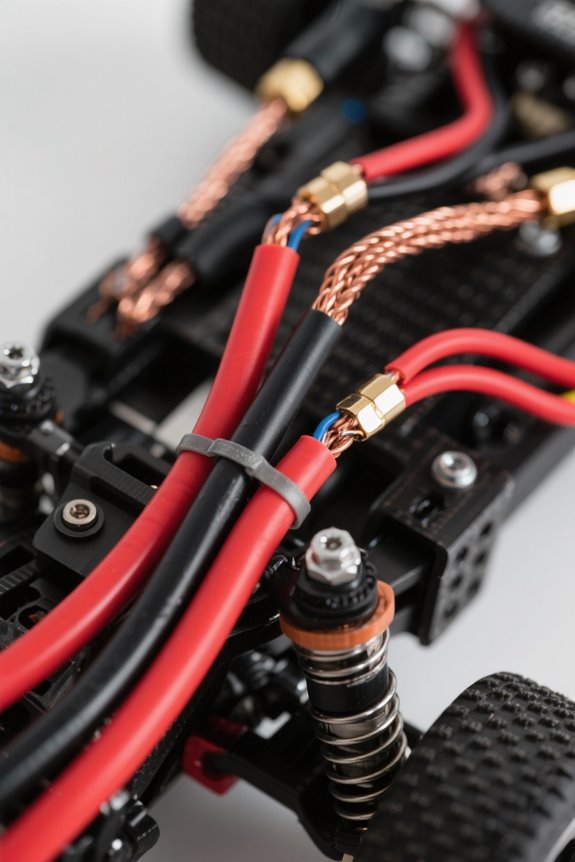
Proper Gauge Matching guarantees we avoid overheating and maintain the right current flow. Using thicker gauges, like 12 AWG for modified setups, minimizes resistance and enhances battery life. Balancing wire gauge and weight is essential, particularly in aerial RC vehicles. Ultimately, selecting the right gauge can elevate our vehicles’ responsiveness and durability effectively. Additionally, utilizing high-capacity rechargeable batteries, such as those typically found in Heng Long RC tanks, can significantly enhance performance and playtime.
Frequently Asked Questions
How Can I Troubleshoot Voltage Drop Issues in My RC Vehicle?
To troubleshoot voltage drop issues in our RC vehicle, we’ll measure voltage under load, inspect for corrosion, check wiring sizes, and guarantee connections are tight. Identifying these points helps prevent power loss during our runs.
What Is the Impact of Poor Wiring on Battery Lifespan?
Like a frayed rope, poor wiring leads to battery degradation, causing heat buildup and stressing our batteries. By ensuring proper wiring insulation, we can reduce risks and enhance our overall RC experience together.
How Do I Choose the Right Connectors for My Setup?
To choose the right connectors for our setup, we should consider connector types and soldering techniques. By selecting quality connectors suited for our vehicles, we enhance performance and reliability, ensuring a smoother experience together.
Can Weather Conditions Affect Wiring Performance in RC Vehicles?
Just like a sturdy ship braves the storm, our RC vehicles need weather resistance and moisture protection to thrive. We’re all in this together, ensuring our wiring stays strong against nature’s trials for peak performance.
What Maintenance Practices Help Prolong Wiring Efficiency?
To prolong wiring efficiency, we should focus on proper soldering techniques and maintaining wiring insulation. By regularly inspecting and protecting our connections, we can guarantee smoother runs and a longer-lasting RC experience together.


