As an Amazon Associate, we earn from qualifying purchases. Some links on this site are affiliate links at no extra cost to you. Our recommendations are based on thorough research and editorial judgment.

How To Balance Speed And Control In RC Tuning?

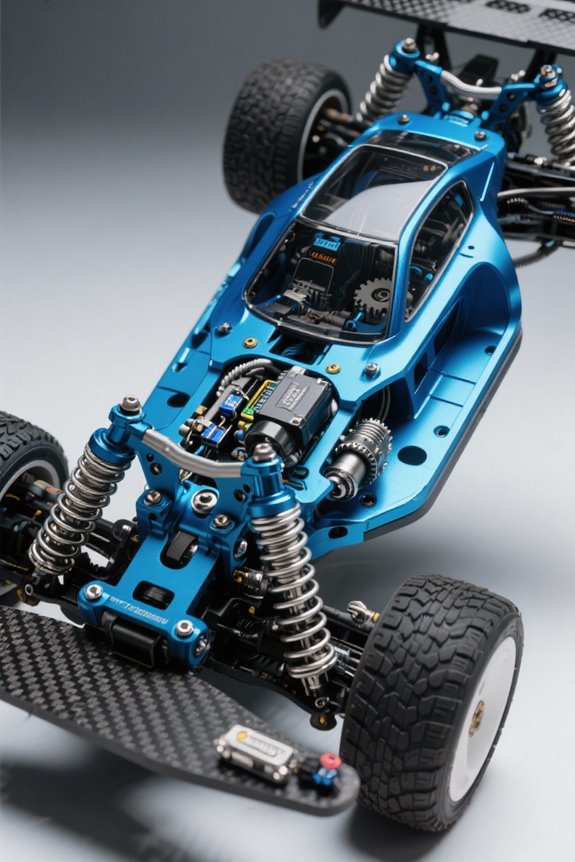
To balance speed and control in RC tuning, we must focus on ESC and Motor Tuning Balance, adjusting throttle rates to 10-25 for smoother power delivery. Next, Gearing Enhancement involves calculating gear ratios to fine-tune speed versus torque, with gradual changes. We should also address Suspension and Handling by optimizing ride heights and camber settings for improved grip. Learning Driving Techniques helps manage weight transfers and braking. Finally, Battery Management guarantees peak power and longevity. Explore further for detailed strategies.
Key Takeaways
- Adjust the ESC throttle rate control to a medium setting (20-25) for a balance of responsiveness and smooth acceleration on varied surfaces.
- Optimize your gear ratio by adjusting pinion and spur teeth ratios to find the right balance between speed and torque during performance.
- Fine-tune suspension settings, including ride height and camber, to improve grip and stability for better handling on uneven terrains.
- Implement controlled driving techniques and smooth acceleration out of corners to maintain rear tire traction and optimize speed control.
- Manage battery charging effectively by keeping temperatures within the optimal range and using balance chargers for safe LiPo battery maintenance.
ESC and Motor Tuning Balance
Balancing ESC and motor tuning is essential for maximizing performance and control in RC vehicles. ESC Throttle Rate Control plays a pivotal role in determining how power is delivered from the ESC to the motor, affecting the acceleration’s smoothness and the risk of wheel spin. A low throttle rate setting, typically between 10-20, provides smooth acceleration, great for low-grip or beginner situations. In contrast, medium settings, ranging from 20-25, balance responsiveness across various track conditions. Proper Motor Timing Adjustment is also vital; advancing timing increases top speed but can generate excess heat, while lower settings enhance torque and efficiency. By carefully adjusting both throttle rate and motor timing, we can achieve ideal performance tailored to specific driving styles and track conditions. Additionally, utilizing upgraded aluminum components can significantly improve vehicle responsiveness and stability, enhancing overall driving performance.
Gearing Optimization

When we explore Gearing Optimization, understanding the gear ratio‘s impact on our RC vehicle’s performance is vital. The gear ratio, calculated by dividing spur gear teeth by pinion gear teeth, directly influences speed and torque. Pinion Adjustments are important; increasing pinion teeth boosts speed but reduces torque, risking motor stress. Conversely, decreasing pinion size enhances torque, improving acceleration while limiting top speed. Spur Sizing fine-tunes our setup; reducing spur teeth increases speed but lowers torque, while increasing spur teeth has the opposite effect, favoring control. Starting with the manufacturer’s recommended baseline, we should make gradual changes (1-2 teeth on pinion, 3-5 on spur) and test, ensuring we monitor motor temperatures to maintain performance and prevent overheating. Additionally, selecting customization options allows for tailored performance that can influence optimal gearing for various terrains.
Suspension and Handling for Control
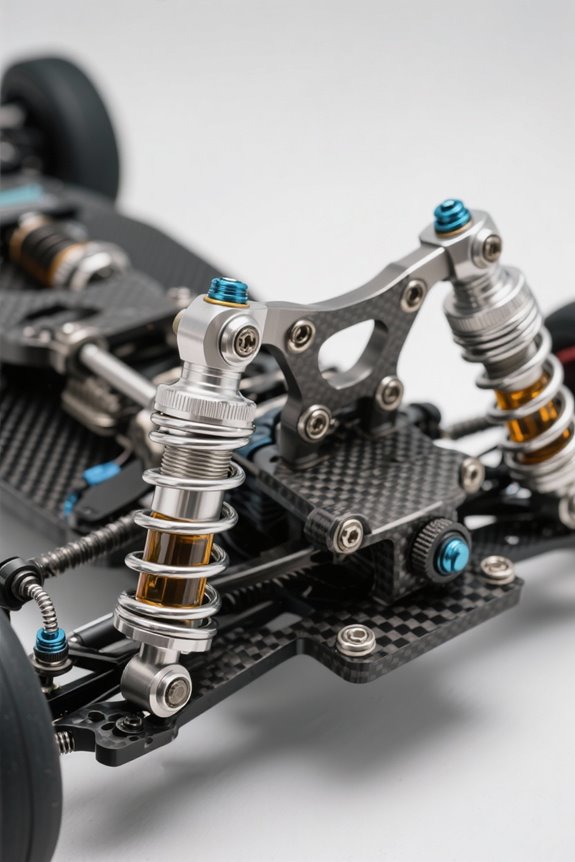
Ride Height Tuning is equally critical; adjusting front ride height can soften steering on uneven terrains, and camber settings of around -1° to -2° enhance tire contact for better grip. Combining these adjustments, like maintaining balanced spring rates front-to-rear, maximizes our vehicle’s performance. Ultimately, fine-tuning these aspects helps us achieve a stable and controlled ride, no matter the track conditions we face. Additionally, component quality plays an essential role in overall vehicle reliability and performance, ensuring that our tuning efforts yield the best results.
Driving and Braking Techniques for Controlled Speed
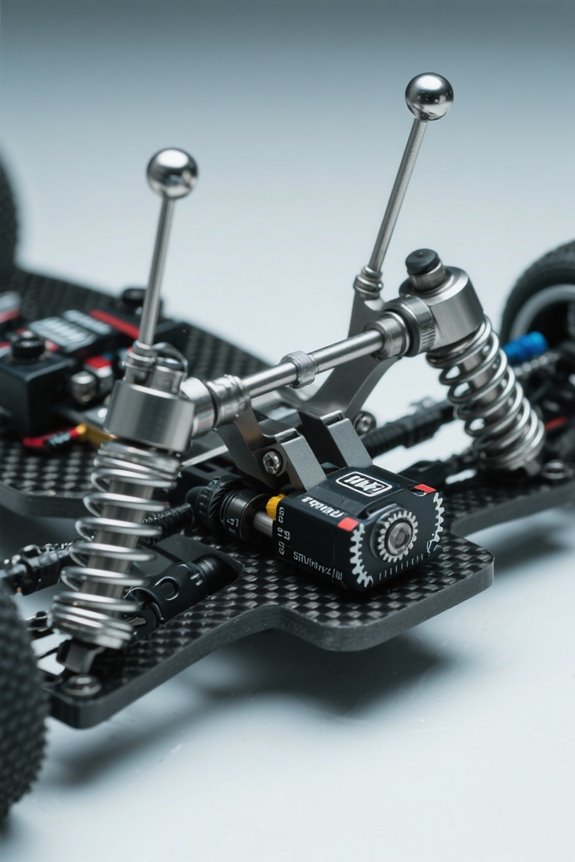
Additionally, we must be aware of Weight Transfer; understanding that braking shifts weight forward affects stability during turns. Smooth acceleration out of corners helps us regain rear tire traction, optimizing our overall performance on the track. The performance of RC equipment, such as Huina 1583 loader, is greatly influenced by managing speed and control effectively during operation.
Battery and Power Management

Utilizing effective charging techniques means letting batteries cool before charging and avoiding full depletion. Maintaining a temperature between 20-25°C during storage and use guarantees peak performance. Finally, adjusting ESC settings and slight undercharging can enhance power stability, enhancing our run times considerably. Embracing these strategies will extend our batteries’ lifespans and optimize our track experience. Additionally, using specific balance chargers is essential for safely recharging LiPo batteries.
Frequently Asked Questions
How Does Tire Choice Impact Speed and Control?
Tire choice strongly impacts speed and control. We’ve found that selecting the right tire compounds and tread patterns can enhance grip and handling, allowing us to tackle diverse terrains while maximizing performance and enjoyment in our RC adventures.
What Role Does Weight Distribution Play in Performance Tuning?
Did you know that a 60/40 weight distribution can greatly improve traction in crawlers? We all know weight distribution is essential in performance tuning, helping us enhance stability and control during challenging climbs and sharp turns together.
How Can Track Conditions Affect Tuning Decisions?
Track conditions greatly impact our tuning decisions. Weather influences grip levels, and diverse surface types demand adjustments in suspension setup, ensuring we achieve the right balance between stability and responsiveness for peak performance during races.
Are There Specific Tools Required for Tuning Adjustments?
For our tuning essentials, we need some key adjustment tools. These include Allen screwdrivers, camber gauges, and torque wrenches, ensuring we optimize our RC setups together, making our tuning experience efficient and fun—let’s gear up!
How Often Should I Perform Maintenance on My RC Car?
We shouldn’t underestimate our RC car’s maintenance needs. A consistent maintenance schedule every run, plus inspecting wear patterns weekly, keeps our vehicles performing at their best and guarantees we enjoy our time together on the track.


