As an Amazon Associate, we earn from qualifying purchases. Some links on this site are affiliate links at no extra cost to you. Our recommendations are based on thorough research and editorial judgment.

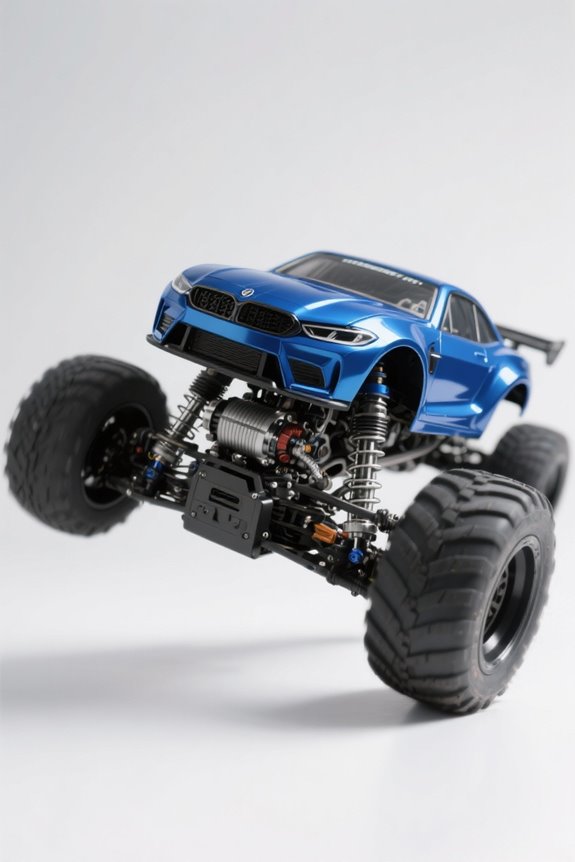
How Much Can I Realistically Increase My RC Vehicle’s Speed?

We can realistically increase our RC vehicle’s speed through strategic upgrades and tuning. By switching to brushless motors, we can double RPM potential, enhancing speed considerably. LiPo batteries offer a 20-40% speed boost due to higher voltage, while careful gear adjustments can optimize speed without compromising performance. Additionally, using larger tires improves top speed through increased rollout distance. Understanding these factors can maximize our vehicle’s performance and stability at high speeds, setting the stage for continued improvements.
Key Takeaways
- Upgrading to a brushless motor can potentially double your RPM, significantly increasing speed without losing performance.
- Switching to LiPo batteries can enhance speed by 20-40% due to higher voltage output.
- Optimizing gear ratios in relation to tire size can improve acceleration and overall speed efficiency.
- Lightweight components and strategic weight distribution minimize drag and enhance handling at high speeds.
- Fine-tuning aerodynamics, such as reducing frontal area, can lead to better speed and stability during high-speed runs.
Understanding RC Vehicle Speed Classes
Racing categories emphasize competition readiness and skill levels. For instance, Stock Short Course Trucks cater to beginners with stock motors, whereas Modified 4WD Buggies challenge advanced racers. By adhering to these classes, competitors can better evaluate their vehicle’s performance and target suitable racing events. This structure not only fosters competition but also unites like-minded enthusiasts enthusiastic for shared racing experiences. Many enthusiasts opt for high-speed vehicles like the DEERC 1/10 Brushless RC Car, which is designed for high-speed performance on various terrains.
Factors Influencing Speed Potential
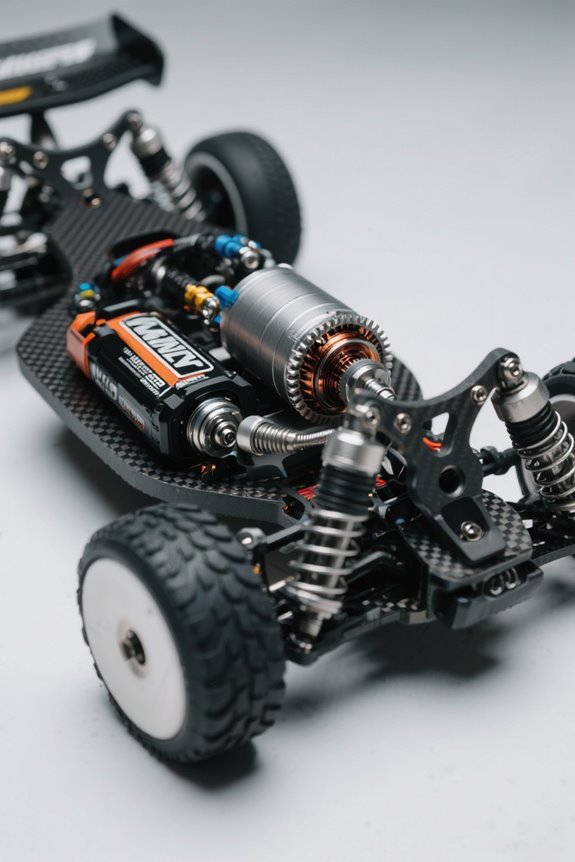
When considering factors influencing speed potential, it’s essential to recognize how various components interact to enhance performance. Tire selection is imperative; slick tires reduce rolling resistance, maximizing top speed on smooth surfaces, while knobby tires improve grip for off-road conditions, albeit at a speed cost. Suspension tuning affects stability; a tighter setup minimizes body roll at high speeds, enhancing control. Adjusting suspension geometry can help balance grip and speed, ensuring we maintain ideal handling. Additionally, matching gear ratios to tire size impacts acceleration and top speed, necessitating fine-tuning to prevent overheating and wear. By carefully considering these factors, we can achieve a harmonious blend of speed and stability, elevating our RC vehicle performance on various terrains. Furthermore, incorporating robust materials in your build can significantly enhance durability, allowing the vehicle to withstand the rigors of high-speed maneuvers.
Beginner RC Vehicles: Speed Limitations

Entering the world of beginner RC vehicles, we encounter significant speed limitations designed to suit novice users. Typical Speed Range: Beginner models usually max out at around 20 mph (30-45 km/h), allowing for safety and skill development. Design Constraints: Brushed motors and gear ratios emphasize control over speed, with stock batteries limiting power and performance. Safety Features: Many beginner RCs incorporate electronic speed limiters and adjustable throttle curves, promoting beginner safety through manageable acceleration. Environmental Factors: Performance fluctuates based on surface type, from smooth pavement to loose gravel, impacting top speeds. Additionally, it’s crucial for beginners to be aware of terrain suitability, as choosing the right environment can greatly enhance their experience and speed. As we explore these limitations together, we realize they’re essential for enhancing our skill sets, providing a solid foundation before pursuing faster models.
Upgrading to Intermediate Speed Levels
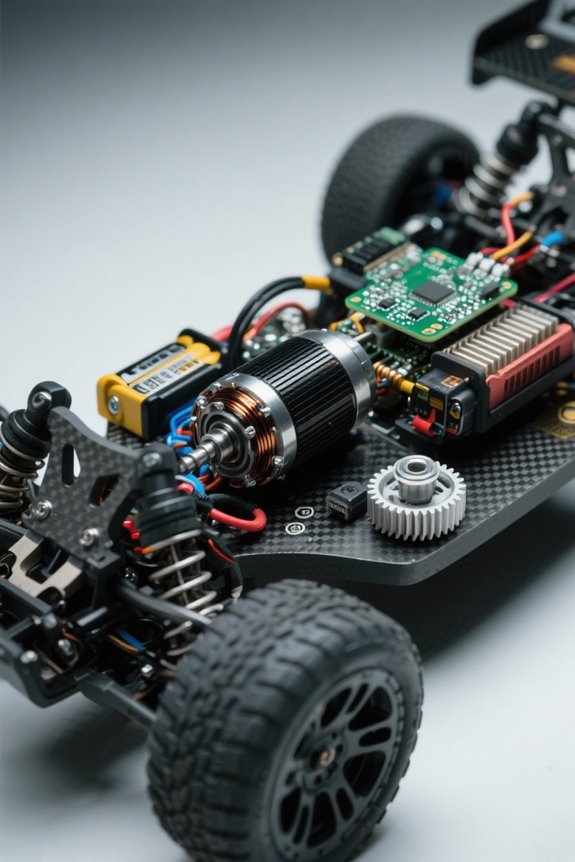
Weight Adjustments improve speed stability, particularly through strategic placements of heavier materials, while Sensor Integration aids in performance tuning, stabilizing acceleration during high-speed runs. These enhancements help us achieve that desired intermediate performance level. Additionally, implementing high-quality materials can significantly contribute to reduced weight and increased agility, further enhancing speed.
Professional RC Vehicles: Achieving 200+ Mph

Aerodynamics plays an essential role; vehicles often feature streamlined profiles and vertical tailfins to enhance stability. Powertrain Configurations utilize high-power electric motors—often exceeding 100 horsepower—to tackle aerodynamic drag. Such engineering innovations guarantee that each record attempt involves meticulous optimization for performance, helping enthusiasts like us understand the technical aspects required to achieve these impressive speeds. Additionally, the use of high-quality motors significantly contributes to improved power delivery and overall performance, making them essential in high-speed RC vehicle designs.
The Role of Battery Types in Speed Enhancements
When achieving high speeds in RC vehicles, selecting the right battery type can greatly influence performance metrics. Battery selection is crucial; LiPo batteries are lighter and provide higher voltage, enhancing top speed. Voltage choices matter, with 3S at 11.1V offering significant RPM boosts, while C rating impacts power delivery. A higher C rating, typically 30C to 60C for racing, means improved acceleration and sustained speed. However, capacity trade-offs must be considered; larger capacities may reduce speed due to added weight. Additionally, proper maintenance routines and safety precautions are essential for handling LiPo batteries. Finally, acknowledging weight effects guarantees we maximize our vehicle’s performance characteristics for peak speed without risking damage. Furthermore, new technologies in LiPo battery designs could enhance energy density and performance, allowing for even greater speeds.
The Impact of Motor Upgrades on Performance
Upgrading the motor in an RC vehicle is one of the most effective ways to enhance performance and increase speed. Brushless Motor Advantages include dramatically higher RPMs compared to brushed motors, often exceeding double the RPM potential. This upgrade typically yields speed increases upwards of 50% with proper pairing. Efficiency Gains arise from improved power delivery, allowing better acceleration without draining the battery excessively. Motor Timing Adjustments enhance torque and RPM, provided thermal management is adequate to prevent overheating. Finally, ESC Programming is vital; a high-quality ESC guarantees superior power transfer and accelerates tuning adjustments, helping us fine-tune our setup to achieve peak performance. By carefully monitoring temperatures and adjusting gears, we can reveal our vehicle’s true speed potential. Furthermore, investing in high-performance models, such as those with rugged aluminum alloy construction, can significantly enhance durability and support your speed upgrades.
Gearing Changes for Optimal Speed
To achieve ideal speed in our RC vehicles, understanding gear ratios is essential, as they directly influence performance. Gear Ratio Calculation can be determined by dividing the number of teeth on the spur gear by the pinion gear. For instance, a 20-tooth pinion with a 100-tooth spur gives a 5:1 ratio. Gear Ratio Optimization balances top speed and acceleration; lower ratios increase speed but reduce torque, while higher ratios enhance acceleration at the expense of peak speed. We should consider Performance Trade-offs carefully—over-gearing may cause excess heat, risking motor damage. Adjusting gearing appropriately helps us maximize our vehicle performance without overheating, tailoring our setup for specific racing conditions or terrains effectively. Additionally, upgrading to Motor 12T 550 can provide higher torque and performance, making gearing changes even more impactful.
Managing Heat Generation During Upgrades
When we prioritize these adjustments, we can enjoy longer run times without compromising performance. Additionally, implementing durable construction can significantly enhance your vehicle’s lifespan during high-speed operations.
Weight Considerations for Speed Improvement
Reducing weight in our RC vehicles is crucial for enhancing speed and performance, as excess mass directly affects acceleration, braking, and handling. Weight Reduction Benefits: A lighter vehicle accelerates faster and requires shorter braking distances, improving control. Even a small reduction can cut lap times considerably on high-traction tracks. Weight Placement: Strategic weight placement, like positioning mass low and centered, enhances stability while maintaining traction during turns. Balancing weight prevents undesirable handling like understeer. Traction Trade-Offs: While added weight can increase grip, it can also hinder acceleration on smooth surfaces. It’s important to evaluate conditions; slight weight increases may improve handling but may counter speed gains. Ultimately, optimized weight management leads to better performance. Additionally, efficient hydraulic systems in RC machinery can help minimize energy loss, further enhancing speed and operation.
Aerodynamics: Enhancing Speed Efficiency
Aerodynamics plays a significant role in enhancing speed efficiency, impacting both our top speeds and overall control. Minimizing Drag involves reducing aerodynamic resistance that opposes our vehicle’s movement; this can be achieved by decreasing the frontal area and ensuring a smooth body shape, leading to better acceleration and higher maximum speeds. Downforce Management enhances tire grip during high-speed turns, with multi-element wings and spoilers contributing to stability. Ground Effects create lower air pressure beneath the chassis, increasing grip without excessive drag penalties, while Airflow Analysis using CFD tools allows us to visualize turbulence mitigation and optimize wing adjustments. Incorporating these aerodynamic shapes into our RC vehicles lets us maximize performance and speed efficiency on any track.
Realistic Expectations for Speed Boosts
By integrating these performance optimization techniques, we can achieve realistic speed boosts, ensuring our RC vehicles meet our speed aspirations while maintaining efficiency and control.
The Importance of Safety in High-Speed Driving
High-speed driving in RC vehicles requires not only a focus on performance but also a commitment to safety. Personal Safety Gear Requirements include using safety glasses to shield our eyes from debris, wearing closed-toe shoes and gloves to protect against injury during crashes, and avoiding open-toed footwear for adequate foot protection. Safety Precautions involve conducting tests in open areas, maintaining a 30-foot distance from spectators, and following track protocols that highlight vehicle control. Emergency Procedures are crucial; we should practice shutting down vehicles immediately if control is lost and have fire extinguishers available when using LiPo batteries. By prioritizing these aspects, we guarantee a secure and enjoyable experience while satisfying our passion for high-speed RC driving.
Incremental Tuning Strategies for Best Results
Gearing Adjustments: Start with stock gearing, increasing pinion size by 1 or decreasing spur teeth by 2-4, to boost speed without drastic losses. This gradual method helps manage heat and motor load effectively.
Motor and Battery Upgrades: Shifting to a brushless motor can double RPM potential. Switching to LiPo batteries increases speed by 20-40%, enhancing voltage output.
Tire Modifications: A larger tire diameter increases rollout distance, improving top speed, while adjusting gear ratios helps maintain balance.
Monitoring Temperature to Prevent Damage
Properly monitoring temperature in our RC vehicles is essential to maintaining performance and preventing component damage, especially as we increase speed. Temperature Trends are critical; overheating can lead to motor or ESC failures, risking permanent damage. By tracking temperature spikes, we can react promptly. Sensor Placement matters too; positioning sensors near motor windings and battery cells provides accurate readings. Using multi-channel systems like the Dynamite Temperature Recording System enables us to monitor up to five components at once. With systems such as Traxxas’ smart sensors, we get real-time data directly to our radios or apps, ensuring we manage cooling efficiently. Ultimately, these practices support our RC vehicle’s longevity and performance during high-speed runs while minimizing the risk of overheating.
Frequently Asked Questions
What Are the Common Mistakes When Upgrading RC Vehicle Speed?
When upgrading speed, we often overlook motor compatibility issues and battery capacity concerns. Neglecting proper gear ratios, maintenance, and driving technique can derail our progress, leaving us frustrated instead of achieving the speed we crave.
How Do Track Conditions Affect My RC Vehicle’s Speed?
Track surface and tire selection considerably impact our RC vehicle’s speed. By adjusting our tires to match grip levels, we can enhance traction and control, ultimately leading to faster laps and improved performance together.
Can I Use My RC Vehicle in Wet Conditions Without Speed Loss?
We’ve tackled wet conditions together, like racing through mud. While it’s possible to use our RC vehicles, water resistance reduces traction control, leading to speed loss. Proper waterproofing and tire choices can help preserve our fun.
What Are the Best Practices for Maintaining Upgraded Speed Components?
To maintain upgraded speed components, we must guarantee speed component compatibility and use effective lubrication techniques. Regular inspections and timely adjustments help keep everything running smoothly, letting us enjoy the thrill of increased performance together.
How Often Should I Perform Maintenance on High-Speed RC Vehicles?
We should perform maintenance every 5-10 hours of run time and do regular performance checks to keep our high-speed RC vehicles in top shape. It’s all about enjoying stellar performance together on the track!


