As an Amazon Associate, we earn from qualifying purchases. Some links on this site are affiliate links at no extra cost to you. Our recommendations are based on thorough research and editorial judgment.


How To Design Custom RC Vehicle Chassis?

To design a custom RC vehicle chassis, we prioritize chassis types based on intended use; tub chassis works best for off-road durability. Next, we select materials like lightweight carbon fiber for strength or metal for added weight. We consider design aspects, ensuring thermal management with airflow channels. Rigorous prototyping techniques, like CAD modeling and 3D printing, help refine designs. Finally, structural strategies enhance strength through load paths and cross-members, leading to superior performance in various environments. Further insights await you.
Key Takeaways
- Begin by selecting the appropriate chassis type, such as tub chassis for off-road durability or others for specific performance needs.
- Choose materials based on desired durability and weight, considering options like carbon fiber for strength or plastic for affordability.
- Incorporate effective thermal management through design techniques like airflow channels to maintain optimal operating temperatures for motors and electronics.
- Utilize CAD software for initial design and 3D printing for rapid prototyping to test fitment before finalizing your chassis design.
- Focus on structural integrity by strategically placing cross-members and utilizing materials that ensure both strength and flexibility under various racing conditions.
Understanding Chassis Types and Their Applications
Tub Chassis provides a flat base with raised sidewalls, balancing strength and safeguarding internal components, particularly in off-road applications where durability is essential. Each chassis type serves specific demands, shaping our vehicle’s performance according to its intended use. For instance, the infrared combat system found in many RC tanks enhances interactive experiences by allowing multiple users to engage in battle simulations.
Selecting the Right Materials for Your Design
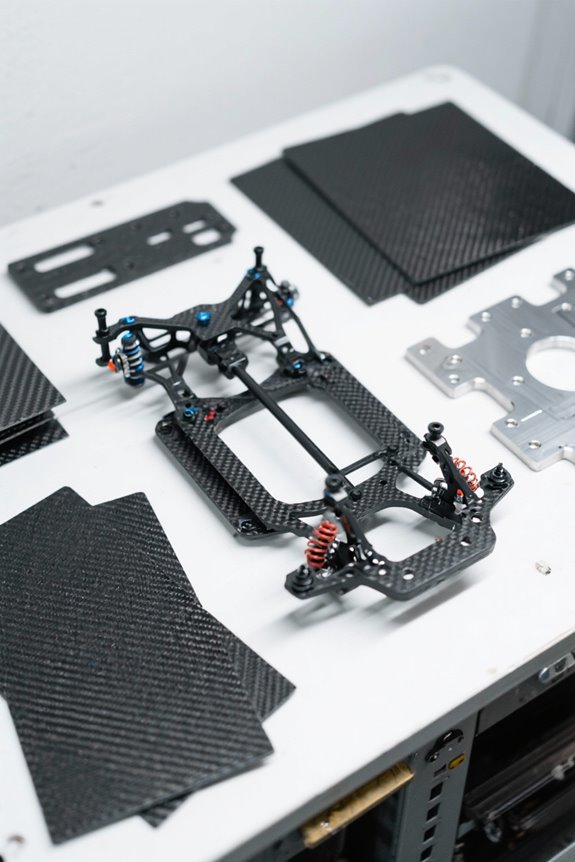
When designing a custom RC vehicle chassis, material selection is essential to optimizing performance and ensuring durability. Metal options like aluminum and steel provide strength, but can add weight, affecting speed and handling. Carbon fiber is lightweight, boasting five times the strength of steel, making it ideal for high-performance applications. However, it comes with manufacturing challenges** due to its complex production process. Plastic is an affordable choice for beginners but lacks durability, while graphite-impregnated plastic offers increased rigidity. Titanium strikes a balance between strength and lightness but can be costly and complex to work with. Each material’s benefits and challenges influence our design choices, directly impacting our vehicle’s performance and usability in various applications. Additionally, the use of brushless motors** in your design can significantly enhance speed and efficiency.
Key Design Considerations for Performance
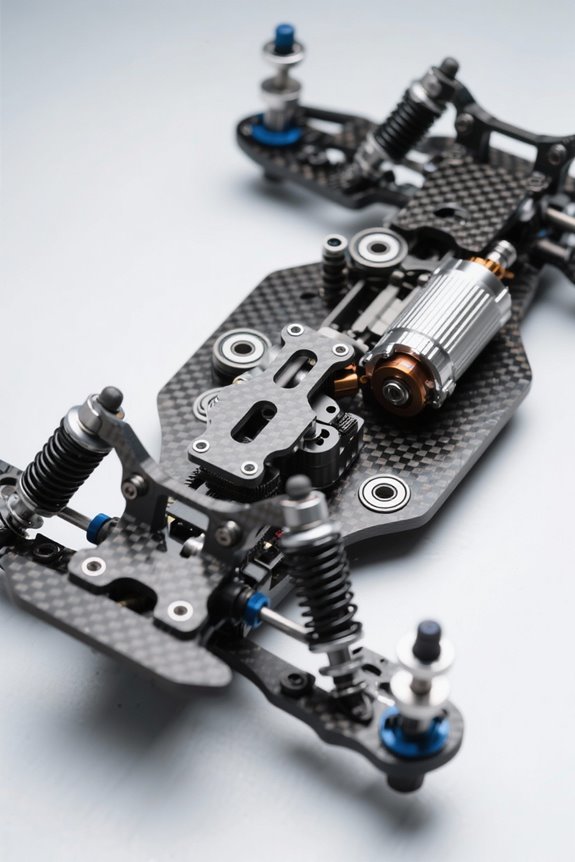
Thermal management is equally essential, as effective cooling prevents overheating of motors and electronics. Designing airflow channels and adding vents enhances air circulation, therefore maintaining ideal operating temperatures. These combined considerations guarantee our RC vehicle not only performs at its best but also remains durable and reliable across various racing conditions. For instance, ensuring high-quality non-toxic materials are used can further enhance the vehicle’s longevity in demanding environments.
Prototyping and Modeling Techniques
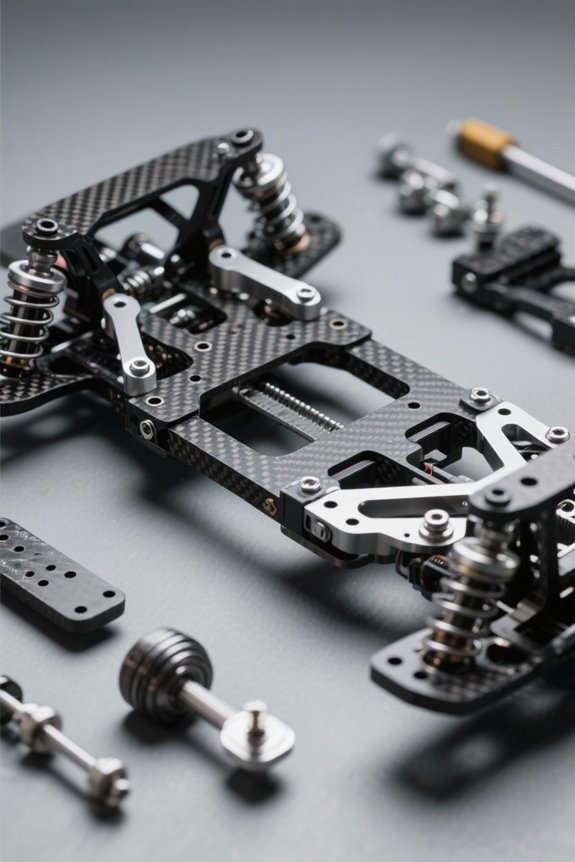
Prototyping and modeling techniques play an essential role in the development of custom RC vehicle chassis, allowing for precise iterations and enhancements. CAD-Based Prototyping Workflow starts with importing scaled front and side views of the vehicle, typically at a ratio of 1:10, to serve as a reference for accurate modeling. We can create a rough model of the body shell first, establishing initial proportions and integrating components like axles and motors. Early 3D printing enables rapid prototyping, allowing us to test fitment and functionality. Physical testing of prototypes helps evaluate real-world forces on parts before finalizing designs. Ultimately, mold making allows for efficient duplication of custom parts, ensuring quick replacements during prototyping and repair, promoting iterative design. Additionally, understanding the battery life and control range is crucial for designing a chassis that accommodates various RC specifications effectively.
Structural Design Strategies for Strength and Flexibility
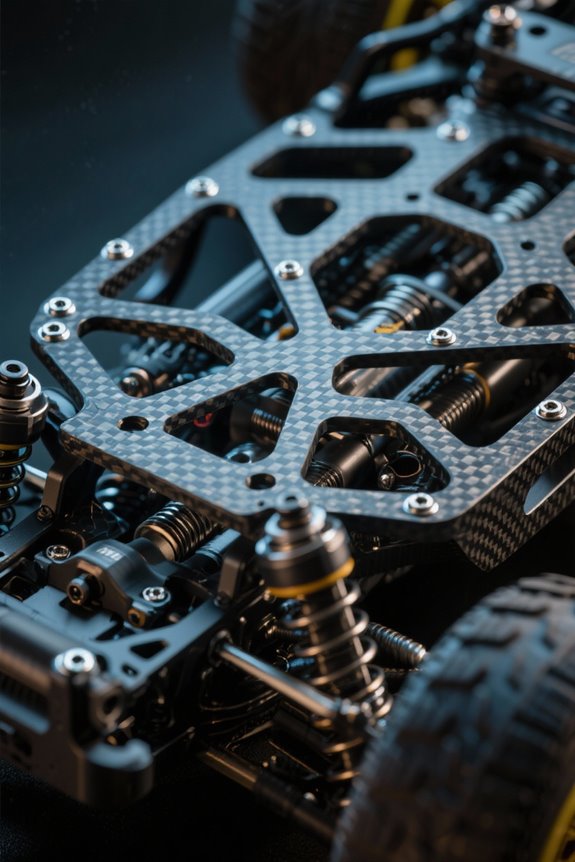
In designing our custom RC vehicle chassis, we should prioritize material selection to achieve an ideal balance between strength and flexibility. Low-carbon steel frames are great due to their combination of rigidity and ductility, making them resilient under stress. When considering load path, we need to direct forces through critical points, like suspension and battery mounts, enhancing overall performance. Utilizing circular closed tubes grants excellent torsional stiffness, while triangulation reinforces the frame against twisting forces. For stress distribution, it’s crucial to place cross-members strategically, especially in areas with high stress, ensuring that we limit weight while maximizing strength. By combining materials creatively, we can tailor our chassis to absorb shocks and vibrations, enhancing durability and handling precision. Additionally, understanding the importance of battery life performance can further optimize the design for prolonged use, similar to features in high-quality RC vehicles.
Optimizing Performance Through Testing and Iteration
Acceleration and Speed Testing via quarter-mile runs enables us to tune gear ratios and analyze performance through GPS tools. Finally, Measuring Handling and Stability through skidpad tests helps refine our chassis dynamics, keeping track of G-forces and improving responsiveness for enhanced control. Additionally, implementing upgrade options such as aluminum shock towers can further enhance the vehicle’s performance during testing.
Frequently Asked Questions
What Tools Do I Need to Build a Custom Chassis?
Building our custom chassis is like crafting a ship; we’ll need cutting tools to shape our chassis materials, ensuring each piece fits perfectly. With the right tools, we’ll navigate every twist and turn together.
How Do I Choose the Right Size for My Chassis?
When choosing the right size for our chassis, let’s consider chassis width and wheelbase length. We should match these dimensions to our vehicle type and intended terrain, ensuring stability and performance that fits our driving style.
Can I Modify Existing Chassis Designs for My Project?
Yep, we can modify existing chassis designs! We just need to keep chassis compatibility and design limitations in mind. Together, let’s create something unique that meets our project’s needs and enhances our RC experience.
What Safety Precautions Should I Take While Building?
Did you know 70% of RC accidents happen due to neglecting safety? While building, let’s remember our safety gear and electrical precautions. We’ve got to keep ourselves and our vehicles safe for the ultimate enjoyment!
How Do I Troubleshoot Issues With My Chassis Design?
To troubleshoot, let’s check for chassis alignment issues and guarantee parts fit snugly. We’ll also inspect material durability concerns. Regular maintenance helps us avoid performance problems and keeps our RC vehicles running smoothly together.