As an Amazon Associate, we earn from qualifying purchases. Some links on this site are affiliate links at no extra cost to you. Our recommendations are based on thorough research and editorial judgment.


How Much Should I Budget For RC Vehicle Customization?

When we budget for RC vehicle customization, we should anticipate costs ranging from basic upgrades, which start around $100, to high-end builds exceeding $7,000. Components like body kits can cost $20 to $200, while electronics upgrades typically begin at $50. Maintenance expenses may add another 20-50% of our initial purchase price annually. Considering shipping and labor costs can further impact our budget; planning meticulously will guarantee a well-rounded project. More insights await us.
Key Takeaways
- Basic customization starts at around $100, with upgrades often ranging between $400 and $700 depending on components chosen.
- High-performance electronics like motors and ESCs can cost between $150 and $400, significantly impacting your budget.
- Body kits, paint jobs, and decals range from $20 to over $500; complex designs can elevate costs further.
- Expect to allocate 20-50% of the initial vehicle cost annually for maintenance and repairs.
- For high-end builds, total costs can reach up to $7,000 due to specialized components and custom work.
Overview of RC Vehicle Customization Costs
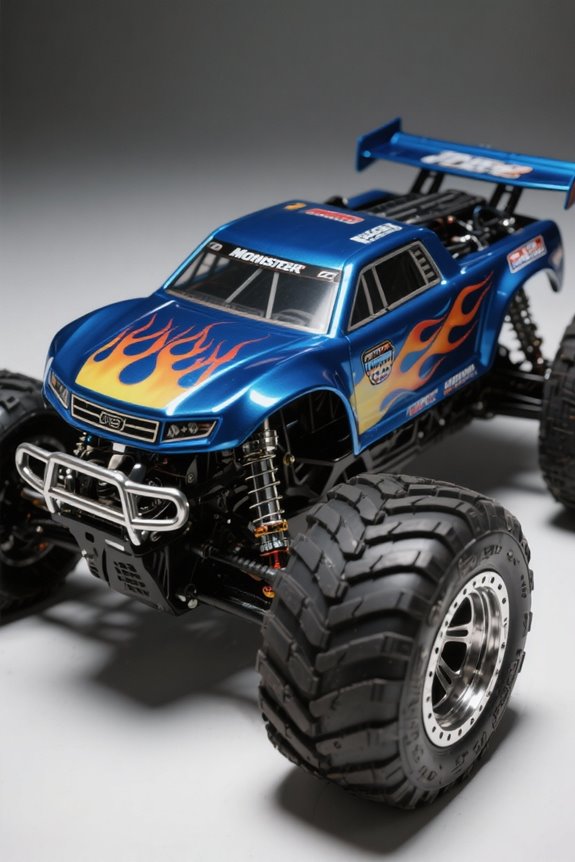
When we consider the Overview of RC Vehicle Customization Costs, it’s important to recognize that the investment can vary substantially based on several factors. Body Kits and Parts can range from $20 to $200, while Paint Jobs and Decals typically run between $50 to $150, influencing our overall budget. For Electronics and Power Systems, costs often start at $50, with high-performance components reaching $400 or more. Scale Impact is significant; smaller models average $100 to $300, whereas larger scales can demand up to $2,000. Incorporating Budgeting Strategies like cost formatting helps us track expenses effectively. By knowing these specifics, we can make informed decisions, maximizing our RC vehicle customization without overspending. Additionally, considering the importance of high-performance motors can enhance your vehicle’s speed and control, which may also affect your budget and customization choices.
Typical Budget for Upgrades
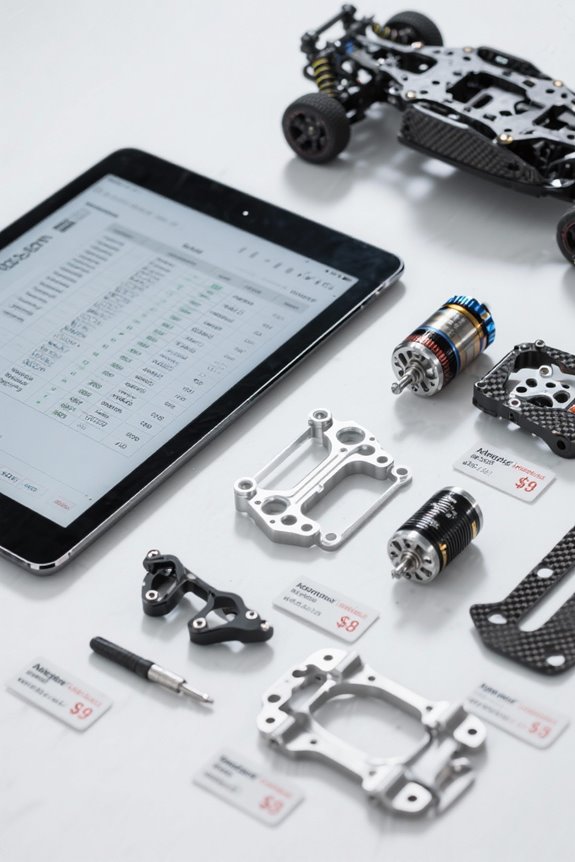
In evaluating the Typical Budget for Upgrades, we notice that costs can increase greatly beyond the vehicle’s initial price. Basic upgrades typically add $100 to $400, enhancing durability for general use. Our upgrade priorities include brushless motors and ESCs, priced between $150 and $300—these improve efficiency and torque markedly. For speed boosts, we recommend LiPo battery upgrades, costing $30 to $80, yielding 30-40% improvements. Following customization trends, we see advanced tuning parts often exceed $300, providing refined enhancements. Maintenance wear can add 30-40% over time, indicating the need for routine upkeep. By strategically targeting these areas, we can optimize our upgrades while staying within budget and maximizing performance. Additionally, focusing on brushless technology in your upgrades can significantly enhance your RC vehicle’s overall performance and longevity.
High-End Custom Builds and Pricing
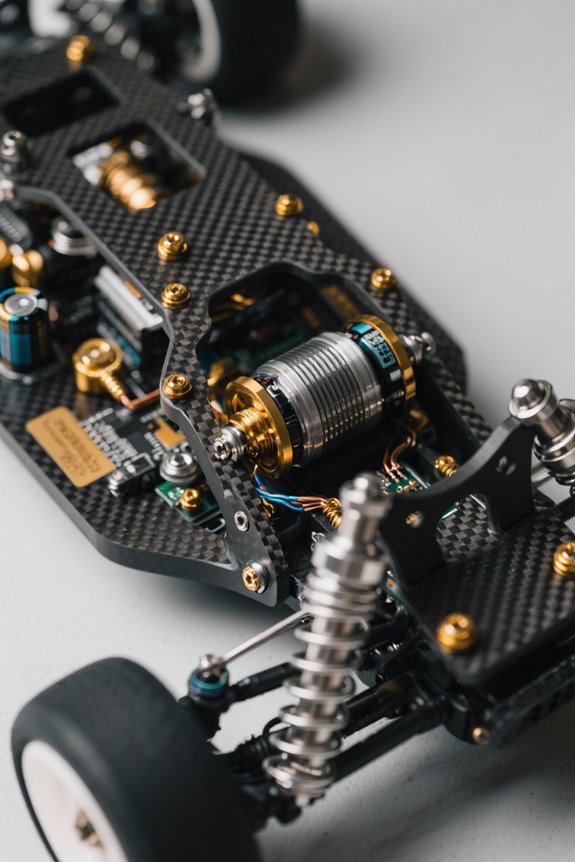
High-end custom builds for RC vehicles can require a substantial investment, with total costs often climbing to around $7,000 for ultra-realistic scale models. Specialized Components like miniature functional clutches and precise braking systems enhance realism, but they raise expenses quickly. Custom Bodywork involves meticulous cleaning, priming, and painting, making every vehicle unique, yet it considerably elevates costs. Precision Assembly mirrors professional car restoration, ensuring each custom build operates flawlessly while extending build time. Premium Model Features, such as customized chassis and advanced electronic systems, also contribute to elevated pricing. By gathering insights from experienced custom builders, we can better understand the importance of these features for achieving exceptional performance and aesthetics in our RC vehicles. Additionally, opting for models with high-strength alloys can significantly enhance the durability and longevity of your custom build.
Breakdown of Major Cost Components
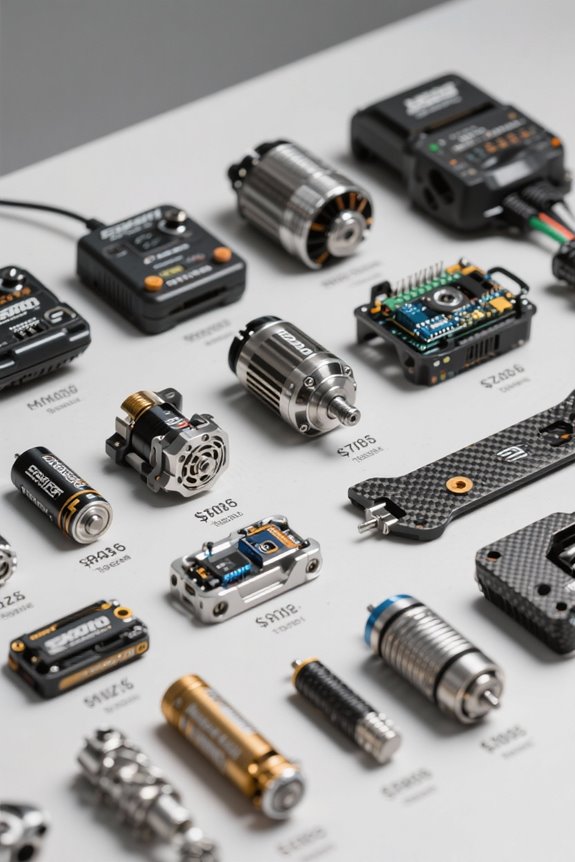
Understanding the major cost components of RC vehicle customization is essential for anyone looking to enhance their model. Paint and Body Customization Costs can greatly influence the overall budget, with custom paint jobs ranging from $50 to over $500, based on complexity and paint quality. For those seeking budget-friendly options, vinyl wraps and decals typically cost between $20 and $150. If you’re interested in detailed designs, airbrushing can add anywhere from $100 to $400 or more. When considering DIY customization tips, body shell replacements or custom kits range from $30 to $200. Additional materials, like primer and clear coats, generally cost between $20 and $60. This breakdown helps us plan effectively for our RC vehicle transformations. Moreover, investing in durable materials enhances the longevity of the customizations and protects your investment over time.
Chassis and Drivetrain Upgrades
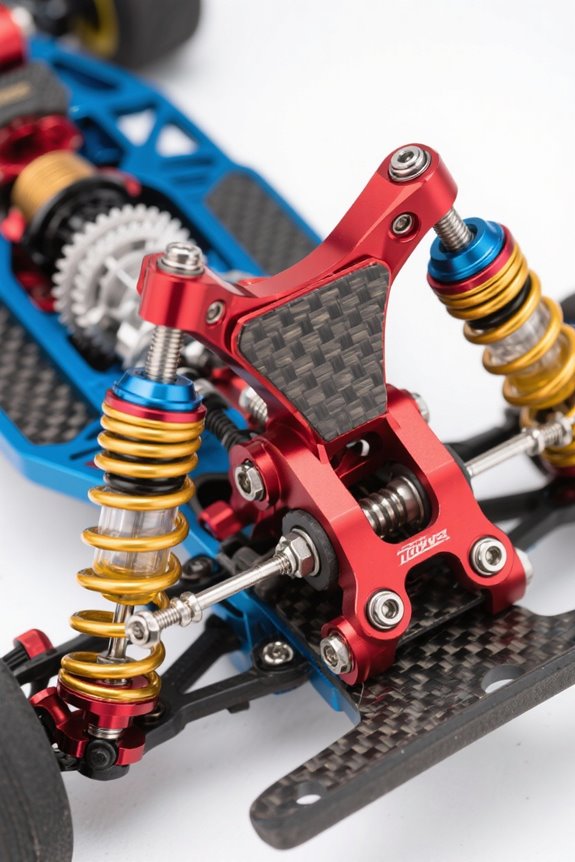
Chassis and drivetrain upgrades serve as the backbone of enhancing our RC vehicles, considerably improving performance and durability. Chassis Material and Frame Upgrades offer options like carbon fiber chassis kits, typically priced from $25 to $140 for lightweight, robust designs suitable for 1/10 scale models. We can also explore nylon and composite parts, ranging from $20 to $40, providing budget-friendly alternatives. Drivetrain Enhancements include metal axle upgrades priced at $20 to $55, boosting strength. Driveshaft parts commonly range from $10 to $30, and you may find portal axles costing $30 to $150 for increased ground clearance. Overall, these upgrades enhance handling, durability, and off-road capability, ensuring our vehicles perform at their best on any terrain. Furthermore, investing in high-quality upgrades can significantly improve the overall performance of your vehicle, especially in demanding off-road conditions.
Body Kits and Custom Paint Jobs
Body Kits Overview play an essential role in enhancing the aesthetics and performance of our RC vehicles. When we explore body material choices, we typically find options ranging from affordable ABS kits priced between $28 and $42, to lighter and more durable polycarbonate bodies starting around $35. For those looking to elevate their design, custom paint jobs can cost between $100 and $400+, depending on our chosen complexity and details. Custom design techniques also influence price; intricate artwork or multiple colors add to overall costs. If we opt for clear, unpainted bodies, those can be more economical but will require additional investment for paint and decals. Ultimately, our selected materials and designs directly impact both appearance and performance. Additionally, the choice of high-capacity Traxxas 4-cell LiPo batteries can significantly enhance the overall performance of an RC vehicle, making it worthwhile to consider upgrades alongside body modifications.
Suspension and Tires Improvements
When we think about enhancing our RC vehicles, suspension and tire improvements are essential components that notably affect handling and ride quality. Suspension types range from budget-friendly shock absorbers priced around $10, to premium designs at $95 for full sets. Upgrading items like aluminum shock mounts, at $10 to $20 each, enhances durability. Tire compounds also notably impact performance; starting at $10 per set for basic options, specialized tires can exceed $50 for exceptional grip. Adding aluminum wheels at $15 to $30 improves strength, while wheel weights around $7 boost stability. Overall, a realistic budget for these enhancements should range from $100 to $200, considering individual part costs and installation, leading to improved driving experiences. Additionally, choosing the right tire features can significantly influence overall RC performance.
Electronics and Upgrading Systems
Electronic Speed Controllers (ESCs) are essential, costing between $130 to $200, depending on features like waterproofing and programmability. Transmitters and receivers, ranging from $50 to $200, provide essential signal clarity for precise control. For ideal electronics integration, we should consider digital servos for steering upgrades, priced around $70 to $140, to improve responsiveness. Careful upgrade planning on these elements guarantees improved performance and lifespan for our vehicles. Additionally, investing in waterproof electronics enhances durability and ensures reliable operation in challenging weather conditions.
Additional Accessories and Their Costs
The performance of our RC vehicles can considerably improve with the right additional accessories, enhancing both functionality and aesthetics.
LED Lighting: Quality LED kits range from $15 to $50, providing enhanced visibility for night races. They include necessary installation hardware, making setup easier.
Camera Mounts: Small HD cameras cost between $30 and $150, allowing for driver’s-eye perspectives. Additional mounting hardware may add $10–$30.
Sound Systems: Kits costing $20–$80 simulate engine noises, increasing realism. Some require integration with the vehicle’s power source.
Custom Decals: Personalization through decals ranges from $5 to $30, making our vehicles unique.
In addition, considering the compatibility of these accessories with multi-terrain tires is essential for maximizing performance in various conditions. Each of these accessories not only upgrades our vehicle’s performance but also enriches our overall driving experience, enhancing both utility and enjoyment.
Entry-Level vs. High-End Customization
In the world of RC vehicle customization, understanding the difference between entry-level and high-end tiers is essential for making informed decisions. Entry-Level Customization typically starts with RTR (Ready-to-Run) 1/18 scale RC cars priced between $50 and $150, offering an affordable way to enhance performance. With entry-level benefits like basic motor options and simple battery types, we can achieve durability improvements and basic performance enhancements for around $150 to $300. Conversely, High-End Customization, requiring a budget exceeding $1,000, features advanced chassis materials, high-performance motors, and premium servos. These custom styles demand precise tuning methods and significant upgrade processes, ensuring competitive performance. Understanding these distinctions allows us to tailor our budget and customization strategy effectively. Additionally, the use of high-performance motors in high-end customizations can significantly elevate speed and torque, offering enhanced driving experiences.
Maintenance and Replacement Expenses
Maintaining RC vehicles isn’t just about occasional care—it’s a continuous investment. Routine Maintenance Costs include tasks like cleaning and inspecting components, helping us prevent premature wear and extend vehicle life considerably. Understanding Maintenance Frequency is essential; replacing batteries for electric models typically happens every 1 to 2 years. We should consider Replacement Parts like tires, suspension components, and electric motors that may need replacing due to wear indicators and common failures. By setting a Repair Budget, we can allocate 20-50% of the initial purchase price annually for maintenance and repairs. Establishing Maintenance Schedules lets us track servicing needs efficiently, ensuring performance longevity and minimizing unexpected expenses due to ignored service intervals. Let’s embrace these cost-saving tips for more enjoyable racing experiences.
Shipping and Labor Costs
Regarding Labor Costs, they depend on customization complexity, averaging $20 to $75 per hour. More intricate tasks like custom paint jobs can considerably inflate expenses. It’s essential to account for potential delays in shipping, as they could impact labor scheduling, further affecting overall costs. By understanding these factors, we can effectively allocate our budget for a smooth customization project.
Tools and Consumables Budgeting
Tools and Consumables Budgeting is crucial for achieving successful RC vehicle customization, as the right equipment simplifies the process and enhances our results. Important tools, such as multi-function screwdriver sets, range from $15 to $30 and typically include 20 or more bits to accommodate various screw types. Specialty hex wrenches and Torx screwdrivers, priced between $2 and $10, are key for disassembling components efficiently. Furthermore, precision hobby screwdriver sets cost $8 to $15, perfect for delicate tasks. Investing in motor gear removal tools, about $8 to $20, guarantees easier modifications. Additionally, important consumables, like replacement screws and bulk kits, usually range from $17 to $26, helping us maintain our vehicles effectively over time.
Frequently Asked Questions
What Are the Benefits of Custom Painting an RC Vehicle?
Custom painting an RC vehicle lets us create a unique design that truly reflects our style. It enhances aesthetic appeal, making our vehicles stand out and fostering a sense of community with fellow enthusiasts.
How Can I Determine My RC Customization Goals?
To determine our RC customization goals, we should identify desired performance upgrades and aesthetic modifications that reflect our style. Let’s focus on what excites us most, balancing functionality with unique visuals for our vehicles.
Are There Financing Options for Expensive Custom Builds?
Absolutely, we can explore custom build financing for those extravagant upgrades! From layaway plans to peer-to-peer lending, countless options await us, making it easier to turn our grand customization dreams into reality together.
What Brands Offer the Best Upgrades for RC Cars?
When it comes to brands offering the best upgrades for RC cars, we appreciate Traxxas and Arrma for their strong aftermarket parts and brand reputation. Their community support helps us enhance our vehicles effortlessly together.
How Often Should I Perform Maintenance on My RC Vehicle?
We should perform maintenance regularly, ideally after every run or race. Creating a maintenance schedule and sticking to an upkeep checklist helps maintain our RC vehicles’ performance, ensuring they’re always ready for action and fun together.