As an Amazon Associate, we earn from qualifying purchases. Some links on this site are affiliate links at no extra cost to you. Our recommendations are based on thorough research and editorial judgment.

How To Optimize RC Vehicle Suspension Settings?

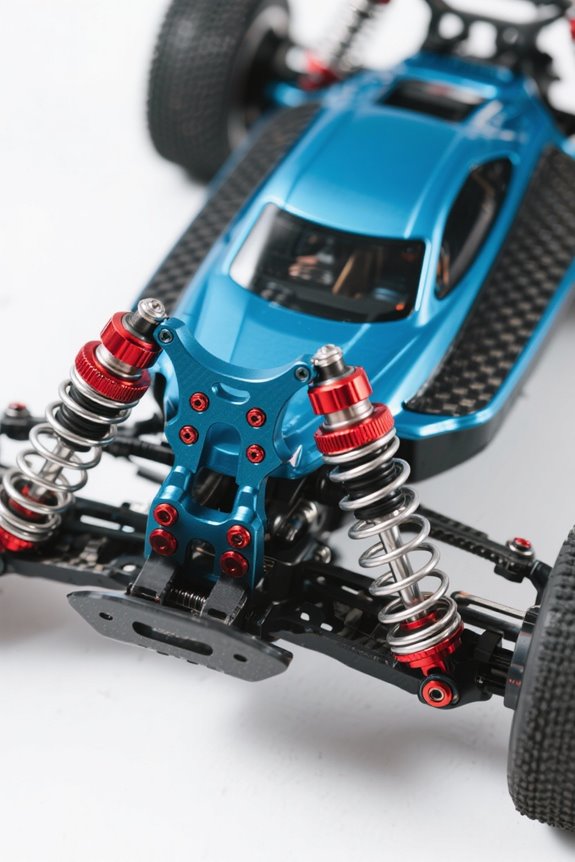
To optimize RC vehicle suspension settings, we should focus on suspension geometry adjustments for better handling balance, ensuring ideal roll center and Panhard alignment. Next, shock oil, springs, and piston tuning must match to refine performance across surfaces. We then adjust ride height and droop settings for maintaining traction, followed by precise camber and toe angle settings to maximize tire grip. Finally, implementing proper lubrication and maintenance keeps suspension components functioning efficiently, ensuring longevity and performance consistency. More insights await.
Key Takeaways
- Adjust roll center and Panhard geometry to ensure balanced handling and prevent unwanted axle shift for optimal traction and stability.
- Tune shock oil viscosity, spring characteristics, and piston design together to improve overall vehicle handling across different surfaces.
- Maintain precise ride height and droop settings to enhance balance and stability, ensuring left and right sides match for consistent performance.
- Set camber and toe angles accurately to maximize tire contact, grip, and stability, tailoring adjustments to your specific driving style.
- Regularly lubricate pivot points and clean suspension components to prevent wear, ensuring smooth operation and extended suspension lifespan.
Suspension Geometry Adjustments
When we consider Suspension Geometry Adjustments, it’s essential to understand how each element interacts for peak performance. Roll Center Adjustments, for instance, involve positioning the roll center near the vehicle’s center of gravity, promoting balanced handling. By raising the roll center, we reduce chassis roll, leading to more predictable handling and less body lean, which is especially useful in high-stability scenarios, like rock crawling. In addition, Panhard Geometry plays a significant role in axle centering; ensuring the axle remains beneath the chassis at ride height prevents unwanted axle shift during articulation. Misalignment here can lead to handling issues, negatively affecting traction and stability. Thus, achieving ideal roll center alignment and refining Panhard Geometry enhances overall vehicle performance dramatically. Furthermore, considering high torque ratings allows for better load management during steep climbs, which can greatly benefit the vehicle’s suspension performance.
Shock Oil, Springs, and Pistons Tuning

Piston Design must also match our oil selection, as piston holes regulate oil flow. Properly tuning shock oil characteristics, springs, and pistons collectively guarantees peak compression and rebound, refining our handling and overall performance on various surfaces. Additionally, understanding tire performance factors can significantly enhance overall vehicle stability and grip during dynamic driving conditions.
Ride Height and Droop Settings
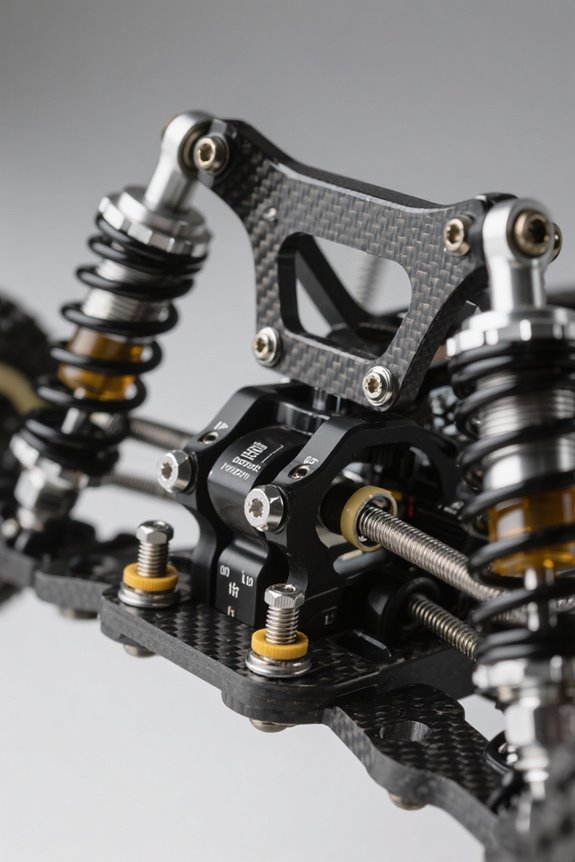
Ride Height is crucial for optimizing RC vehicle performance, as it directly influences handling characteristics. We should always measure Ride Height from the chassis to the ground; using a ride height gauge or ruler guarantees precision. A common ride height adjustment involves changing shock preload to maintain similar levels for front and rear, enhancing balance. Droop Measurement tells us how much suspension can extend downwards before losing contact with the ground. Accurate Droop Measurement is important, often done with dedicated gauges when the wheels are off the ground. Balancing droop is essential too; left and right must match to maintain stability. By carefully setting ride height and droop, we can greatly improve handling and traction on different track surfaces. Additionally, understanding battery life and charging can impact overall performance and playtime efficiency when using RC vehicles in various environments.
Camber and Toe Angle Settings
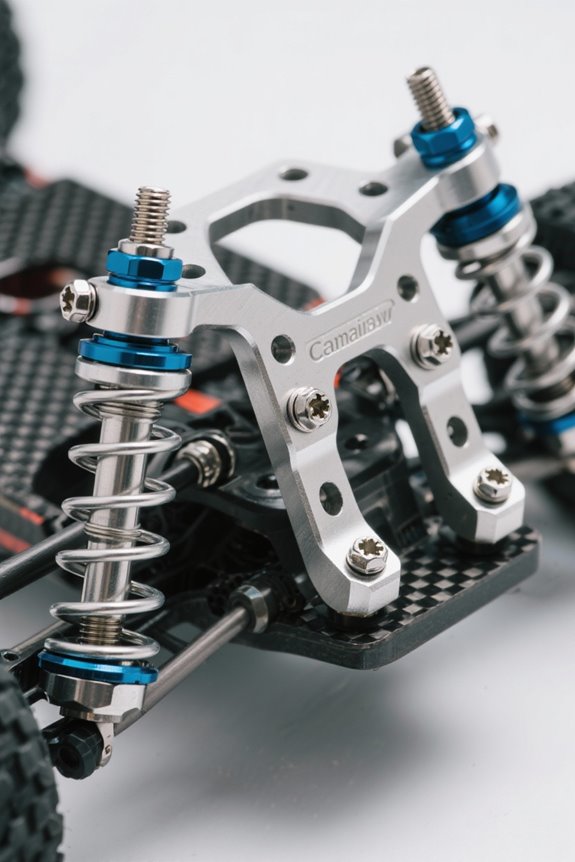
Toe Angle indicates whether tires point inward (toe-in) or outward (toe-out). Generally, we adjust front toe between 1° to 2° for stability or use toe-out for better responsiveness. Keeping adjustments symmetrical guarantees balanced handling, essential for enhancing performance on the track. Additionally, considering shock absorption can further improve your vehicle’s handling characteristics and overall performance.
Lubrication and Suspension Maintenance
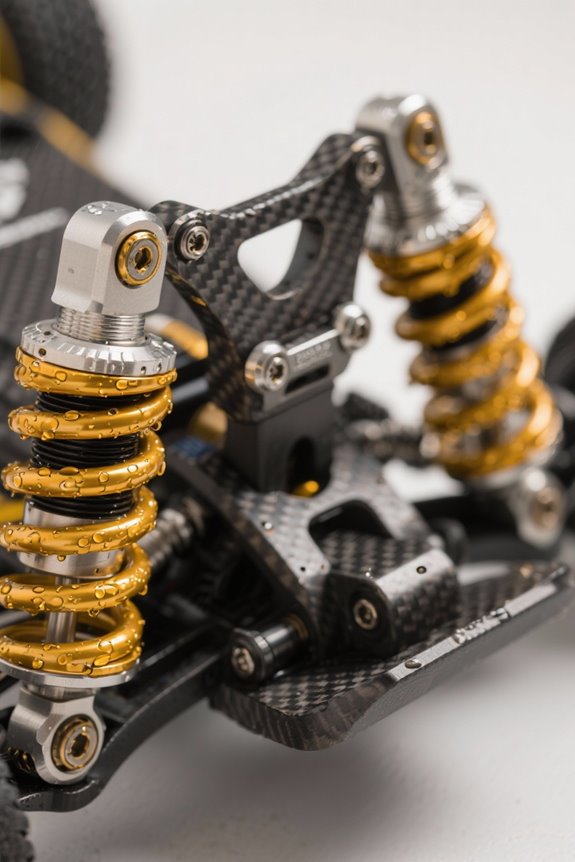
When we talk about Lubrication and Suspension Maintenance, it’s essential to understand that proper upkeep can markedly enhance our RC vehicle’s performance. We should utilize lubrication techniques like applying light oils or silicone lubricants specifically designed for RC vehicles, ensuring we reduce friction without attracting excessive dirt. Focusing on key contact points, such as pivot bearings and linkages, enables smoother operation. Regularly cleaning suspension parts using brushes or compressed air is crucial, and we should inspect shock shafts for dirt buildup. Following maintenance intervals, we can safely fill shocks with the correct weight silicone oil, ensuring consistency. Finally, checking seals for wear and lubricating pivot points helps maintain the system’s longevity and effectiveness. Incorporating high-grade aluminum components in the suspension upgrade process can further enhance durability and performance.
Testing and Fine-Tuning Process
Iterative Testing: Post-adjustments, short test runs on varied terrains help us refine settings, guaranteeing balanced responsiveness and better handling. Emphasizing data analysis verifies our updates lead to tangible improvements in performance. Incorporating torsion bar systems into your setup can enhance stability and traction during these tests.
Frequently Asked Questions
How Often Should I Replace My Suspension Components?
We should replace suspension components regularly, typically every few months, especially if we notice signs of suspension wear. Keeping a consistent replacement interval helps maintain performance and guarantees our vehicles remain safe and responsive.
What Tools Do I Need for Suspension Tuning?
When we plunge into the world of suspension tuning, gathering our trusty tuning tools is essential. Hex drivers, pliers, and gauges become our allies, ensuring we refine every detail for an ultimate driving experience together.
Can Weather Conditions Affect Suspension Performance?
Absolutely, weather conditions considerably influence our suspension performance. We’ve noticed that adjusting suspension stiffness according to terrain variations helps maintain control and responsiveness, ensuring our vehicles handle ideally through both wet and dry conditions.
Do Heavier Drivers Need Different Suspension Settings?
Yes, heavier drivers definitely need different suspension settings. We must consider weight distribution and make precise damping adjustments to guarantee our vehicles handle well, maintain stability, and keep us connected to the track, no matter the terrain.
How Can Tire Choice Impact Suspension Tuning?
Tire choice greatly impacts suspension tuning. We find that tire compounds affect grip levels, while tread patterns must match surfaces. Together, they dictate our adjustments to optimize performance and enhance our driving experience.


