As an Amazon Associate, we earn from qualifying purchases. Some links on this site are affiliate links at no extra cost to you. Our recommendations are based on thorough research and editorial judgment.


What Gear Ratios Improve RC Vehicle Performance?

Gear Ratios in RC vehicles considerably affect performance. We recommend using higher ratios for improved torque, which enhances acceleration, especially in off-road conditions. For speed optimization, lower Gear Ratios are ideal, particularly on longer tracks. Temperature Management is essential; precise adjustments can prevent motor overheating. Additionally, pairing 48-pitch gears for rough terrains with 64-pitch for smoother surfaces facilitates greater efficiency. Exploring compatibility and ensuring proper gear meshing are crucial for longevity. Let’s explore more adjustments to enhance your setup.
Key Takeaways
- Higher gear ratios enhance torque for improved acceleration, beneficial for rough terrains and off-the-line performance.
- Lower numerical gear ratios elevate top speed, ideal for long straights but may compromise acceleration.
- Adjust gear ratios based on tire size and track length to optimize handling and performance for varying conditions.
- Regularly monitor motor temperature to prevent overheating; effective gear management is crucial for sustained efficiency.
- Ensure proper gear meshing to prevent wear and prevent performance issues; compatibility between gear standards is essential.
Understanding Gear Ratios in RC Vehicles
Definition and Calculation of Gear Ratios**: While understanding gear ratios is essential for enhancing our RC vehicle performance, it begins with a clear definition. The gear ratio represents the number of rotations our motor’s pinion gear makes to rotate the spur gear once. Commonly expressed as X:Y or in decimal form, for example, 3.12:1 means the pinion rotates 3.12 times for every spur rotation. We calculate the gear ratio by dividing the spur gear tooth count by the pinion gear tooth count (spur ÷ pinion). In gear ratio terminology, higher ratios yield more torque but less top speed, while lower ratios improve speed but reduce torque. Selecting the right gears involves balancing these factors, ensuring ideal gear selection strategies for varied driving conditions. A well-maintained weight distribution** ensures better handling and performance during off-road adventures.
The Relationship Between Speed and Acceleration

Speed and Acceleration Dynamics: Understanding how speed and acceleration relate in RC vehicles is essential for optimizing performance. The inverse relationship between these two factors illustrates key acceleration trade-offs. A lower numerical gear ratio allows for higher top speeds but sacrifices acceleration, while a higher ratio enhances off-the-line acceleration but limits maximum speed. We can experiment with spur and pinion gear combinations to tune our vehicles. For example, larger spur gears and appropriate pinion sizes provide quicker launches in drag racing scenarios, improving responsiveness. Meanwhile, adjusting gear ratios should consider tire size and track length, ensuring effective speed optimization. Additionally, the advantages of brushless technology in RC vehicles help in achieving improved speed and torque, further enhancing overall performance. Ultimately, balancing these parameters enables us to maximize performance while maintaining motor efficiency and avoiding overheating.
Managing Motor Temperature and Efficiency
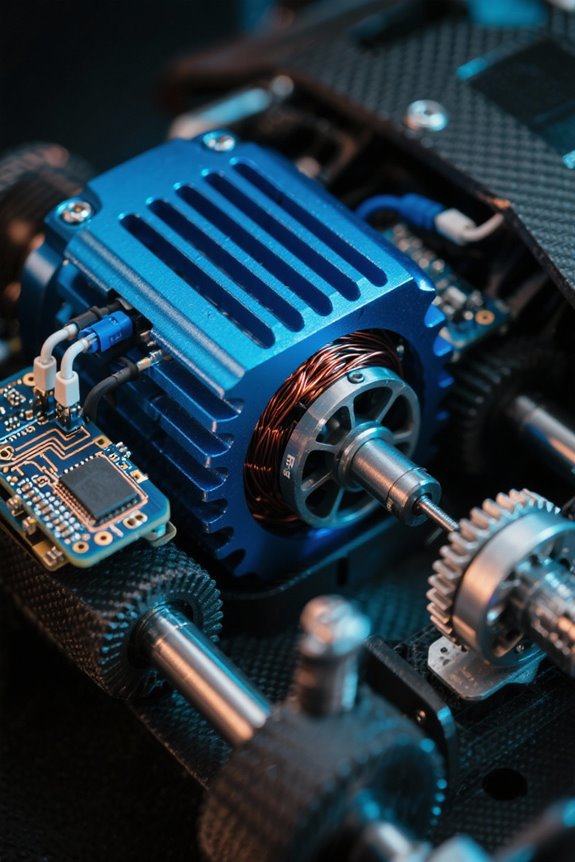
Regular Adjustments based on track conditions and vehicle performance help us strike the right balance, ensuring our motors and ESCs operate safely and efficiently. This can be particularly important when factoring in high-capacity Traxxas 4-cell LiPo batteries, as they significantly influence both speed and overall vehicle efficiency.
Adapting Gear Ratios for Different Track Types
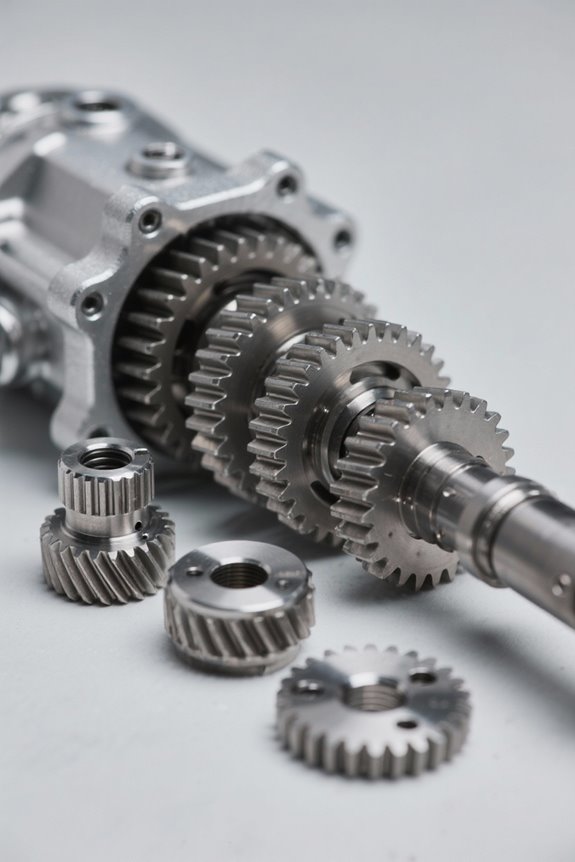
When adapting gear ratios for different track types, it’s essential to understand how specific setups impact performance. Track Type Considerations: For tracks with long straights, taller gear ratios—lower numerical final drive ratios—increase top speed. Conversely, tight, technical tracks benefit from lower gear ratios, improving acceleration and torque for sharp corners. Surface Adaptation: On low grip surfaces, like wet or icy terrain, higher gear ratios enhance traction, while high-rpm setups might cause wheelspin. Gear Pitch and Durability: Off-road applications favor 48-pitch gears for toughness, while on-road setups utilize 64-pitch gears for smooth operation. By making these gear ratio adjustments and adapting to track conditions, we can optimize performance and enhance our overall driving experience. Additionally, understanding practical customization options allows users to tailor their setups for improved speed and endurance.
The Impact of Gear Ratios on Braking Performance
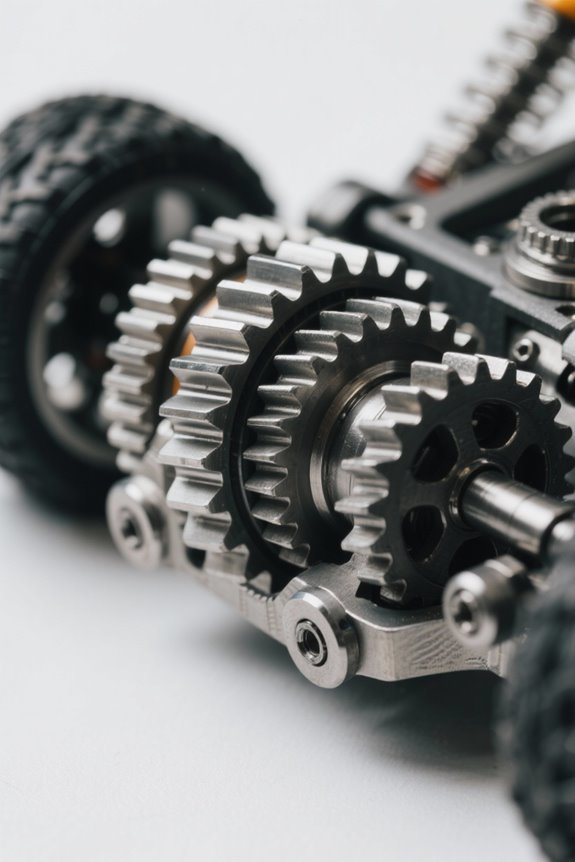
Influence of Gear Ratios on Braking Efficiency**: Understanding how gear ratios affect braking performance is essential for optimizing our RC vehicle setups. Higher numerical gear ratios enhance braking force by increasing torque, allowing the motor to resist wheel rotation effectively. This leads to improved braking stability, reducing the risk of wheel lockup. Adjusting gear ratios also impacts regenerative braking; too low a ratio can diminish its efficiency, negatively affecting overall control. Additionally, higher gear efficiency during deceleration increases motor drag torque, which supports better braking performance. Fine-tuning our gear ratios helps balance these factors, ensuring smoother shifts between throttle and brake, ultimately providing enhanced driving experiences through consistent braking response and control across various track conditions. Notably, battery life and efficiency** can also play a critical role in maintaining optimal performance during intense braking scenarios.
Fine-Tuning for Torque and Speed Balance
Finding the right balance between torque and speed is essential for optimizing our RC vehicle’s performance. Gear Ratio Adjustments directly influence how our vehicle accelerates and reaches top speeds. By employing effective gear selection strategies, we can target our vehicle’s needs. Increasing pinion size raises speed but may lead to overheating. Alternatively, adjusting to a larger spur gear enhances acceleration and torque, vital for climbing or rough terrains. Understanding torque optimization techniques helps us fine-tune our gear ratios for specific conditions. Consequently, whether we’re racing on smooth tracks or tackling steep hills, finding that ideal gear ratio allows for responsive control and maximized efficiency, ensuring we make the most of our setup while keeping performance in check. Additionally, some RC vehicles are designed with realistic design features that complement gear adjustments, providing an enriched experience during operation.
Practical Tips for Gear Ratio Optimization
To optimize gear ratios effectively, we should start by adhering to Manufacturer Recommendations, which provide a foundational guideline tailored to our specific RC vehicle model. Incremental Adjustments are essential; we can change pinion gear teeth by 1–2 based on terrain demands, ensuring better torque or speed. Tool Preparedness is critical; having hex drivers and various pinion gears ready helps us make quick gear swaps. Utilizing Temperature Monitoring keeps an eye on motor and ESC heat levels, preventing overheating during trials. Finally, Terrain Adaptation is essential; lower ratios work best on rough surfaces, while higher ratios maximize speed on smooth tracks. These practical tips enhance our vehicle’s performance through effective gear ratio innovations and tuning techniques. Additionally, remember that the performance benchmarks of different RC trucks can guide your gear ratio adjustments based on speed and handling characteristics.
The Role of Final Drive Ratio (FDR)
Understanding the Final Drive Ratio (FDR) is key to enhancing our RC vehicle’s performance. FDR is calculated by multiplying the primary gear ratio—spur teeth divided by pinion teeth—by the internal transmission ratio unique to our model. This ratio tells us how many times the pinion rotates per wheel revolution, impacting acceleration and top speed dramatically. A higher FDR increases torque and acceleration while sacrificing some top speed, making our vehicle responsive out of corners. Conversely, a lower FDR favors speed but reduces torque. We must also consider gear sizing, as larger pinions decrease FDR, optimizing for top speed, while smaller ones increase FDR, prioritizing torque for better traction and control during races. Additionally, ensuring compatibility with high-quality materials can further enhance performance and durability.
Monitoring Temperature During Gear Adjustments
We recommend measuring temperatures at multiple points on the motor and ESC immediately after runs to capture maximum operating heat. Using an infrared temperature gun or dedicated RC temperature tools, we can effectively track trends through consistent checks after every five runs or after gear changes. Adopting these guidelines guarantees we maintain a balance between speed and safety, keeping our components within the manufacturer-recommended temperature thresholds for peak performance. Additionally, understanding the importance of battery life can help optimize performance during extended play sessions.
Customizing for Driving Conditions
Customizing gear ratios for specific driving conditions can greatly enhance performance and control. Adjusting Gear Ratios for Terrain Types involves selecting lower gear ratios, such as a smaller pinion paired with a larger spur, to improve torque for rough and steep surfaces. This provides essential terrain adaptability, allowing us to navigate challenging environments with precision. Conversely, higher gear ratios, featuring a larger pinion and smaller spur, favor speed on smooth, flat surfaces. For technical courses, we benefit from shorter gearing for superior acceleration out of corners, while long straights require taller gearing for maximum velocity. By aligning gear ratios with our driving preferences and the specific environmental conditions, we can effectively optimize our vehicle’s performance and responsiveness. Additionally, the durability of components like upgraded gearboxes and metal tracks can significantly affect how well the tank performs under varying conditions.
Common Mistakes to Avoid When Adjusting Gear Ratios
When adjusting gear ratios, avoiding common mistakes can greatly enhance your vehicle’s performance. Incorrect Gear Mesh Settings often result from setting the meshing too tight or too loose, leading to serious issues. A tight mesh can bind gears, generating excess heat and causing premature wear. Loose mesh results in backlash, which weakens gears and increases noise. Mixing Gear Standards is another pitfall; using imperial and metric components can lead to poor meshing and gear stripping. Neglecting Gear Fastener Tightening can cause shifts during operation, risking alignment. Finally, Overlooking Gear Ratio Limits can overheat motors and void warranties. By ensuring proper gear mesh, adhering to gear standards, and regularly inspecting fasteners, we can optimize our vehicles for durable performance.
Frequently Asked Questions
How Do I Determine the Ideal Gear Ratio for My RC Vehicle?
To determine the ideal gear ratio for our RC vehicles, we should consider factors like motor specs, tire size, and terrain. By experimenting with gear selections, we can achieve peak performance tuning for our unique setups.
Can Adding Weight Affect My Desired Gear Ratio Optimization?
When it comes to gear ratios, we’ve all got to remember that adding weight can tip the scales in performance balance. By considering weight distribution, we can optimize our vehicle for better overall performance—no doubt about it!
What Tools Help in Calculating Gear Ratios Accurately?
We’ve found that using gear ratio calculators makes our performance analysis much easier. They help us precisely tune our setups, ensuring we get the most out of our RC vehicles and enjoy our time together racing.
How Often Should I Change Gear Ratios for Maintenance?
We should change our gear ratios regularly based on gear ratio trends and maintenance schedules, inspecting them every 5 to 10 hours. This keeps our vehicles performing smoothly and guarantees we enjoy our driving experiences together.
Are There Universal Gear Ratio Settings for Specific Vehicle Types?
There aren’t universal gear ratio settings for specific vehicle types. While we can follow general guidelines, each vehicle’s unique characteristics mean we should experiment to find the best ratios tailored to our preferences and performance goals.


