As an Amazon Associate, we earn from qualifying purchases. Some links on this site are affiliate links at no extra cost to you. Our recommendations are based on thorough research and editorial judgment.


What’s The Difference Between Hobby-Grade And Toy-Grade RC Vehicles?

Hobby-grade RC vehicles generally have a higher price range, starting from $150 and exceeding $1,000, ensuring durability and performance. They feature superior build quality using advanced materials, enhancing robustness and resilience. With customization options, they allow enthusiasts to tailor performance and design, unlike toy-grade models that offer limited personalization. They also provide modular repairability, ensuring easy part replacement. With a stronger community support system, hobby-grade models deliver long-term engagement. If you explore further, you’ll discover even more distinctions.
Key Takeaways
- Hobby-grade RC vehicles are built with high-quality materials for durability, while toy-grade models prioritize affordability and simplicity, often compromising quality.
- Hobby-grade models offer advanced features and customization options, whereas toy-grade vehicles are typically sealed units with limited personalization.
- Performance-wise, hobby-grade vehicles utilize faster brushless motors and better suspension systems, allowing for superior speed and terrain adaptability compared to toy-grade counterparts.
- Hobby-grade RCs target enthusiasts requiring maintenance skills and foster community support, while toy-grade models cater to casual users with minimal technical engagement.
- Maintenance for hobby-grade vehicles involves regular upkeep and part replacements, contrasting with toy-grade models that have basic construction and short lifespans.
Price and Cost Differences
When comparing Price and Cost Differences between hobby-grade and toy-grade RC vehicles, we notice significant variations that cater to different users. Hobby-grade RC vehicles typically start around $150 and can escalate to over $1,000, depending on performance features and component quality. These models offer durable components and upgradeability, making them a solid choice for enthusiasts. In contrast, toy-grade models are priced between $50 and $150, focusing on affordability and simplicity, ideal for beginners. While toy-grade vehicles have lower upfront costs, they often require frequent replacements, impacting long-term budget considerations. In the end, hobby-grade vehicles may yield better investment returns, as their longevity and performance justify their higher initial costs. Additionally, durable components found in hobby-grade vehicles often ensure superior performance and are designed for rigorous use in diverse terrains.
Build Quality and Materials
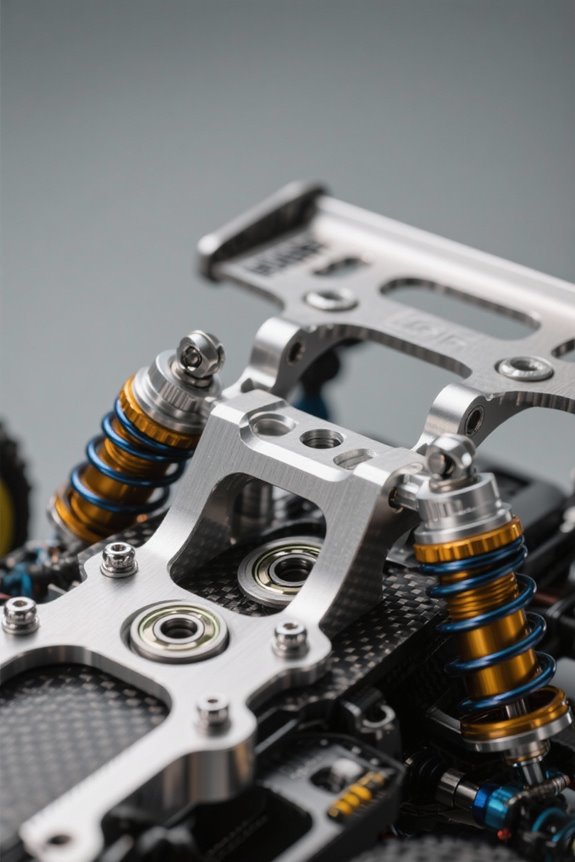
These material comparisons and assembly techniques underscore that hobby-grade vehicles are engineered for performance and resilience, making them a worthwhile investment for enthusiasts desiring a reliable and customizable experience. Additionally, the inclusion of advanced features like infrared combat systems in models such as the Heng Long M1A2 Abrams enhances the overall play experience and engagement for users.
Repairability and Parts Availability
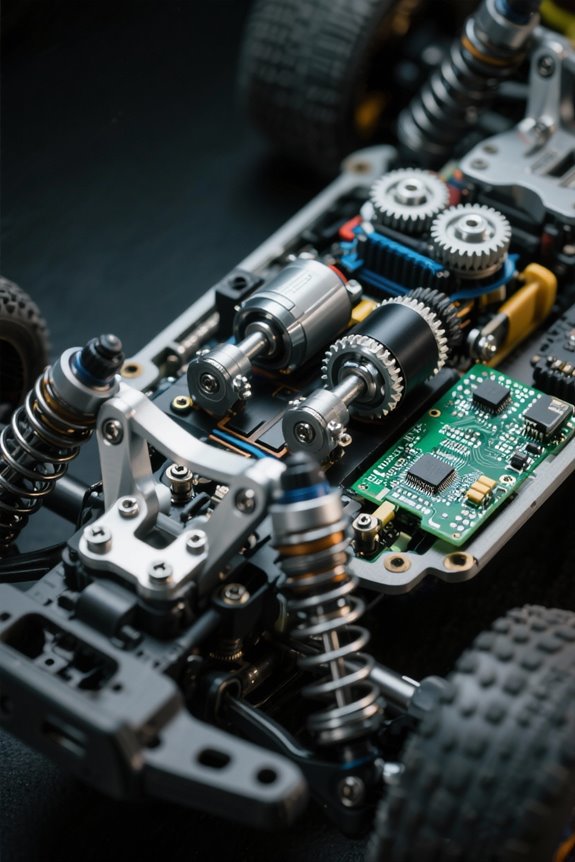
Understanding the Availability of Replacement Parts is essential for RC vehicle enthusiasts who prioritize long-term use and customization. Hobby-grade vehicles provide extensive options for repair techniques, as they feature modular designs that allow easy part replacement. We can source high-quality components, like motors and suspension parts, through specialized hobby shops and online retailers. In contrast, toy-grade models often lack spare parts availability, making repairs difficult or impractical. Their integrated designs hinder accessibility, requiring entire unit replacements when a single part fails. Consequently, hobby-grade enthusiasts not only enjoy the satisfaction of hands-on maintenance but also foster skills in parts sourcing and repairs. This emphasis on repairability enhances longevity and ultimately contributes to a more sustainable investment in our hobby. Moreover, utilizing high-quality materials during upgrades further supports the durability and performance of these vehicles.
Performance and Customization

In today’s competitive RC landscape, Performance and Customization are key factors that distinguish hobby-grade vehicles from toy-grade models. Motor Efficiency in hobby-grade RCs often features brushless motors, delivering higher speeds beyond 20 km/h, while toy-grade vehicles use brushed motors, limiting them to 15-20 km/h. Suspension Quality plays an important role; hobby-grade models boast adjustable systems, enabling fine-tuning for varied terrains, enhancing stability and cornering. Customization Options are abundant with modular parts available for upgrades in motors, tires, and electronics; this allows for significant performance enhancement. In contrast, toy-grade RCs come as sealed units, severely restricting personalization. Higher quality materials in hobby-grade models, like carbon fiber and aluminum, contribute to their durability and overall performance, fostering a sense of belonging in the RC community. Models often include splash-proof components that enhance their capability to perform in various weather conditions, making them suitable for adventure seekers.
Intended User and Usage
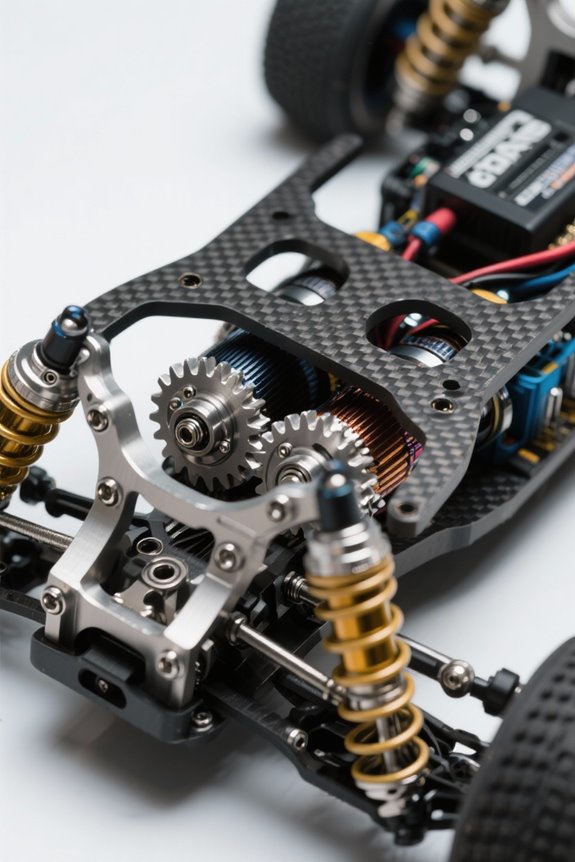
When evaluating Intended User and Usage, we can clearly identify distinct target groups for hobby-grade and toy-grade RC vehicles. Intended Users of hobby-grade RCs are often enthusiasts, including teens and adults, who prioritize durability and customization in their vehicles. These users appreciate advanced usage scenarios like competitive racing, off-road driving, or engaging in organized events, which require higher skill levels and maintenance knowledge. In contrast, toy-grade RCs cater primarily to beginners and children, focusing on straightforward operation and affordability. They’re perfect for casual, indoor play or on smooth surfaces without the need for repairs. Additionally, hobby-grade vehicles often feature durable aluminum alloy frames and powerful motors capable of achieving higher speeds, which satisfy the demands of serious hobbyists. Ultimately, the intended user preferences reveal a significant divide: hobby-grade enthusiasts seek long-term engagement, while toy-grade users enjoy immediate, uncomplicated fun.
Electronics and Standards
Battery Technology also varies greatly. Hobby-grade vehicles use high-capacity LiPo or NiMH packs for longer runtimes, while toy-grade options come with low-capacity batteries. This distinction impacts overall performance and user satisfaction in the long run. Additionally, the battery life of hobby-grade models is typically longer, allowing for extended play sessions without frequent recharging.
Target Audience Comparison
Age Relevance: Toy-grade RC vehicles target young children, focusing on simple controls and safety. In contrast, hobby-grade models cater to teenagers and adults, appealing to those with intermediate or advanced skills.
User Motivation: Casual users often choose toy-grade for immediate fun and ease, while hobby enthusiasts seek long-term engagement. Hobby-grade vehicles promote customization and performance upgrades, leading to sustained interest.
Skill Development: Parents may introduce toy-grade models for basic entertainment, but as children develop skills, they might shift to hobby-grade options to encourage technical aptitude and engagement in community events. Additionally, understanding the differences between brushless motors and brushed motors can significantly enhance the performance experience for hobby-grade users.
Durability and Longevity
Durability and longevity are essential considerations for anyone investing in RC vehicles, as they greatly impact performance and cost-effectiveness over time. Construction Materials and Part Quality are fundamental aspects, with hobby-grade models often utilizing aluminum, reinforced composites, and durable plastics designed to resist impact under various conditions. This durability comparison highlights that toy-grade RCs frequently use lighter plastics, resulting in quicker wear and breakage. Maintenance and Repairability also differ considerably; hobby-grade vehicles feature replaceable parts, allowing for long-term customization and repairs, whereas toy-grade vehicles often necessitate entire unit replacements. With proper care and routine maintenance, hobby-grade models can last for years, making longevity considerations a crucial part of our RC journey, ensuring we get the best value for our investment. Additionally, the presence of readily available parts for hobby-grade models underscores the importance of support in maintaining your vehicle over time.
Terrain Suitability
When it comes to selecting RC vehicles, understanding their terrain suitability is essential for ideal performance. Hobby-grade vehicles are designed for varied and challenging terrains, like dirt tracks and rocky paths. With medium to high ground clearance, typically ranging from 25-100mm, they can navigate obstacles effectively. Their knobby tires enhance traction on loose surfaces, while advanced suspension systems provide shock absorption on rough terrain. These models often feature 4WD or AWD systems for better control on slippery ground. In contrast, toy-grade vehicles are suitable for smooth, flat surfaces, lacking the durability and adaptability features for rough conditions, resulting in reduced efficiency and susceptibility to damage. Choosing wisely guarantees our RC experiences are enjoyable and rewarding across diverse terrains. Additionally, many Hobby-grade vehicles like those listed in recent reviews offer high-speed capabilities and improved handling for outdoor performance.
Maintenance and Upkeep
Maintenance Complexity is a crucial consideration for anyone serious about RC vehicles. When we engage in maintenance routines, hobby-grade models demand regular cleaning, lubrication, and thorough parts inspection. This detailed upkeep guarantees peak performance, especially for the drivetrain, suspension, and electronics, while toy-grade vehicles require minimal attention due to their basic construction and sealed components. Managing upkeep challenges, hobby-grade options feature modular parts, making replacements and upgrades feasible while providing access to a wide array of replacement parts. Conversely, toy-grade vehicles often need complete replacements if damaged, limiting longevity. This ongoing inspection and maintenance can considerably enhance our hobby-grade experience, assuring every powered lap remains thrilling and reliable. Additionally, battery life is often longer in hobby-grade models, enhancing the enjoyment of extended play sessions.
Community and Support Systems
Participating in local clubs offers hands-on experiences through meetups and races, strengthening support networks. Manufacturer events further build connections, promoting peer mentorship that benefits both novices and experienced users. In contrast, toy-grade RC vehicles lack robust community infrastructure, limiting engagement to brief interactions. The absence of organized support often results in a less satisfying user experience.
Learning Curve and User Experience
Learning Curve: The difference in user experience between toy-grade and hobby-grade RC vehicles greatly affects the Learning Curve for users.
Ease of Control: Toy-grade models offer simple on/off controls, making them accessible for beginners. In contrast, hobby-grade vehicles require users to develop advanced control over proportional steering and throttle, enhancing user skills.
Durability: Hobby-grade models are built with stronger components, encouraging experimentation with varied terrains. This Durability fosters a beneficial learning progression through frequent use.
Maintenance Knowledge: Hobby-grade vehicles necessitate regular upkeep, promoting hands-on technical understanding. In contrast, toy-grade models limit engagement, as users can’t easily repair or modify them.
Performance Feedback: Hobby-grade RCs provide nuanced feedback for skill refinement, allowing users to navigate complex maneuvers. This experience supports a richer, more engaging learning journey.
Upgradability Options
When it comes to upgradability options, hobby-grade RC vehicles offer significant advantages over toy-grade models. Modular Designs allow us to replace parts like motors, batteries, and tires, enhancing user experience and extending the vehicle’s lifespan. In contrast, toy-grade vehicles often mandate a complete replacement upon failure of a critical component. Performance Enhancements enable upgrades from brushed to brushless motors and higher-capacity batteries, directly addressing our upgrade motivation for greater speed and runtime. Additionally, Aesthetic Customization lets us personalize body shells and accessories, while Repairability guarantees long-term maintenance with readily available parts. Ultimately, these robust options foster a community where we can share knowledge and enthusiasm for improvement, making our RC journey far more rewarding.
Resale Value and Market Trends
As we consider the lifespan and upgradability of our RC vehicles, the topic of resale value and market trends becomes increasingly relevant. Hobby-grade vehicles typically maintain strong resale prospects, often recouping significant investments due to superior materials and longevity. Their build quality fosters market stability, resisting fluctuations that toy-grade models experience. Conversely, toy-grade vehicles depreciate rapidly, attracting limited adult interest and diminishing secondhand value. The aftermarket for hobby-grade RCs thrives, fueled by dedicated enthusiasts willing to pay for performance and customization. In summer and during holidays, we see seasonal bumps in demand, particularly for well-maintained hobby-grade models. Recognizing these market fluctuations can guide us in making financially sound decisions for our collections.
Frequently Asked Questions
Can Hobby-Grade RC Vehicles Be Used for Racing Competitions?
Absolutely, hobby-grade RC vehicles can be used for racing competitions! They meet racing regulations, featuring competition-ready components. We can customize and upgrade them, enhancing performance and making every race a thrilling experience together.
What Age Is Suitable for Toy-Grade RC Vehicles?
The suitable age for toy-grade RC vehicles typically starts at 3, emphasizing basic controls and durability. As we grow older, these vehicles evolve with more advanced features, making playtime engaging and fun for everyone.
How Do I Choose the Right Hobby-Grade RC Model?
When choosing our hobby-grade RC model, let’s consider budget considerations and performance expectations. Imagine the thrill of customizing our ride, racing across rough terrains, and bonding over repairs while creating unforgettable memories together.
Are There Safety Concerns With Toy-Grade RC Cars?
Yes, there are safety concerns with toy-grade RC cars. They often lack proper safety regulations, increasing injury risks like cuts or choking hazards. We should prioritize adult supervision and choose wisely to keep everyone safe.
Can I Modify a Toy-Grade RC Vehicle for Better Performance?
While we can explore some modification techniques on toy-grade RC vehicles, performance upgrades are often limited and inefficient. For significant enhancements, we recommend considering hobby-grade options that offer greater potential for customization and improvement together.


