As an Amazon Associate, we earn from qualifying purchases. Some links on this site are affiliate links at no extra cost to you. Our recommendations are based on thorough research and editorial judgment.


Are Electric Or Gas RC Vehicles Better For Beginners?

Ease of Use: Electric RC vehicles are ready-to-run and require minimal setup, making them accessible for beginners. Maintenance: They involve fewer moving parts and simpler battery checks, reducing hassle post-use. Cost: Priced from €150 to €400, electric models offer lower ongoing expenses compared to gas alternatives. Noise Levels: With their quiet operation, electric vehicles are suitable for residential areas. Consequently, for new operators, electric options are typically the better choice. Discover additional insights as we explore further.
Key Takeaways
- Electric RC vehicles are ready-to-run (RTR) with minimal setup, making them user-friendly for beginners.
- They offer smoother acceleration and instant torque, enhancing the excitement for new operators.
- Electric models require less maintenance, encouraging frequent use and reducing downtime for beginners.
- The lower upfront and ongoing costs of electric vehicles make them financially accessible for newcomers.
- Electric RC cars operate quietly, making them suitable for use in residential areas without disturbing neighbors.
Power and Performance Comparison
When comparing power and performance in RC vehicles, it’s essential to look at both gas and electric models closely. Power Output and Top Speed Comparison reveals that gas-powered RC vehicles typically achieve sustained top speeds of 40 to 60+ mph, driven by their engines, which usually range from 23 to 32cc 2-stroke specifications. Meanwhile, electric vehicles can reach 30 to over 70 mph, showcasing higher peak speeds in bursts. Torque Response differs, with gas providing consistent torque for varied terrains, while electric offers instantaneous torque for quick acceleration. Runtime Efficiency favors gas, maintaining performance over longer runs. Finally, Weight Distribution impacts handling, with gas models benefiting from a better power-to-weight ratio compared to heavier electric counterparts. Additionally, the advancements in brushless technology have allowed electric models to achieve enhanced speed and performance, making them increasingly competitive with gas models.
Ease of Use for New Operators
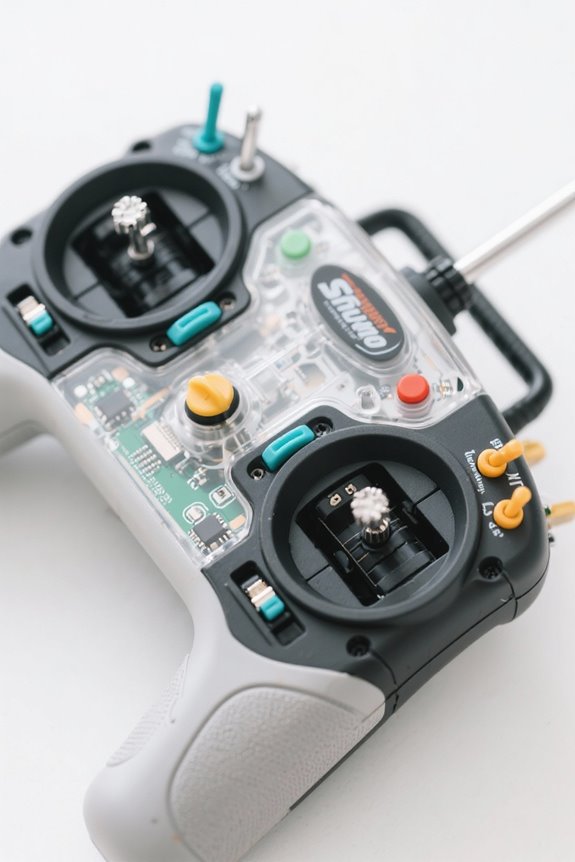
Simplicity of Operation plays a significant role in determining the ease of use for new operators in RC vehicles. Electric models come ready-to-run (RTR) with minimal setup, allowing us to dive right into our hobby. They feature beginner-friendly controls, providing straightforward throttle responses and electronic speed controls (ESC) for smooth acceleration. Gas vehicles, however, demand mechanical knowledge, starting with glow plugs and carburetor adjustments, which can be intimidating for newcomers. The user-friendly features of electric vehicles eliminate complex fuel management and detailed engine tuning, helping us focus on driving and enjoyment. With fewer moving parts, electric RC vehicles also require less maintenance, enabling us to spend more time racing and less time troubleshooting. Additionally, the high-speed performance of electric models contributes to the excitement for beginners seeking an engaging experience.
Maintenance and Reliability Differences
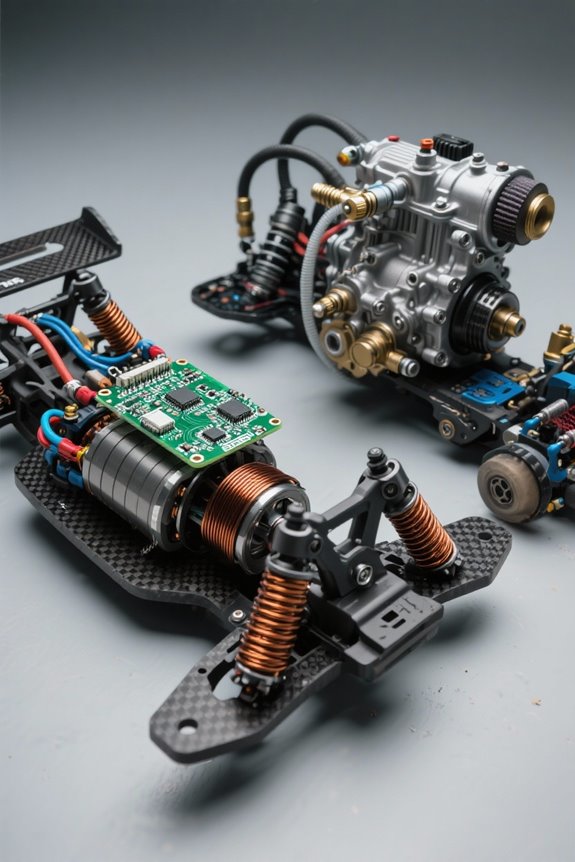
Additionally, post-run care is more extensive for gas models, involving draining fuel and checking for oil residue, while electric owners merely check battery status. With less hassle, electric RC cars encourage frequent use, enhancing the overall experience for beginners. Furthermore, understanding battery maintenance can help ensure that electric vehicles perform optimally and have a longer lifespan.
Cost Implications for Beginners
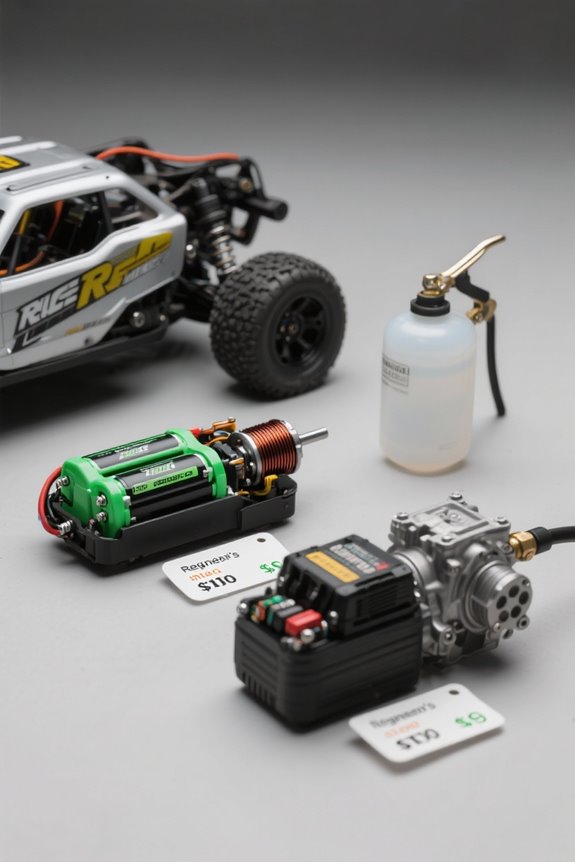
Understanding the Cost Implications for Beginners is essential, especially when considering the differences between electric and gas RC vehicles. Upfront Expenses: Electric RTR cars typically range from €150 to €400, including key components. Gas models often exceed electric costs due to complex engines. Long-Term Savings: While electric vehicles require initial battery investments, ongoing costs are lower, as electricity for charging is minimal. In contrast, gas vehicles incur continuous fuel costs and maintenance expenses, potentially surpassing electric expenses over time. Accessory Costs: Beginners need essential accessories for both types; however, electric RTR cars often come pre-equipped, reducing initial outlay. Additionally, electric models like the HYPER GO H16BM make good options for beginners due to their adjustable throttle limits and robust design. Ultimately, electric options provide a more budget-friendly entry point, aligning with the long-term interests of many newcomers to the hobby.
Environmental Impact and Noise Levels
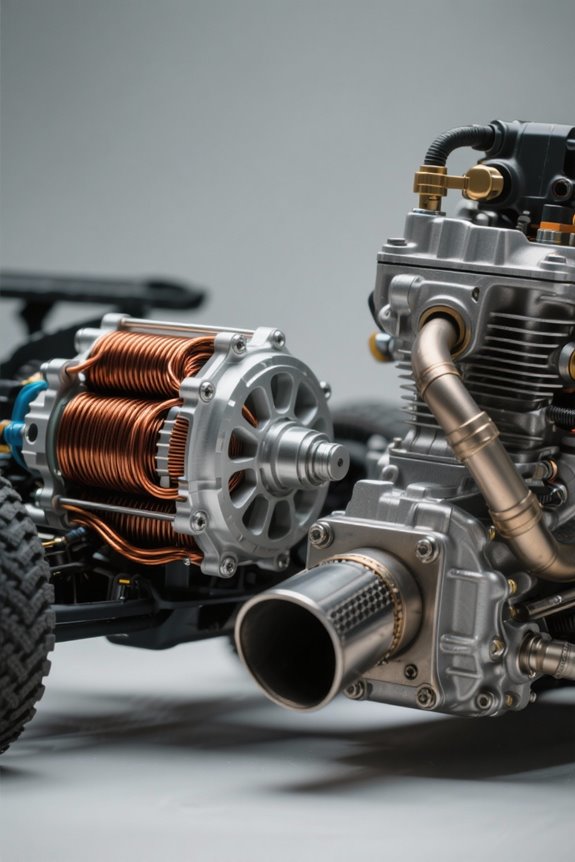
With regard to Noise Levels, gas RC vehicles are markedly louder due to internal combustion engines, creating noise pollution that can disturb both people and wildlife. Electric models function quietly, making them ideal for residential areas and promoting a more harmonious experience. By choosing electric, we embrace a quieter, cleaner hobby that respects our communities and the environment. Additionally, electric models often allow for more accessible performance customization options, providing beginners with a variety of choices to enhance their driving experience.
Frequently Asked Questions
What Are the Best Beginner RC Vehicle Brands?
Imagine sailing a ship; we find Tamiya, Traxxas, and Arrma as our sturdy vessels. Their beginner vehicle types stand out in brand quality comparisons, offering us reliable journeys through the thrilling world of RC adventures together.
How Long Do Electric and Gas RC Vehicles Typically Last?
Electric vehicles usually last 10 to 30 minutes per charge, while gas models run 10 to 60 minutes per tank. We should consider battery lifespan and fuel consumption to find the right match for us.
Can Beginners Upgrade Their RC Vehicles Easily?
Absolutely, we can upgrade our RC vehicles easily! With electric models, finding upgrading parts is straightforward, plus we’ve got maintenance tips that simplify our journey. Together, we’ll enhance our RC experiences and share our successes!
Are There Community Resources for RC Vehicle Beginners?
We’ve got local clubs and online forums where we can share experiences, ask questions, and learn together. These communities help us grow our skills and deepen our passion for RC vehicles. Let’s connect!
What Types of Terrains Can Each Vehicle Handle?
Picture us cruising across varying landscapes! Electric vehicles shine on smooth paths, while gas models tackle rugged terrains with ease. Each offers unique terrain versatility and surface compatibility, making our adventures enjoyable no matter where we roam.


