As an Amazon Associate, we earn from qualifying purchases. Some links on this site are affiliate links at no extra cost to you. Our recommendations are based on thorough research and editorial judgment.


How To Compare RC Vehicle Specifications Effectively?

When we compare RC vehicle specifications effectively, we must focus on Scale and Size, which affect stability and storage; Motor Type, essential for determining power and efficiency; and Suspension Features, integral for handling diverse terrains. Additionally, we should evaluate Chassis Design for performance and Torque Output for acceleration. Each aspect contributes to how well the vehicle will perform, ensuring our choice is tailored to our intended use. More insights await as we explore further details.
Key Takeaways
- Start by comparing scale size ratios (e.g., 1/10 vs. 1/5) to assess stability and storage needs for your RC vehicle.
- Evaluate motor types, focusing on brushed versus brushless designs, to understand their performance, efficiency, and compatibility with ESCs.
- Assess suspension systems and ground clearance to determine each vehicle’s suitability for different terrains, like off-road vs. on-road capabilities.
- Analyze weight and aerodynamics, considering battery type and capacities to ensure optimal performance and runtime for your driving style.
- Check specifications of electronic speed controllers (ESCs) for compatibility, current ratings, and protection features to safeguard your RC vehicle’s components.
Understanding Scale and Size Impact
When we talk about scale, it’s crucial to grasp its definition and measurement basics, as they dictate how an RC vehicle compares to its full-sized counterpart. Scale Choices reflect the size ratio, such as 1/10 representing one-tenth the actual vehicle. Size Implications affect weight and handling; larger scales, like 1/5, offer improved stability but require ample storage space. Vehicle Proportions impact performance; for instance, a 1/10 scale balances speed and maneuverability, while a 1/24 scale fits indoor use. Dimension Comparisons highlight essential metrics; length, width, and height all influence how we transport, store, and utilize our vehicles. Understanding these aspects guarantees we choose the right scale for our intended use, enhancing our overall experience and satisfaction. Additionally, different model specifications have varying functionalities that can significantly enhance play experiences.
Evaluating Motor Type and Power Systems

Evaluating Motor Types is vital for maximizing the performance of our RC vehicles, as each motor type offers unique advantages and limitations. Brushed motors are simpler and more cost-effective, featuring a brush and commutator system that provides adequate torque for low-speed applications like rock crawlers; however, they may wear out faster due to friction. In contrast, brushless motors enhance efficiency and power output without brushes. Their compatibility with electronic speed controllers (ESCs) is important for performance. When reviewing Kv ratings, turns, and size, we must guarantee superior motor compatibility within our systems. Finally, considering power ratings informs our choices, aligning our motors with specific vehicle applications to achieve peak performance and longevity. Additionally, understanding how high-quality materials in upgrade parts contribute to overall durability helps ensure that your motor and other components work together effectively.
Assessing Suspension and Chassis Features
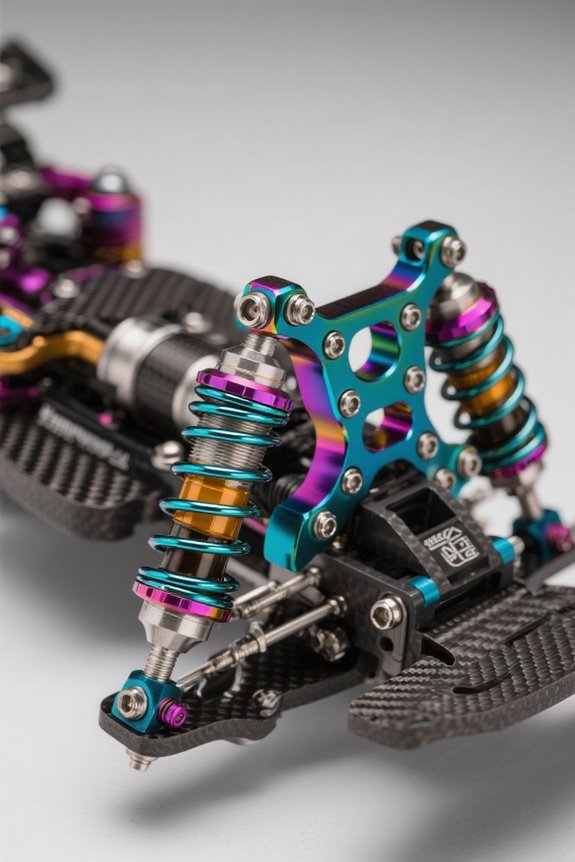
Evaluating suspension and chassis features is essential for optimizing RC vehicle performance on various terrains. Suspension Systems like independent and solid axles serve specific purposes; independent systems enhance off-road adaptability, while solid axles stabilize on smooth surfaces. Chassis Flexibility is vital; flexible designs absorb bumps, improving traction, whereas stiffer options enhance precision. Ground Clearance matters too; off-road vehicles typically need 20mm or more, while on-road models require only 4-5mm. Weight Distribution promotes stability during navigation. Durability Components should withstand impacts, ensuring longevity. Waterproofing Protection safeguards against moisture. Finally, understanding Shock Absorber Types and Spring Tension allows for effective suspension tuning, optimizing performance based on terrain conditions. Together, these features equip us for the best possible RC experience. Additionally, models like the DANCHEE RidgeRock 4WD rock crawler capabilities highlight the importance of versatile steering options in different off-road situations.
Identifying Terrain Suitability and Vehicle Type

How do we match an RC vehicle to the terrain we plan to conquer? Terrain Adaptability is essential. For instance, monster trucks excel on grass and dirt thanks to their high torque and ground clearance. Vehicle Robustness plays a significant role as well; rock crawlers navigate rocky terrain effectively with specialized tires, while buggies provide balanced performance on both pavement and sand. In softer terrains like sand, short course trucks maintain momentum, thanks to their deep-tread tires. The right vehicle enhances our control and stability, ensuring we tackle diverse surfaces confidently. When selecting, consider these factors to guarantee the best performance and enjoyment tailored to our favorite environments, making our RC experiences even more rewarding. Additionally, the durability and construction of the vehicle are key aspects that contribute to how well it performs in difficult terrains.
Measuring Speed and Performance Metrics
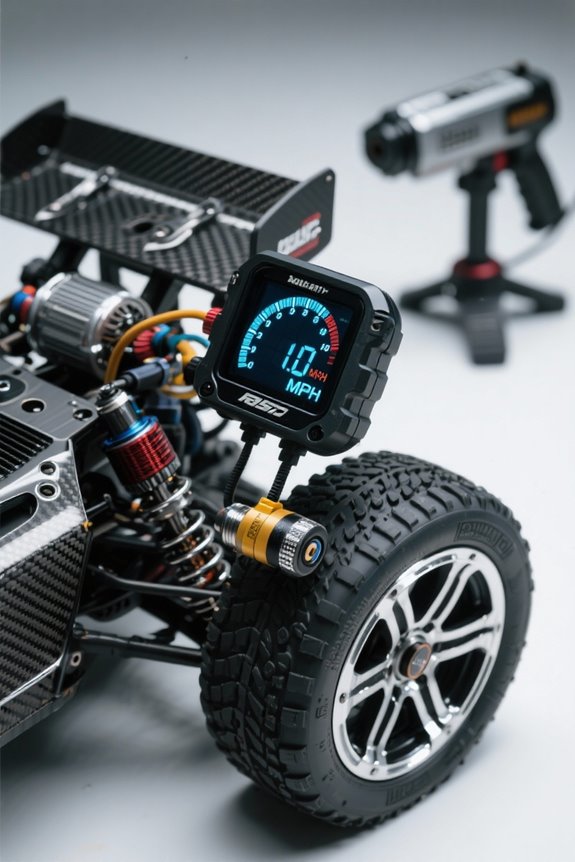
Understanding the specifications of an RC vehicle includes not only its ability to navigate different terrains but also its speed and performance metrics.
Speed Measurement: We can utilize methods like wheel revolution sensors, dual sensor timing gates, or GPS modules. These techniques give us precise calculations and track maximum and average speeds throughout runs, directly impacting performance testing.
Performance Testing: In addition to speed, we should evaluate metrics like acceleration and lap times. Using onboard accelerometers complements speed data, offering insights into a vehicle’s handling characteristics and overall stability.
Data Accuracy: Remember, the measurement setup affects accuracy; wheel slippage can overestimate speed while GPS accuracy can waver due to signal quality. Each method brings unique benefits to our analysis, helping us make more informed choices in our RC vehicle comparisons. Additionally, understanding performance benchmarks like acceleration capabilities is essential for enthusiasts looking for efficient and thrilling experiences with their RC vehicles.
Maintenance Requirements for Different Scales
When considering the maintenance requirements for different scales of RC vehicles, it’s essential to recognize that larger models, like 1/6 or 1/8 scales, typically demand more rigorous upkeep due to their exposure to rough terrains. Maintenance frequency is higher for these vehicles; we need to conduct thorough cleanings regularly to avoid parts wear from dirt accumulation. Smaller scales, like 1/10 or 1/24, allow for quicker cleanups since their components are more accessible. Nevertheless, we still must check screws and fasteners after every run to prevent vibrations from loosening them. We should also inspect motors, ensuring proper lubrication and cleanliness, as this helps extend their lifespan. Additionally, upgrading components like suspension arms enhances durability and performance, which can reduce overall maintenance needs. Ultimately, understanding these requirements helps us keep our RC vehicles in top condition, enhancing our hobby experience.
Comparing Upgrade Options Across Scales
Evaluating upgrade options for RC vehicles requires a clear understanding of scale-related factors that influence compatibility and performance. Scale Compatibility of Upgrade Parts is essential; parts designed for a 1/10 scale model won’t fit either smaller or larger models due to significant size and design discrepancies. Hub sizes, wheelbase lengths, and suspension geometry vary, limiting upgrade compatibility across scales. Performance Trade-Offs also play a significant role; larger scales often gain more noticeable acceleration and speed improvements, while smaller scales benefit from agility. Finally, Availability and Cost Considerations are important; 1/10 models offer a wide range of affordable upgrades, while larger and smaller scales can present fewer options at varying costs, impacting our upgrade decisions and overall performance experiences. For instance, models like the Hosim 1/10 maximize performance with extended battery life, demonstrating the advantages available in this popular scale.
Analyzing Weight and Aerodynamics
Aerodynamic Efficiency influences drag and downforce; a well-designed body minimizes drag while maximizing downforce for improved handling. Lightweight lexan bodies help maintain this balance, ensuring we’re competitive on the track without sacrificing control. Additionally, selecting parts made from CNC machined aluminum alloys can further enhance the vehicle’s performance and durability.
Understanding Battery Compatibility and Performance
Understanding battery compatibility and performance is vital for enhancing the effectiveness of our RC vehicles. Battery Types include NiMH and LiPo, each with distinct characteristics that affect our choice. NiMH batteries offer moderate power output, are affordable, and handle 300-400 charge cycles, making them durable and user-friendly. On the other hand, LiPo batteries are lighter with higher power output, but they require careful handling and typically last 150-300 charge cycles. Voltage Compatibility is paramount; matching battery voltage with our vehicle’s motor and ESC guarantees peak performance and safety. Batteries also affect our vehicle’s speed—higher voltage provides more speed but might reduce runtime due to the increased current draw. Knowing these factors helps us make informed decisions. Additionally, selecting batteries with an appropriate discharge rating ensures efficient power delivery for both casual use and aggressive stunts.
Evaluating Electronic Speed Controllers (ESC)
ESC Types: We need to match ESCs to either brushed or brushless motors.
Current Ratings: Understanding the continuous and peak Current Ratings guarantees we match our ESC to our motor’s needs.
Safety Features: Built-in protections enhance reliability, safeguarding against over-temperature and over-current situations.
Mounting Strategies: Secure placement promotes airflow for cooling solutions, vital during high-performance runs.
Programming Options: Customizing power settings through programmable features allows fine-tuning for peak performance.
Compatibility Issues: Verifying voltage compatibility with our battery prevents potential damage, especially considering that specific voltage compatibility is crucial for preventing overheating and failure.
Understanding the Impact of Chassis Design
When selecting an RC vehicle, chassis design plays an essential role in overall performance and suitability for specific driving conditions. Types of RC Chassis include ladder frames, tub designs, and monocoque structures, each varying in weight, strength, and intended use. Chassis Material impacts durability factors; for instance, aluminum offers a strong ratio of weight to strength, while carbon fiber provides excellent stiffness with low weight. Impact Resistance is critical—tub chassis protect internal components effectively, enhancing resilience against shocks. Torsional Stiffness affects handling; monocoque designs generally offer superior rigidity, improving cornering stability. Understanding these characteristics helps us select the right chassis for our driving style, ensuring peak performance and longevity for our beloved RC vehicles.
Analyzing Torque and Power Output
Torque and Power Output are fundamental metrics to assess in RC vehicles, as they determine acceleration and overall performance. The relationship between torque measurement and RPM reveals the motor’s efficiency; power output equals torque times RPM. High KV motors excel in speed but sacrifice torque, while low KV motors provide high torque, ideal for stability and heavy loads. When we consider power efficiency, brushless motors shine, converting 70-90% of input power into usable output, thereby enhancing torque capabilities. By analyzing these values, we find a balance that suits our vehicle’s needs: racing demands high RPM, whereas off-road or heavy-duty applications benefit from higher torque. Understanding these metrics guarantees we optimize our RC vehicle for both performance and longevity.
Comparing Damping Systems and Shock Absorption
Adjustability in shock oil viscosity and piston size allows us to tailor damping systems to our preferences. By mastering shock absorption techniques, we can fine-tune our vehicles for optimized stability and enhanced performance on any terrain.
Considering Cost and Accessibility of Parts
How do we make informed decisions about RC vehicle parts without breaking the bank? Cost Analysis is essential in our comparisons, as it involves understanding various components that contribute to affordability. Entry-level RC cars start at around €200, but maintaining them can raise costs considerably over time. Parts Availability varies greatly based on brand popularity; for example, Traxxas offers extensive replacement parts which simplify repairs. While used components may save money, their reliability can be an issue due to factors like labor costs and shipping expenses. We should budget for potential replacements, as ongoing investment might exceed initial purchase costs. By weighing quality against affordability, we can guarantee our RC experience remains enjoyable without draining our finances.
Frequently Asked Questions
How Do Weather Conditions Affect RC Vehicle Performance and Operation?
Weather conditions greatly affect our RC vehicles’ performance. Temperature effects can hinder efficiency, while surface traction suffers in wet or icy conditions. Understanding these factors helps us enjoy smoother rides and better control in varied environments.
What Safety Precautions Should I Take When Operating RC Vehicles?
When it comes to remote control vehicles, safety’s our best friend. We must prioritize operation safety by using designated areas, supervising younger drivers, and charging batteries responsibly to guarantee a fun, accident-free experience for everyone.
How Can I Improve My Driving Skills With RC Vehicles?
To improve our driving skills with RC vehicles, let’s practice essential driving techniques and focus on vehicle handling. Regular practice and observing skilled drivers together will enhance our performance and boost our confidence on the track.
What Are Common Beginner Mistakes to Avoid With RC Vehicles?
When starting with RC vehicles, we should avoid poor battery maintenance and tackling challenging terrains. Let’s practice gentle throttle control and always check our setups to guarantee a smoother, more enjoyable experience together!
How Do I Choose the Right Brand for My RC Vehicle?
When we chose our first RC vehicle, we went with Traxxas. Their brand reputation guaranteed product reliability, like trusting a compass on a journey. Let’s explore brands that resonate with our passion for performance and community.


