As an Amazon Associate, we earn from qualifying purchases. Some links on this site are affiliate links at no extra cost to you. Our recommendations are based on thorough research and editorial judgment.


How To Create Safe RC Vehicle Operating Zones?

To create safe RC vehicle operating zones, we must first select the right location, preferring flat surfaces like empty parking lots. Next, we should identify hazards by analyzing the area for obstacles and risks such as uneven terrain. We then need to establish operational safety protocols, defining maximum speeds and establishing right-of-way rules. We must implement barriers and warning systems for added safety. Finally, let’s focus on training operators in safe practices, ensuring everyone understands vehicle capabilities and care, which are essential for successful operations.
Key Takeaways
- Select smooth, flat surfaces free of obstacles for operating zones to ensure optimal performance and safety for RC vehicles.
- Identify and analyze potential hazards, such as uneven terrain and overheating batteries, to mitigate risks in operating areas.
- Establish safety protocols, including speed limits and right-of-way rules, to protect operators, bystanders, and pets during operations.
- Conduct routine maintenance and inspections on vehicles, focusing on fasteners and battery care, to ensure safe operation and longevity.
- Implement visual and audible warning systems, like cones and alarms, to enhance awareness and safety within RC vehicle zones.
Selecting the Right Location for RC Vehicle Operations
When we’re choosing the ideal spot for operating our remote-controlled (RC) vehicles, several critical factors should guide our decision. Terrain Suitability is paramount; for instance, smooth, flat surfaces like empty parking lots or school grounds offer appropriate conditions for touring and on-road RC cars, improving stability and minimizing damage. Terrain Types vary greatly; dirt BMX tracks present challenges for short-course trucks, while forest trails cater to crawlers with their technical features. Beaches require 4WD waterproof vehicles due to soft sand. We must also consider Vehicle Compatibility; selecting a site suited for our specific vehicle guarantees performance and safety. Ultimately, understanding Terrain Types and their compatibility with our RC vehicles helps us enjoy our hobby responsibly and effectively. Additionally, ensuring that the area is free from obstacles and debris enhances vehicle performance and safety.
Identifying Hazards and Managing Risks

Hazard Identification in RC Vehicle Operating Zones** is essential for ensuring safety and preventing accidents. We must prioritize hazard recognition to keep our environment secure. First, we should analyze the operating area for potential dangers, like uneven terrain or overheating batteries. Using physical warnings—such as signs and fences—along with electronic monitoring tools can effectively delineate hazardous zones. We also need to conduct thorough inspections for materials nearby that may react dangerously, considering conditions like weather and airflow. Finally, engaging in detailed risk analysis helps us understand unprotected hazards, ensuring all operators and bystanders are safeguarded. By adhering to these practices, we can create a safe space for everyone involved in RC vehicle operations and enhance overall experience. Additionally, considering high-capacity LiPo batteries** can help mitigate risks associated with battery overheating during prolonged use.
Establishing Operational Safety Protocols
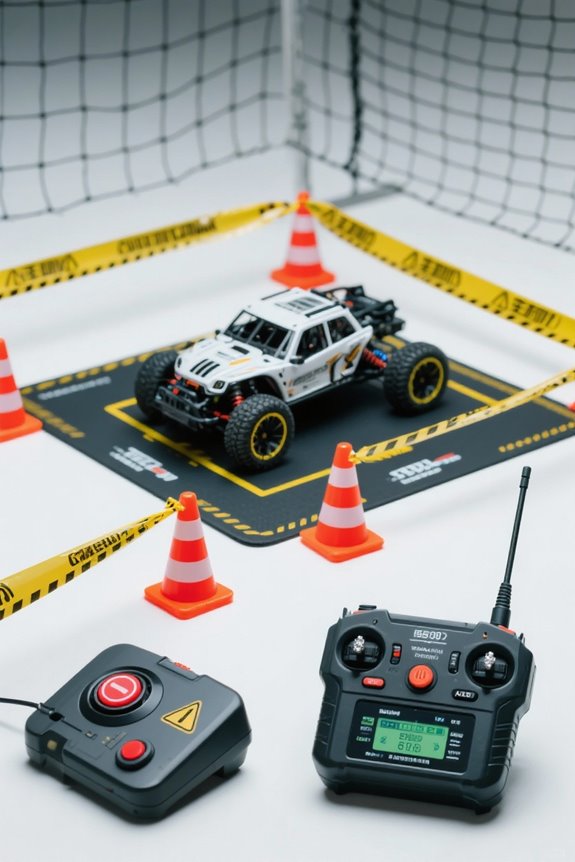
To guarantee safe operation of RC vehicles, establishing Clear Operating Rules is essential for minimizing risks and preventing accidents. We need to define maximum speeds based on operator age and skill, particularly near kids and pets. Prohibiting operation in streets or crowded areas reduces accident potential. We should enforce right-of-way rules on tracks to prevent collisions. Mandating safety gear, like seat belts in ride-on RC cars, protects operators from falls. Additionally, restricting operation during adverse weather keeps risk low. Implementing thorough operator training guarantees users understand manuals and vehicle features, enhancing overall safety. With focused supervision, especially for minors, we can address hazards promptly, fostering a secure environment for everyone involved in RC vehicle activities. Providing guidance on the safety and quality assurance of toys can further enhance the protection of young operators.
Implementing Barriers and Warning Systems
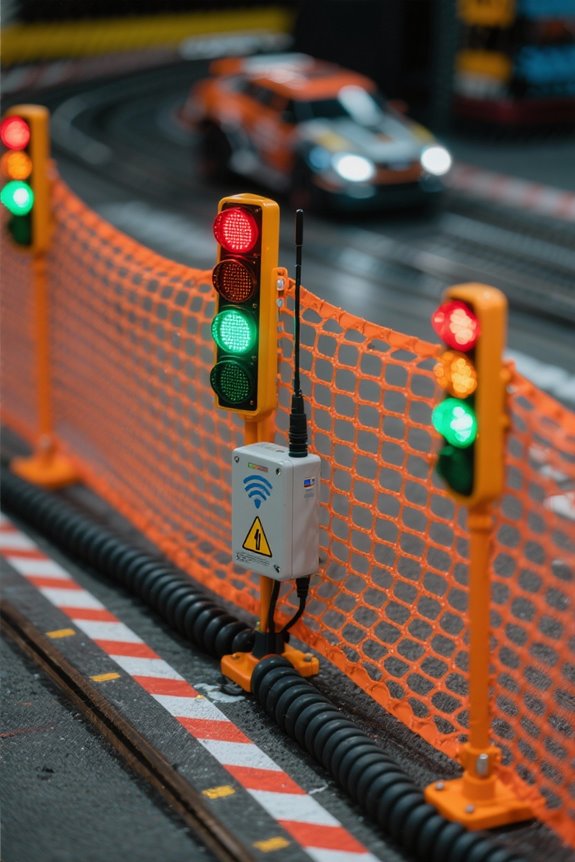
Implementing effective barriers and warning systems is an essential step in creating safe operating zones for RC vehicles. Physical Barriers like safety roller barriers absorb impact energy and reduce vehicle speed, enhancing safety. Barrier Types such as portable high-security barricades guarantee quick setup and adaptability to various environments. We also consider Visual Warning Technology, using bright cones and LED signs to mark boundaries clearly, helping everyone stay aware. Audible Alarms provide immediate alerts, guaranteeing rapid responses to breaches. Remote Monitoring Systems enable live observation of zones, allowing quick interventions. By combining these elements, we not only protect our vehicles but also create a cohesive and safe atmosphere for all operators and spectators, fostering a sense of community in our RC activities. Additionally, ensuring that the operating zones are suited for various terrains, such as grass, gravel, and dirt, can significantly enhance the safety and enjoyment of RC vehicle activities.
Conducting Maintenance and Monitoring
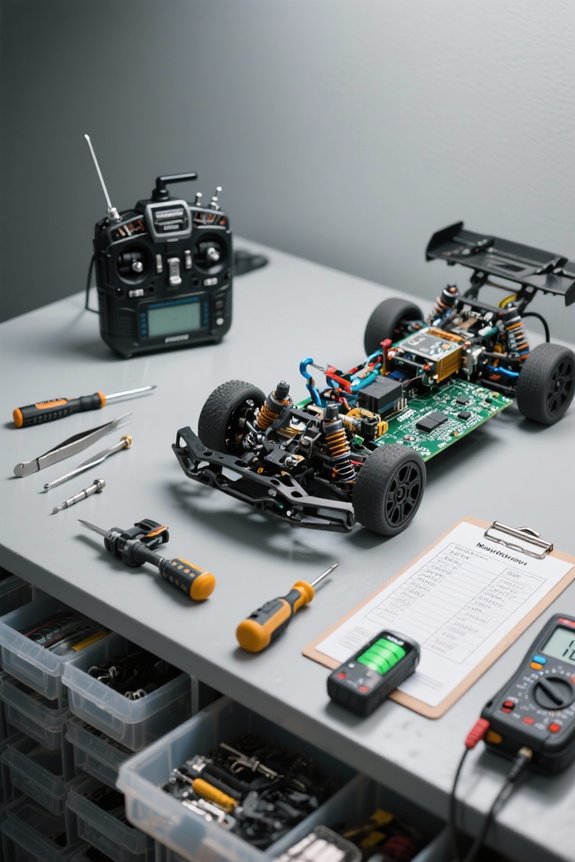
Conducting regular maintenance and monitoring is essential for guaranteeing the longevity and performance of our RC vehicles. Routine Cleaning and Inspection help us prevent dirt, dust, and debris buildup that can impair performance. We should carefully clean our vehicles after each use, removing batteries and using soft brushes or compressed air for delicate parts. Fasteners and Mechanical Components Maintenance involves regularly checking screws and bolts to prevent loosening from vibrations. Proactive repairs, like replacing worn parts promptly, keep our systems efficient. Battery Care and Monitoring is critical; we must store batteries in cool places, cycle LiPo batteries, and watch for puffing to prevent failures. Additionally, incorporating essential upgrades during maintenance can significantly enhance overall vehicle performance. Through these practices, we guarantee our vehicles operate smoothly and remain safe during every session.
Complying With Regulatory and Community Guidelines
While establishing safe and effective RC vehicle operating zones, we must prioritize Regulatory Compliance to align our activities with local laws and community standards. We should review zoning regulations to guarantee our zones do not conflict with land uses like residential or commercial. Adhering to local setback and buffer requirements—such as minimum distance from property lines—helps maintain safety and minimizes disturbances. Compliance with height, noise, and spatial restrictions prevents violations and community complaints. Additionally, securing necessary permits will streamline our operations. Incorporating Community Feedback is crucial for ongoing success; prior consultations and clear signage can facilitate transparency, enhance relationships, and ultimately create a more welcoming environment for all involved. Furthermore, understanding the best RC vehicle features can help inform decisions on safe operating zones that accommodate off-road adventures.
Communicating Effectively on the Operating Site
To operate RC vehicle zones safely and efficiently, effective communication is a fundamental element. Clear Communication Protocols must be established, including specific radio channels and call signs dedicated to the operation. We should define safety terminology for consistent incident reporting and utilize telemetry integration to share real-time data like speed and temperature. During shift turnover, we’ll implement checks to guarantee proper operational documentation and equipment status is logged. Feedback Systems can enhance situational awareness through visual alerts and regular updates. Utilizing established urgency signals will help us respond rapidly to hazards. Additionally, incorporating aftermarket parts availability can provide essential enhancements to our vehicles’ performance, ensuring they are well-suited for various terrains. By encouraging consistent communication and documenting all exchanges, we can minimize errors and maintain a safer operating environment, fostering a culture of proactive safety among all personnel.
Training for Safe Operation and Maintenance Practices
In order to guarantee the safe operation and maintenance of RC vehicles, effective training programs should incorporate structured Cleaning and Inspection Practices. We must train operators to remove batteries before cleaning, using compressed air or soft brushes to eliminate dust from vital components. Regular Mechanical Maintenance is essential; consequently, we should regularly tighten fasteners in high-stress areas like motor mounts. Additionally, Battery Safety and Maintenance requires knowledge of proper charging methods, which extend battery life. Implementing Post-Run Cooling and Safety Checks makes certain we don’t handle hot components, protecting both vehicles and ourselves. By offering maintenance workshops complemented by operator certifications, we create a knowledgeable community committed to best practices. Together, we can foster a culture of safety while enhancing performance and longevity. Moreover, understanding the importance of battery life helps ensure optimal operation during play.
Promoting a Culture of Safety Among Operators
Promoting a culture of safety among operators is essential in fostering responsible behaviors within RC vehicle operating zones. Establishing Shared Safety Norms involves collective beliefs guiding our actions. When we respect procedures, we minimize risky behaviors like speeding. Positive Peer Influence helps maintain safety standards; we can support each other in adhering to safe practices. Regular Safety Communication at meetings keeps everyone informed about safety expectations and near-misses. Safety Rewards, through recognition and incentives for safe operations, can reinforce good habits. By embracing shared responsibility and fostering communication, we create an environment where everyone feels accountable for safety. Together, we can guarantee our RC zones are safe and enjoyable for all, strengthening our community’s commitment to safety and responsible operation. Additionally, it is critical to understand the capabilities of various RC vehicles, such as their battery life expectations, to ensure they are operated within safe parameters.
Frequently Asked Questions
What Type of Surface Is Best for RC Vehicle Operations?
For RC vehicle operations, we find asphalt surfaces and concrete areas offer great traction, while dirt tracks provide excitement. Grass fields are fun too, but they can be tricky. Let’s explore these terrains together!
How Can I Safely Store RC Vehicles and Batteries?
Did you know that 25% of battery issues stem from improper storage? To guarantee our RC vehicles thrive, we should prioritize battery maintenance and store them in cool, dry places, keeping them in top shape for all our adventures.
What Should I Do if an RC Vehicle Malfunctions During Use?
If our RC vehicle malfunctions, we should follow malfunction protocols by immediately using the emergency stop feature. Then, we’ll inspect for damage and troubleshoot to get back to enjoying our driving experience safely together.
Are There Insurance Options for RC Vehicle Operators?
Yes, there are insurance options for us as RC vehicle operators. We should consider liability coverage that fits our needs, paying attention to policy limits to guarantee we’re well-protected during our hobby activities.
How Can I Involve Community Members in Safety Practices?
Together, let’s ignite engagement by hosting community workshops, where we can train dedicated safety ambassadors. As we share experiences and knowledge, we’ll build a bond, ensuring everyone feels secure and valued in our RC adventures.