As an Amazon Associate, we earn from qualifying purchases. Some links on this site are affiliate links at no extra cost to you. Our recommendations are based on thorough research and editorial judgment.


How To Safely Transport RC Vehicles To Events?

To safely transport RC vehicles to events, we conduct a thorough chassis inspection for damages and secure all components. Battery safety involves disconnecting and insulating terminals, maintaining proper charge in cool environments. We use durable packaging like bubble wrap and RC car haulers for organized transport. Upon arrival, we implement on-site procedures for safe operation, confirming all participants understand safety protocols. Conducting a post-transport inspection guarantees our vehicles are race-ready, and there’s more we can cover on best practices.
Key Takeaways
- Perform a thorough chassis inspection and secure delicate parts to prevent damage during transport.
- Use durable packaging materials, such as bubble wrap and soft padding, to protect sensitive components.
- Disconnect batteries, isolate terminals, and store them in a cool, dry environment for safety.
- Utilize organized transport solutions, like RC car haulers or plastic totes, to keep vehicles and parts intact.
- Document vehicle conditions with photos and notes before and after transport for post-event assessments.
Pre-Transport Preparation
Before we hit the road, thorough pre-transport preparation is essential to guaranteeing our RC vehicles arrive intact and ready for action. Chassis Inspection involves checking for cracks, dents, or loose parts, which helps prevent worsening damage during transit. We should tighten all screws and guarantee that tires are securely glued. Component Organization is key for reducing transport risks. Detaching delicate parts like antennas or wings minimizes breakage. Wrapping sensitive components in foam or soft padding protects against shocks. Additionally, using small bags for loose parts keeps everything organized. By documenting our vehicle’s condition with photos and notes, we set a clear baseline for post-transport checks. This meticulous approach not only safeguards our gear but enhances our overall transport experience. Using high-quality materials from Kyosho Honda NSR500 models can also contribute to durability and reduce damage during transport.
Battery Safety and Handling

Battery safety and handling are vital when preparing our RC vehicles for transport. Proper Battery Charge Levels should be maintained by keeping LiPo batteries at storage voltage—around 3.7 to 3.85 volts per cell. For NiMH batteries, discharging them to about 50% capacity minimizes risks during transport. Battery Terminal Protection is essential; isolating battery terminals prevents short circuits. We should never store loose batteries together or in pockets with metal objects. Handling and Monitoring Batteries during transport involves disconnecting batteries from our vehicles and ensuring they’re kept in cool, dry environments. Finally, when charging, it’s important to use the appropriate charger for each battery chemistry, and always allow them to cool before handling. Safety first! Additionally, understanding discharge rates can help gauge the performance of your batteries during use.
Transport Equipment and Packaging
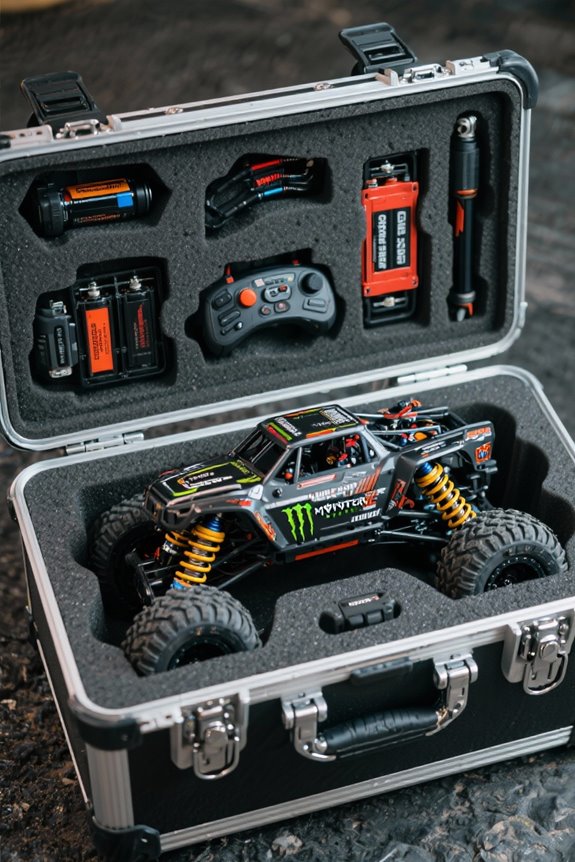
Custom Packaging: We use durable materials like PP bags and bubble wrap to cushion individual parts, while reinforced carton boxes guarantee security for long-distance shipping. Custom Packaging options allow branding through logo printing and color-specific designs.
RC Car Haulers: These dedicated compartments keep our cars, batteries, and tools organized, with multiple drawers for efficient access. The design accommodates various scales, simplifying race day logistics.
Plastic Totes: An economical solution, these durable containers securely hold cars and equipment. We can add foam padding for further stabilization, enhancing safety during transport. Utilizing these tailored transport solutions protects our RC vehicles, maintaining their integrity for every event, especially those designed for optimal compatibility during various conditions.
On-Site Handling and Setup
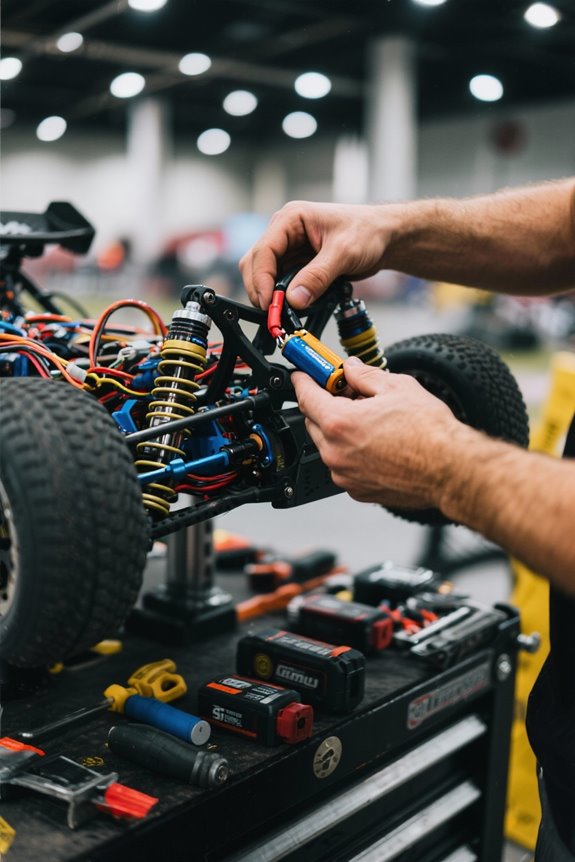
Effective on-site handling and setup are pivotal for a successful racing event, guaranteeing that our RC vehicles and drivers are ready for competition. Staging Procedures require precise vehicle positioning at the starting line, adhering to staging protocols that promote fair starts. Each competitor gets a limited time to prepare their vehicle, with a grace period allowed for troubleshooting. Pit Management emphasizes clear space for maintenance, guaranteeing efficient adjustments amidst the excitement. We’ll also need tents or sheltered areas to protect from adverse weather, keeping our equipment safe and maintaining driver comfort. Organizers should guarantee adequate facilities and inform us about electricity availability, fostering a smooth experience and compliance with safety standards throughout the event. Additionally, ensuring that our vehicles are made from durable materials is crucial for preventing damage during transport and setup.
Transportation Regulations and Safety Considerations
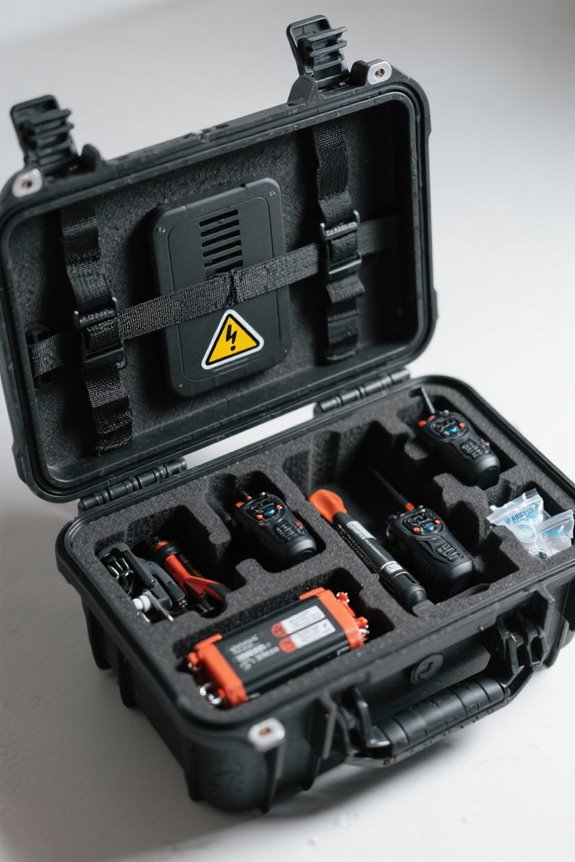
When transporting RC vehicles, it is important to understand that transportation regulations govern how we can safely and legally move our equipment. First, we need to take into account transport mode suitability; lithium batteries must comply with FAA rules when flying, including watt-hour limits and declarations. Ground transport often requires securing our gear according to 49 CFR § 177.834 to prevent movement during transit. Next, compliance documentation is vital, ensuring we meet local and event-specific safety codes. This includes proper labeling and packaging, especially for lithium batteries to minimize fire risks. Engaging with these regulations not only protects our equipment but also helps maintain safety for fellow enthusiasts. Additionally, understanding the battery life and specifications of your RC vehicle can help with effective planning for transportation and usage at events. Being prepared and compliant makes our journey to any event smoother and more enjoyable.
Incident Preparedness and Best Practices
Incident Preparedness Overview: Being prepared for emergencies during RC events is crucial to guarantee safety for everyone involved. We need to prioritize incident awareness and adhere to emergency protocols.
Fire Safety: Always have emergency LiPo sand buckets ready to smother battery fires, cutting off oxygen.
Track Vigilance: Marshals and drivers must stay alert, particularly around jumps where vehicles may become airborne, reducing collision risks.
Proper Attire: Wearing closed-toe shoes minimizes foot injury risks during quick access or emergencies.
Authorized Access: Only allow marshals and drivers on the track during live sessions to maintain safety. This limits injury opportunities and promotes accountability. Additionally, ensure that all participants are aware of maintenance tips for their vehicles to prevent malfunctions during events.
Packing Your RC Vehicle
Packing your RC vehicle correctly is integral to ensuring it remains in top condition during transport. Container Selection involves choosing sturdy plastic totes or hard cases that fit your vehicle type. For 1/8 scale vehicles, shorter, wider boxes work best, while 1/10 scale vehicles benefit from taller containers. Protective Padding is essential; line containers with foam sheets or towels to absorb shocks. We should remove delicate components like wings or antennas to avoid damage and store them in padded bags. Using straps or molded inserts will secure our vehicles and minimize movement during transit. Additionally, ensuring that the RC vehicle has a durable body shell can help withstand impacts during transport. By incorporating these practices, we can avoid damage and keep our vehicles ready for action whenever we arrive at events.
Managing Battery Risks
Managing battery risks is crucial for the safe transport of our RC vehicles, especially since lithium batteries are regulated as hazardous materials. Regulations and Certification for Battery Transport require compliance with the UN Manual of Tests and Criteria, specifically UN 38.3 certification, which guarantees that lithium-ion batteries meet safety standards. Battery Types must be carefully assessed; non-certified batteries can lead to penalties and increased shipping risks. Risk Assessment is essential: we should inspect batteries for damage and ascertain that terminals are insulated to prevent short circuits. Utilizing original packaging or appropriate containers safeguards against physical shocks. By adhering to these precautions, we can minimize risks, ensuring our batteries remain secure throughout transportation and maintain their integrity for safe usage at events. Additionally, it’s important to remember that battery capacity significantly impacts overall performance during driving.
Ensuring Safe Operation on Site
How can we ascertain safety during RC vehicle operations on-site? Track and Pit Area Safety Measures are essential to minimize risks for both participants and spectators. Establish clear boundaries between pits and the track, ensuring spectators stay within designated zones to prevent accidents. We should enforce limits on vehicles operating simultaneously, reducing collision risks. Operational Protocols must be followed, giving right-of-way to moving vehicles and mandating radio regulations. All participants need appropriate safety training, including wearing closed-toed shoes. Emergency Preparedness requires fire extinguishers and first aid kits accessible throughout the area. These protocols and training foster a safer environment, ensuring everyone can enjoy the excitement of RC racing while prioritizing safety for all involved. Incorporating battery maintenance practices helps ensure operational reliability and safety for all participants during events.
Post-Transport Inspection Procedures
Exterior and Body Inspection: We’ll check for new dents or scratches and guarantee our paintwork and decals are intact, preserving aesthetic value.
Mechanical Check: It’s important to inspect tires for wear and maintain fluid levels — engine oil and coolant among them — to confirm safe operation.
Functional Systems Verification: Testing lights and safety equipment is essential; they’ll keep us safe in emergencies. Additionally, ensuring that all aluminum components are maintained for longevity can prevent unexpected failures during operation.
Communicating Event Logistics
Effective communication is essential for ensuring that all participants are well-prepared for our RC vehicle event. Event Schedule Communication involves providing detailed schedules that include race times, practice sessions, and breaks. We disseminate this information through email, social media, and printed materials at the venue. Venue and Access Coordination focuses on sharing detailed venue information, including parking and entry points, while noting transport restrictions. Transportation and Equipment Handling Guidelines outline safe transport protocols and staging procedures, helping to avoid confusion. Participant and Team Communication Channels utilize tools like WhatsApp groups for live updates and coordination during the event. By implementing these logistics communication strategies, we enhance everyone’s experience, ensuring a smooth and organized event for all involved.
Frequently Asked Questions
What Type of Transport Vehicle Is Best for RC Gear?
For our RC gear, we love using SUVs or vans—great transport options with roomy storage solutions. They protect our gear from the elements and make organizing everything for events a breeze, ensuring we’re always race-ready.
How Can I Prevent My RC Vehicle From Getting Damaged in Transit?
When life tosses our RC vehicles around like autumn leaves, we can prevent damage by using protective packing and securing transport accessories. Let’s disassemble parts, use foam inserts, and give our gear the best care possible!
Can I Transport Fuel-Powered Models the Same Way as Electric Ones?
No, we can’t transport fuel-powered models the same way as electric ones. Fuel safety is vital due to flammable liquids, whereas electric models require battery handling. Understanding these model differences helps guarantee safe and compliant transport.
What Insurance Options Are Available for Damage During Transport?
For transport insurance, we can explore options like carrier liability, primary coverage, and broker-arranged packages. Collectible coverage is essential for protecting our valuable models from unforeseen damages during transport. Let’s make certain we’re well-protected together!
How Can I Ensure Compliance With International Transportation Regulations?
“Better safe than sorry,” right? To guarantee compliance with international guidelines, we must meticulously prepare customs paperwork, accurately label our shipments, and document lithium battery specifications. Let’s stick together and keep our ventures smooth and safe!