As an Amazon Associate, we earn from qualifying purchases. Some links on this site are affiliate links at no extra cost to you. Our recommendations are based on thorough research and editorial judgment.

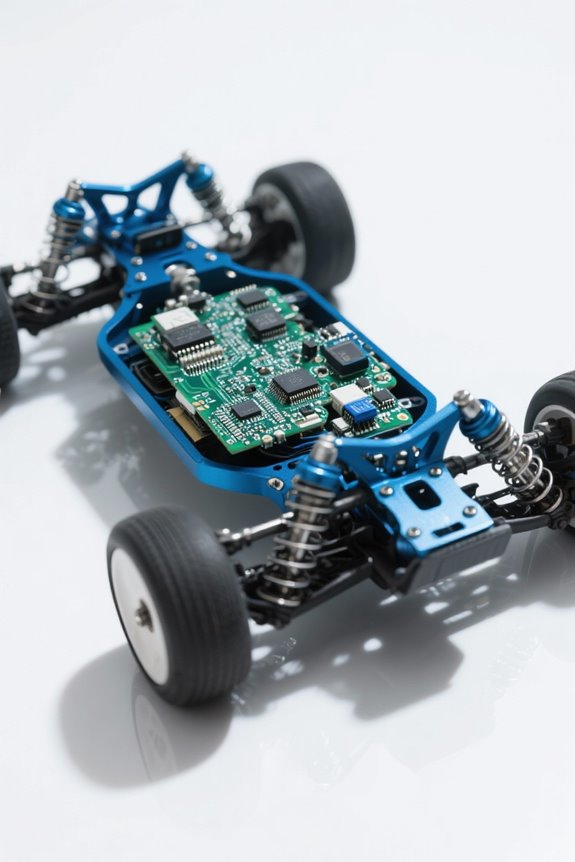
What Cleaning Products Are Safe For RC Electronics?

When cleaning RC electronics, we should use non-conductive cleaners like CRC QD Electronic Cleaner, which prevents short circuits. Residue-free formulas guarantee quick evaporation, eliminating dirt-attracting residues from sensitive components. Important plastic compatibility, as seen with CowRC Moo-Kleen, protects our devices’ surfaces. Look for quick-drying options to minimize downtime and application formats like aerosols that reach tight spaces. These choices enhance performance, prolong lifespan, and safeguard our electronics, while further details are just ahead.
Key Takeaways
- Use non-conductive cleaners like CRC QD Electronic Cleaner to prevent short circuits while cleaning RC electronics.
- Opt for residue-free products to eliminate dirt-attracting deposits, ensuring longer reliability.
- Choose cleaners compatible with plastics, such as CowRC Moo-Kleen Cleaner, to protect sensitive surfaces.
- Consider eco-friendly options like EcoPower and compressed air for effective, sustainable cleaning solutions.
- Ensure dielectric strength of cleaners to safely use them on energized components without risk.
Importance of Using Safe Cleaners for RC Electronics
Protecting Electronics from Damage
To maintain the longevity of our RC electronics, we must prioritize safe cleaning strategies. Dirt and grime can cause abrasives, leading to premature wear on components. Using improper cleaners can promote corrosion, damaging crucial parts. It’s fundamental we apply cleaning agents using controlled methods; oversaturating sensitive areas can cause short circuits. We should aim for gentle, targeted cleaning, using microfiber cloths or specific brushes designed for electronics. Cleaner application methods should dampen the cloth slightly, avoiding excess moisture. By following these guidelines, we reduce the risk of electrostatic discharge and secure consistent performance across our devices. Adopting these practices not only prevents breakdowns but enhances the reliability of our RC systems, allowing for smoother, uninterrupted operation. Additionally, ensuring that our RC trucks are constructed from durable construction materials can further protect electronic components from winter conditions.
Recommended Cleaning Products for RC Maintenance

Choosing the right cleaning products for our RC electronics is crucial to guarantee their ideal performance and longevity. Non-conductive cleaners, like CRC QD Electronic Cleaner, effectively prevent short circuits during use; they evaporate quickly and leave no residue, making them safe for sensitive contacts and connectors. Residue-free evaporation is essential because it eliminates the risk of deposits that may attract dirt, keeping components clean for longer periods. Plastic compatibility is another significant feature, as products like CowRC Moo-Kleen Cleaner are designed specifically to be safe on plastics without causing damage or discoloration. Exploring cleaning alternatives like EcoPower and compressed air ensures we can find effective solutions, while product comparisons help us make informed choices that protect our valuable equipment. Regular maintenance, including cleaning, is vital for extending the lifespan of remote control devices and enhances their operational efficiency.
Key Features to Look for in Electronic Cleaners
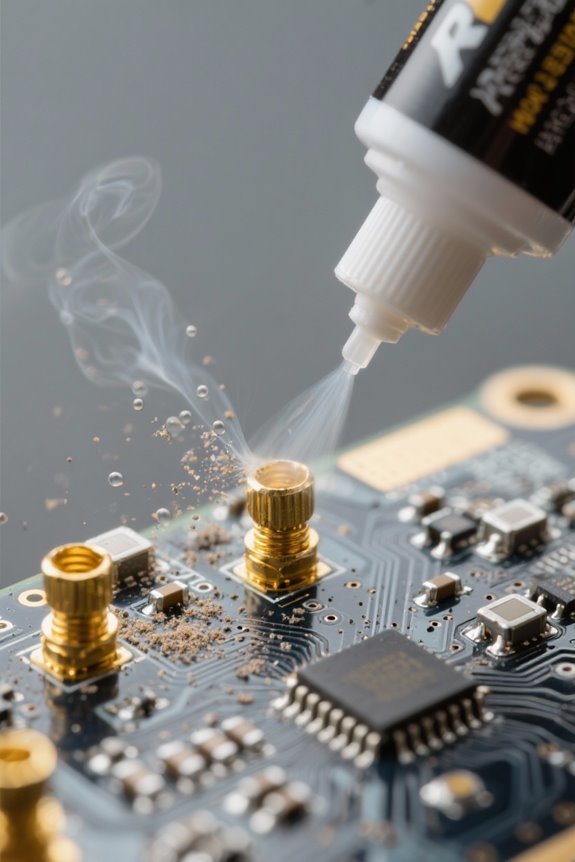
When selecting electronic cleaners, it’s important to take into account dielectric strength, as this feature secures safe use on energized components without risking electrical conduction. High dielectric ratings act as insulators, preventing short circuits.
Evaporation and Residue are critical as well; quick-drying formulas minimize downtime and avoid liquid damage while leaving no residue that could impair electrical contacts.
Material Compatibility secures safe use on various surfaces, protecting plastics and metals from deterioration.
Cleaning Efficacy enhances performance by efficiently removing contaminants from intricate geometries like circuit boards and sockets.
Lastly, choose application features like aerosol formats that facilitate access to tight spaces, securing straightforward usage techniques for maintenance without disassembly. These key aspects help us maintain the reliability of our RC electronics. Additionally, considering battery compatibility is essential to ensure that the cleaner used does not interact negatively with various battery types like Lithium Polymer (LiPo), maintaining optimal performance.
Common Mistakes to Avoid When Cleaning RC Components
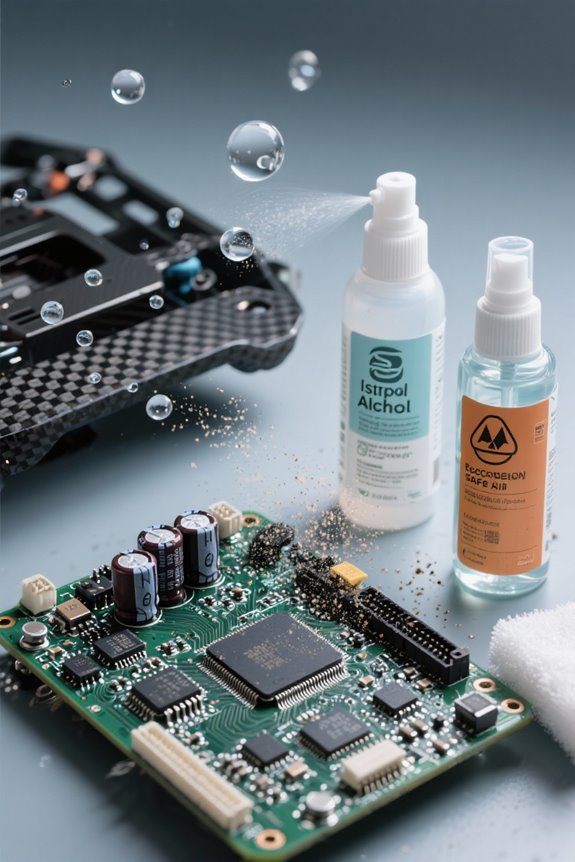
What common mistakes do we often make while cleaning RC components? First, Incorrect Water Usage can lead to corrosion. We should never use water directly on electronics; it’s imperative to avoid pooling. Second, Harsh Chemical Selection is a no-go. Strong solvents can damage sensitive materials, so we should stick to products designed for electronics. Third, Battery and Connector Handling is essential. Always remove batteries prior to cleaning to prevent damage. Fourth, Aggressive Mechanical Cleaning can harm delicate components—let’s use soft brushes instead. Finally, Post-Cleaning Inspection matters. After cleaning, it’s essential to inspect and tighten all screws to enhance durability. By being mindful of these common mistakes and adjusting our cleaning frequency and tool selection, we can protect our beloved RC gear effectively. Additionally, it’s crucial to be aware that many RC vehicles use specialized Lipo battery types, which can be sensitive to cleaning procedures and materials.
Best Practices for Cleaning RC Electronics
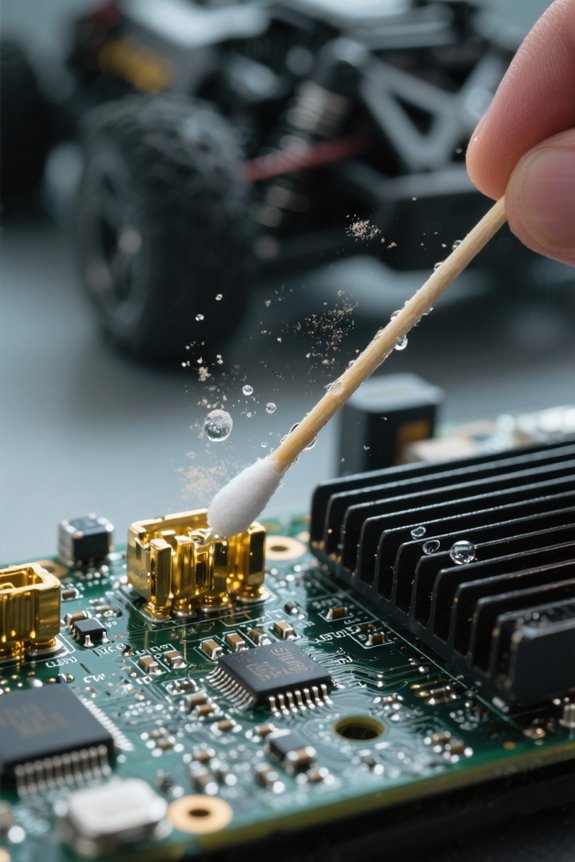
Best practices for cleaning RC electronics guarantee that our equipment remains reliable and functions effectively over time. Non-conductive Cleaners are essential; we should use electronic-specific sprays, like CRC QD Electronic Cleaner, which evaporate quickly and leave no harmful residue. Application Techniques play an important role; by spraying cleaners onto surfaces and allowing them to evaporate instead of wiping, we minimize abrasive encounters with delicate components. Incorporating Cleaning Techniques into our maintenance routines can enhance longevity; for example, using compressed air to remove dust before applying cleaners is effective. Additionally, we should clean after every few runs, especially after exposure to dirt or moisture. This proactive approach guarantees peak performance and durability for our RC electronics. Moreover, ensuring your electronics are well-protected can further enhance their lifespan by minimizing damage during play.
Popular Brands and Products in the RC Community
In the pursuit of maintaining our RC electronics, which brands and products should we consider for effective cleaning? CowRC’s Moo-Kleen boasts a 100% electronics-safe formula, effectively tackling grime without damaging plastics, offering after-run protection for longevity. In brand comparisons, CRC QD Electronic Cleaner stands out with its fast-drying, residue-free properties, making it ideal for delicate parts. FinzFPV’s RC Magic Cleaner employs active foam to clean dust and dirt, specifically designed for intricate models. Finally, EcoPower Motor & Electronics Cleaner features a fast-drying solution safe for most plastics, perfect for routine maintenance. These brands not only guarantee product effectiveness but also establish a trusted community around RC upkeep, making our experiences more enjoyable and seamless. Regular cleaning contributes to the longevity of your RC electronics, ensuring optimal performance on varied terrains.
Safety Considerations When Using Electronic Cleaners
Maintaining our RC electronics effectively also means we have to contemplate safety when using electronic cleaners. Chemical Safety and Compatibility is essential; we should always choose cleaners that are specifically labeled as safe for electronics and plastics. This helps prevent damage from chemical exposure. When using these cleaners, we must guarantee proper Ventilation Requirements; applying them in well-ventilated areas reduces inhalation risk from solvent vapors. It’s vital to wear gloves and eye protection to shield against irritation from sprays. We should avoid brake cleaners or solvents with acetone to prevent melting plastic parts. Finally, using non-conductive, residue-free cleaners allows us to eliminate moisture damage risk while enhancing the longevity and reliability of our trusted RC gear. Additionally, it’s wise to keep a selection of essential replacement parts on hand to quickly address any issues that could arise after cleaning.
Environmental Impact of Cleaning Products for RC Electronics
The Environmental Impact of Cleaning Products for RC electronics is a critical consideration as we labor to protect both our devices and the planet. Sustainable Formulations considerably reduce VOCs that contribute to ozone depletion, helping maintain healthier air quality. These alternatives are designed to have lower toxicity profiles, providing safer solutions for users and the environment. For instance, non-chlorinated solvents and hydrocarbon-based cleaners effectively clean while minimizing damage to both plastics and delicate electronic parts. Waste Management becomes easier with these low-toxicity options, as improper disposal of hazardous substances can contaminate ecosystems. By emphasizing rapid drying and precision application methods, we promote reduced evaporation losses and minimized solvent waste. Collectively, these efforts lead us to a cleaner future for both our devices and our planet. Engaging with educational benefits of safe cleaning methods helps users understand the importance of sustainability in their hobby.
Frequently Asked Questions
Can I Use Household Cleaners on My RC Electronics?
We can’t use household cleaners on our RC electronics; they can damage components. Instead, let’s choose specialized cleaning techniques to keep our prized gear safe, ensuring longevity and peak performance together as a community.
How Often Should I Clean My RC Components?
We recommend cleaning our RC components after every intense session or every 3-6 months for light usage. Staying on top of our maintenance schedule keeps our electronics in great shape, so let’s keep that cleaning frequency consistent!
Are There Eco-Friendly Electronic Cleaners Available?
Yes, there are eco-friendly electronic cleaners available! We can choose products with natural ingredients that prioritize our health and the planet, ensuring our RC components stay clean while embracing sustainable practices together.
What Is the Shelf Life of Electronic Cleaning Sprays?
The shelf life of electronic sprays typically ranges from 24 months to up to 10 years, depending on the formulation and storage. We should always check the labels for freshness and proper handling to verify effectiveness.
Can I Clean My RC Batteries With These Products?
Think of our RC batteries as delicate flowers. We can clean them with isopropyl alcohol and vinegar to maintain their liveliness. By following proper cleaning methods, we guarantee our battery maintenance keeps our devices thriving together.