As an Amazon Associate, we earn from qualifying purchases. Some links on this site are affiliate links at no extra cost to you. Our recommendations are based on thorough research and editorial judgment.

Are Waterproof RC Vehicles Really Maintenance-Free?

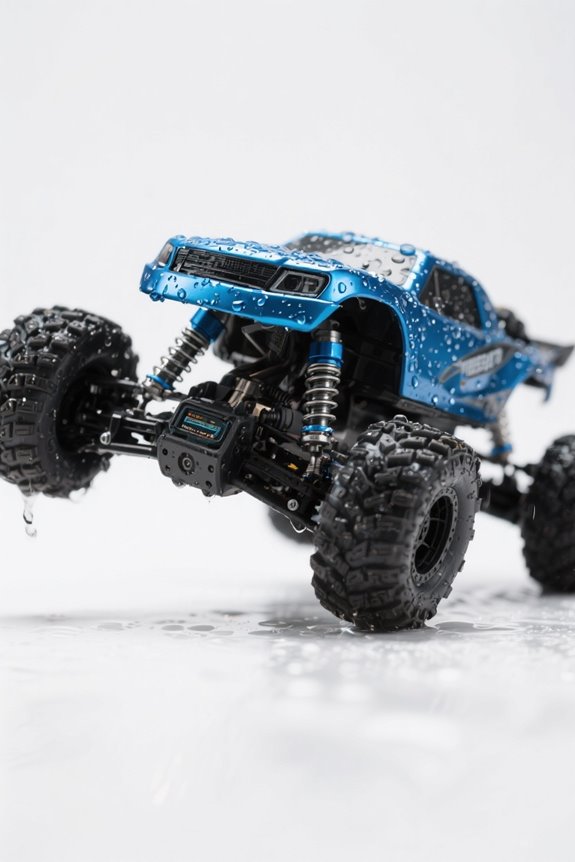
Waterproof RC vehicles aren’t maintenance-free; they require regular upkeep to function effectively. Water Resistance indicates protection against moisture but doesn’t prevent all water damage. Routine Post-Run Inspections should include cleaning, tightening screws, and lubricating essential components. Material Limitations exist, with metal parts vulnerable to rust despite waterproofing. While they’re built for wet conditions, consistent Battery Health Checks and maintenance are important. Learning about the specifics of care can enhance long-term performance and adaptability.
Key Takeaways
- Waterproof RC vehicles require regular maintenance despite their water resistance capabilities to ensure optimal performance and longevity.
- Key maintenance tasks include cleaning, lubrication, and inspecting seals for wear after exposure to moisture.
- “Waterproof” often refers only to specific components, not the entire vehicle, necessitating diligence in maintenance.
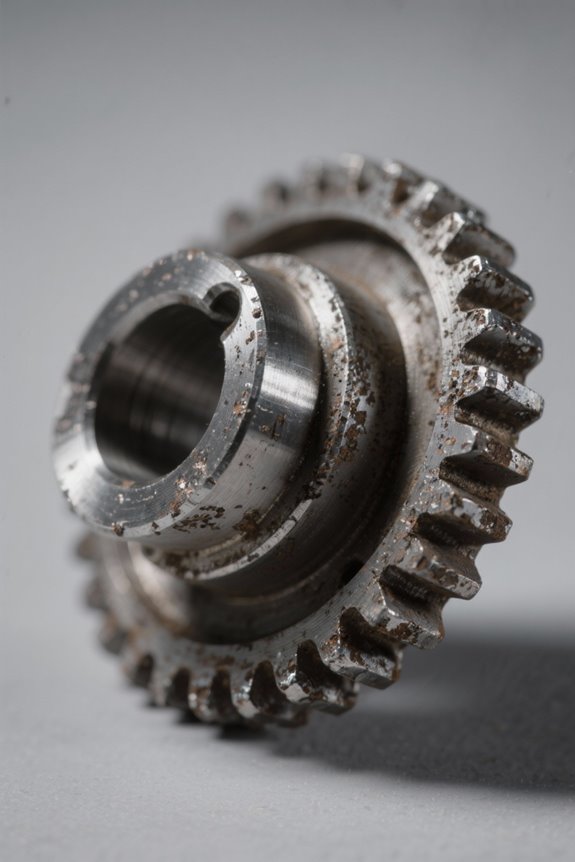
- Metal parts like bearings are still at risk for rust and corrosion, underscoring the need for routine checks.
- Regular inspections and care are crucial, as waterproofing does not eliminate the risk of water damage over time.
Understanding Waterproofing in RC Vehicles
Understanding waterproofing in RC vehicles is important, as many enthusiasts may not realize that being labeled “waterproof” often only indicates splash resistance. Factory Waterproofing Standards refer to the manufacturer’s assurances regarding moisture protection, typically covering significant electronics such as motors, receivers, and servos. Many vehicles use waterproofing materials like silicone sealants and urethane conformal coatings to enhance durability. These sealing techniques create a protective barrier against moisture, ensuring better longevity of components. For additional protection, aftermarket methods, such as sealing receivers in balloons with silicone glue, help create airtight barriers. While factory and aftermarket solutions increase resistance, we must remember that prolonged water exposure can still damage essential components. Active maintenance is important for long-term performance. It’s also worth noting that the average battery life in waterproof RC trucks typically lasts around 25 minutes, which underscores the importance of regularly checking battery health and performance for longevity.
Essential Post-Run Maintenance Practices

After enjoying a run with our waterproof RC vehicle, we should prioritize thorough post-run maintenance to confirm peak performance. Cleaning Procedures play an important role in safeguarding components; we can utilize compressed air or a soft brush to effectively remove dirt and debris without risking damage. During our post run inspection, let’s check screws on all moving parts, tightening them moderately to avoid stripping threads. Lubrication Frequency is essential; we should grease bearings to guarantee smooth operation and apply after-run oil to internal components to prevent corrosion. Finally, inspecting and replacing worn parts, like clutch components and glow plugs, is critical for ideal performance. Additionally, choosing the right RC truck wheels and tires can significantly impact overall vehicle performance. Following these practices keeps our vehicles reliable and ready for the next adventure.
Limitations of Waterproofing Features
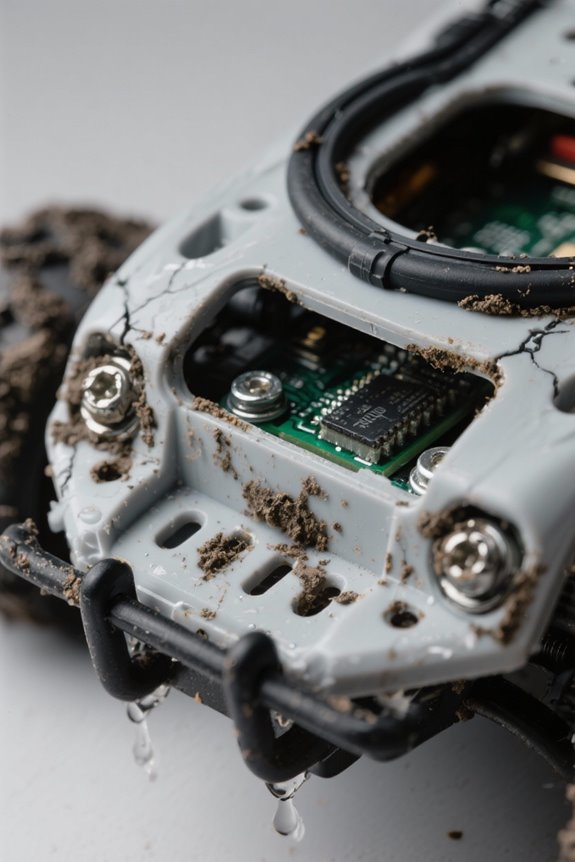
While we might assume that waterproof features fully protect our RC vehicles, it’s important to recognize their limitations. Misleading Nature of “Waterproof” Labels indicates that many manufacturers only label specific components, like electronics, rather than the entire vehicle, which can lead to misunderstandings about overall protection. For example, despite being waterproof, metal parts are still susceptible to rust and corrosion, requiring regular mechanical maintenance. Additionally, Vulnerability of Mechanical and Metal Components highlights how bearings and chassis elements don’t have the same waterproofing guarantees. It’s critical to remember that even in wet conditions, high-speed driving risk splash damage, breaching the waterproof limits of our vehicles. So, regular lubrication and inspection remain essential for maintaining functionality, ensuring lasting performance. Moreover, considering the build quality of various models can give insight into their overall durability and longevity.
Best Cleaning and Lubrication Techniques

Maintaining our waterproof RC vehicles demands attentive cleaning and lubrication strategies to guarantee longevity and performance. Cleaning Techniques for Waterproof RC Vehicles involve first using compressed air or a soft brush to remove loose dirt and dust from vital components like the chassis, suspension, and drivetrain, which helps prevent debris from grinding into sensitive areas. We should clean stuck-on mud with warm soapy water, using a spray bottle and toothbrush. For lubrication, it’s important to apply waterproof grease to servo gears and O-rings to create moisture barriers. Using silicone-based lubricants on gears reduces friction, while avoiding petroleum-based options is essential to prevent dust attraction. Additionally, regular maintenance and checking of battery health are crucial for optimal vehicle performance. Incorporating these best cleaning and lubrication techniques will help our vehicles perform at their best and last longer.
Upgrading to Improve Weather Resistance
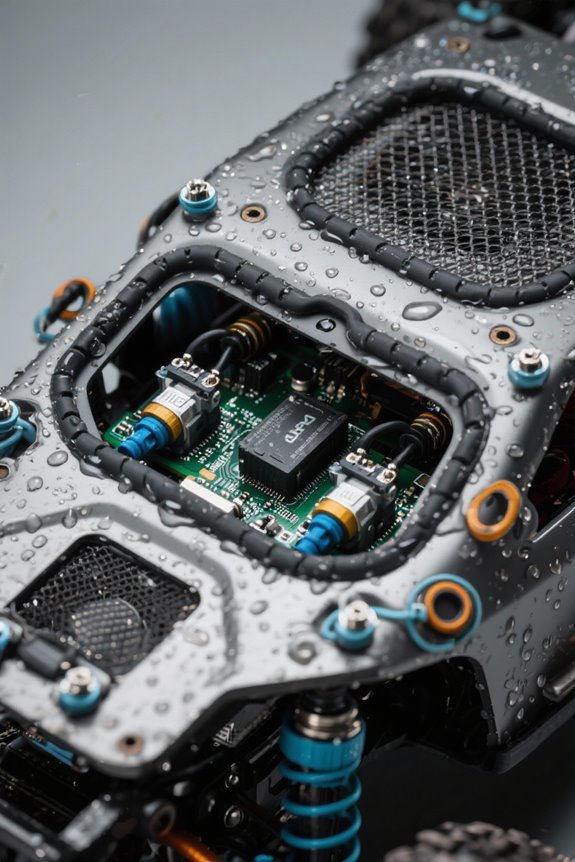
Upgrading our waterproof RC vehicles to enhance weather resistance involves several critical modifications that make them more versatile in wet conditions. Upgrading Waterproof Servos and ESCs is vital for maintaining control; we can swap out stock servos with models like the EcoPower WP120T, which offers a combination of speed, power, and moisture resistance. Wiring Enhancements are equally important; using waterproof connectors guarantees better protection against water ingress. We can seal connections with multiple layers of electrical tape for added security. Additionally, applying conformal coating on electronics creates a protective barrier while remaining removable. Enclosing ESCs and receivers in sealed covers, like balloons, can trap air, preventing water damage. These upgrades greatly improve our vehicle’s performance in adverse weather. Moreover, incorporating high-quality materials ensures that the components are durable and resistant to the wear and tear brought by moisture.
Common Misconceptions About Waterproof RCs
Many enthusiasts misunderstand what “waterproof” really means when it comes to RC vehicles, often assuming these vehicles can handle any aquatic scenario. Waterproof Myths suggest that all components are sealed, but typically, this only applies to the electronics. Key parts like transmissions and axles aren’t fully secure against moisture, which leaves room for contamination. Maintenance Needs remain essential despite these misconceptions; regular cleaning, drying, and lubrication help prevent corrosion and preserve performance. Even factory waterproof models benefit from routine checks, as skipping maintenance can lead to electrical issues and decreased overall functionality. Understanding these realities protects our investments and enhances our enjoyment, ensuring our RC vehicles remain reliable and ready for all adventures. Additionally, many collectors appreciate the build quality of their RC tanks, which can significantly impact durability and performance over time.
Long-Term Care for Optimal Performance
Long-term care plays an essential role in maintaining peak performance for our waterproof RC vehicles. Cleaning Procedures involve using soft-bristle brushes and compressed air to remove debris, guaranteeing electronics remain moisture-free, vital for long-term storage. Lubrication requires us to use silicone-based lubricants on all moving parts; avoiding petroleum-based products extends part life and enhances performance. Electronic Component Checks indicate removing sensitive parts before washing to prevent damage. Regularly inspecting seals and gaskets guarantees waterproofing integrity. Screw and Suspension Maintenance emphasizes tightening critical components after use, preventing performance degradation. Furthermore, Tire Care involves cleaning debris and checking for balance; this seasonal maintenance keeps our vehicles ready for action. Following these steps can greatly prolong the life and performance of our favorite RCs. Additionally, ensuring that the waterproof electronics are rated at least IP67 can provide extra peace of mind against potential water damage.
Frequently Asked Questions
How Often Should I Inspect My Waterproof RC Vehicle?
We should inspect our waterproof RC vehicles immediately after wet runs and maintain a weekly inspection schedule. Let’s create a maintenance checklist to monitor seals and electronics, ensuring our vehicles perform reliably in all conditions.
Can I Use My RC Vehicle in Saltwater?
Yes, we can use our RC vehicles in saltwater, but let’s remember the saltwater impact on durability. We’ve got to rinse them thoroughly afterward and maintain them regularly to keep things running smoothly.
What Lubricants Are Ideal for Waterproof RC Vehicles?
Isn’t it fascinating how the right grease application and silicone spray can keep our waterproof RC vehicles running smoothly? We should always choose water-resistant lubes to protect them and enhance our thrilling adventures together!
Are There Any Specific Cleaning Tools Recommended?
For our RC vehicles, we recommend soft brushes, microfiber towels, and cleaning putty. Along with quality cleaning products, these tools make maintaining our vehicles easier, ensuring they stay in top shape for our next adventures.
How Can I Prevent Corrosion on Exposed Components?
Like an armor for our beloved vehicles, we can shield exposed components with protective coatings and follow corrosion prevention tips. Regularly treat them and embrace maintenance—together, we’ll keep our rides shining and thriving!