As an Amazon Associate, we earn from qualifying purchases. Some links on this site are affiliate links at no extra cost to you. Our recommendations are based on thorough research and editorial judgment.

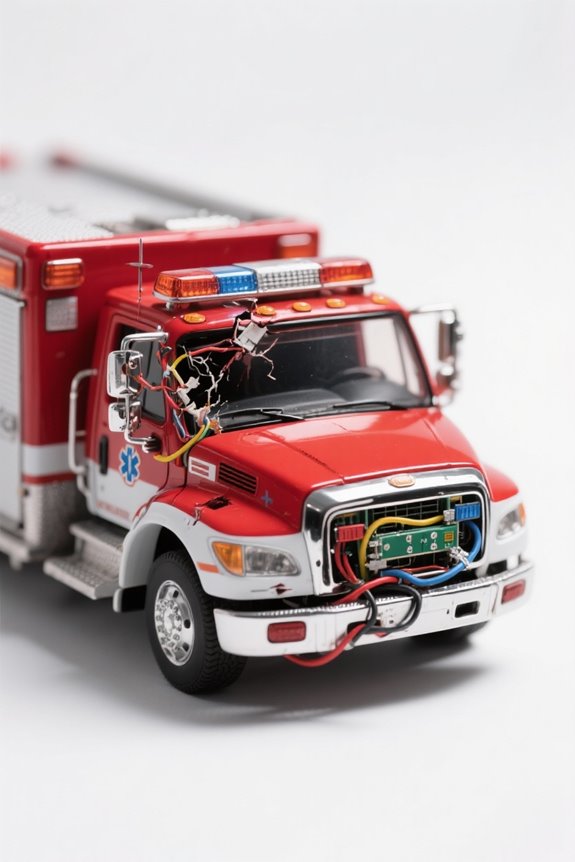
Why Do My RC Emergency Vehicle Lights Keep Malfunctioning?

If our RC emergency vehicle lights are malfunctioning, Loose or Faulty Wiring Connections might be the issue, as improper connections or corrosion can disrupt functionality. Additionally, Wiring Quality and Maintenance play a vital role; using high-quality wires and ensuring proper insulation protects against wear. Installation Errors can result from reversed polarity, causing flickering. Electrical System Compatibility is essential, as LED bulbs may confuse systems not designed for their lower load. Let’s explore more potential problems and solutions.
Key Takeaways
- Loose or faulty wiring connections can disrupt the functionality of RC emergency vehicle lights, leading to inconsistent operation.
- Incorrect polarity connections may prevent LEDs from lighting properly or cause flickering, requiring verification with a multimeter.
- Low-quality wiring or damaged insulation can expose wires to moisture and wear, resulting in malfunctioning lights.
- Regular inspections are essential to identify frayed wires, corrosion at terminals, and ensure secure connections within the system.
- If using LED lights, check for compatibility with RC vehicle systems to avoid hyper flashing or error codes.
Loose or Faulty Wiring Connections
Loose Wiring Connections
One of the most common culprits behind LED emergency light malfunctions is incomplete or loose wiring connections. These faults often stem from inadequate connection integrity, where even seemingly secure wires may not make proper contact. Pushing wires too deep into connectors or incorrect stripping can cause light failures. Crossed or reversed polarity wires might result in erratic behavior. For our peace of mind, we should conduct regular wiring inspections, focusing on connectors that may have loose terminals or corrosion. Ensuring connectors are crimped or soldered properly is essential for preventing intermittent faults. By addressing these wiring issues, we can enhance the reliability of our emergency lighting, ensuring they’re ready whenever called upon. Additionally, regular maintenance practices such as cleaning gears and lubricating moving parts can prevent potential issues in related electronic systems.
Wiring Quality and Maintenance

When we guarantee high-quality wiring and regular maintenance, we greatly enhance the reliability of our emergency vehicle lights. Wiring Insulation protects our systems from moisture and wear; using certified insulation guarantees a thicker, more resilient barrier against environmental factors. Circuit Protection is essential; individually fusing circuits (typically 10–15 amps) safeguards wires from overloads and shorts. Wire Management techniques, like employing grommets and wire looms, prevent chafing and abrasion, prolonging service life. Routine Inspections let us check for frayed wires and conduct tests on switches to catch issues early. By utilizing high-quality components and proper grounding, we can minimize voltage drops and enhance overall performance, leading to dependable emergency vehicle lighting that we can trust on the road. Proper assembly manuals play a crucial role in simplifying the installation and ensuring the system’s effectiveness.
Installation Errors and Polarity Issues

Installation Errors and Polarity Issues** can greatly hinder the functionality of emergency vehicle lights, so it’s essential to understand common mistakes that can arise during installation. Incorrect Polarity Connections are a frequent problem, where reversing positive and negative leads prevents LEDs from lighting or may cause flickering. Conducting polarity verification with a multimeter before connecting power can save us time and frustration. Sync Wire Requirements should also be noted, as some systems rely on proper polarity to maintain flash patterns. Using parallel wiring methods instead of serial ones can guarantee consistent voltage to all lights, enhancing performance and individual maintenance. Additionally, ensuring that the light system is compatible with power source requirements ensures optimal functionality without complications. By addressing these issues, we can greatly improve our emergency light systems’ reliability** and functionality.
Electrical System Compatibility and Hyper Flashing

Understanding Electrical System Compatibility is key to ensuring that LED emergency vehicle lights function correctly. LED bulbs have lower LED resistance, consuming 80-90% less electrical load than traditional halogen bulbs. This difference can cause a vehicle’s signal relay to misinterpret the situation; your system may think there’s a burned-out bulb, triggering hyper flashing. Bulb compatibility varies across vehicles, meaning some may need specific tuners or software adjustments for proper LED recognition. Installing aftermarket LEDs without adjusting for original load requirements can confuse the system and generate error codes. We must consider that hyper flashing often indicates a lower load condition, due to varying electrical requirements between LED and halogen lights, potentially leading to unnecessary alerts and malfunctions. Additionally, maintaining your vehicle’s electric system compatibility by regularly inspecting connections can help prevent such issues.
Environmental and Physical Damage

Environmental and Physical Damage
Moisture exposure and physical impacts can severely affect our RC emergency vehicle lights. Excessive humidity can lead to condensation on lenses, risking short-circuiting. In addition, high temperatures can warp LED housings and stress internal connections, increasing failure rates. We’ve seen that physical shocks, like crashes or everyday handling, can dislodge wiring and damage LED modules. Moreover, vibrations during movement may loosen connectors, impacting electrical contact. Dust and dirt buildup, if not managed, can degrade brightness and lead to overheating issues. Furthermore, high ground clearance in RC vehicles can sometimes expose components more to environmental elements, intensifying potential damage. To maintain best performance, we should store our lights in dry, dust-free environments and routinely inspect for any signs of damage. Proper care guarantees longer lifespans and reliable functionality of our lights.
Power Supply and Voltage Issues
Power Supply Integrity
We all know that maintaining consistent power is essential for our RC emergency vehicle lights. Power variations caused by frayed wires or loose connections can lead to unreliable performance, affecting our LED output. By guaranteeing proper wiring layout and adhering to parallel connections, we prevent voltage loss and guarantee steady performance across all lights. Additionally, using chargers with built-in overcharge protection can enhance the safety and reliability of your power source.
Voltage Stabilization
Furthermore, insufficient voltage from low-capacity batteries, like those with just 4.7V, can compromise our lights’ functionality. Upgrading to a higher capacity battery or implementing voltage regulators can facilitate consistent voltage delivery, stabilizing our lights for reliable operation. Regular checks of our wiring and battery connections help us maintain peak performance, preventing annoying light flickers and guaranteeing the best experience with our setups.
Troubleshooting Steps for Persistent Problems
When troubleshooting persistent problems with our RC emergency vehicle lights, we should start by verifying LED light functionality, since faulty lights can easily be misdiagnosed as wiring issues. Test LED functionality by connecting lights directly to a known good power source, confirming correct polarity. If lights fail, consider replacing them. Next, inspect wiring connections for loose or crossed wires. Guarantee polarity is accurate and that wires are stripped appropriately. Additionally, we can assess wiring condition; replacing worn wires maintains stability. For precise testing, we can utilize diagnostic tools designed for LEDs, confirming compatibility and detecting programming issues. Regular maintenance checks will Guarantee overall reliability, preventing intermittent performance problems in our emergency lighting systems. Consider upgrading with high-quality materials that enhance resilience against challenging environments to improve overall durability.
Frequently Asked Questions
Can Extreme Temperatures Affect the Performance of My Emergency Lights?
Absolutely, temperature extremes can greatly impact light durability. We’ve seen how both extreme heat and cold affect emergency lights, leading to malfunction. Regular maintenance and awareness can help us mitigate these effects and guarantee optimal performance.
How Can I Improve the Visibility of My Emergency Vehicle Lights at Night?
Imagine stars guiding us through darkness; we can enhance our emergency lights’ visibility by optimizing light positioning and selecting the right reflective materials. Together, we’ll guarantee we shine bright and keep our community safe.
Are There Specific Brands Recommended for High-Quality Emergency Vehicle Lights?
When it comes to quality reviews, we recommend brands like Feniex and Whelen for durability, along with Wicked Warnings for innovative designs. Comparing these options can help us all make better choices for our emergency vehicle lights.
What Tools Do I Need for Basic Wiring Repairs on Emergency Lights?
We’ve all dreamt of soldering and connecting wires perfectly, right? For basic wiring repairs on emergency lights, we’ll need wire connectors and soldering tools. Together, we can create safe, reliable systems that truly shine!
How Often Should I Replace the Bulbs in My Emergency Vehicle Lights?
We should replace our emergency vehicle bulbs every 6 to 12 months for halogen or incandescent types, while LEDs may last several years. Keeping track of bulb lifespan guarantees we maintain ideal replacement frequency and reliability.


