As an Amazon Associate, we earn from qualifying purchases. Some links on this site are affiliate links at no extra cost to you. Our recommendations are based on thorough research and editorial judgment.


What’s The Learning Curve For Different Types Of RC Vehicles?

The learning curve for different RC vehicle types varies widely. Electric models are simpler to operate and maintain, making them ideal for beginners, while nitro vehicles require mechanical skills and consistent practice for mastery. Off-road vehicles like monster trucks are forgiving, allowing for error without damage; on-road and touring cars demand precision with throttle and steering. As we refine our skills, exploring these facets can enhance our RC experience considerably, revealing more about what suits our needs.
Key Takeaways
- Off-road RC vehicles like monster trucks are forgiving for beginners, making them ideal for building confidence and skill without significant damage risks.
- On-road and touring RC cars require precision in throttle modulation and steering, emphasizing the importance of initial assembly for learning component functions.
- Drift RC cars demand advanced skills in throttle control and understanding drifting dynamics, making them suitable for more experienced drivers.
- Regular practice and maintenance are vital across all types of RC vehicles to enhance performance and ensure longevity.
- Selecting electric models or Ready-to-Run (RTR) vehicles can simplify the learning curve, allowing quicker skill acquisition for new drivers.
Overview of RC Vehicle Types
When exploring RC vehicle types, enthusiasts can find a variety of models tailored for different preferences and environments. Electric vs. Nitro: Electric vehicles are typically quieter and easier to maintain, while Nitro models offer longer run times and more speed. On Road Designs: Models like touring and drift cars excel on smooth surfaces, featuring aerodynamic bodies and lower ground clearance for high-speed precision. Off Road Features: Monster trucks and buggies boast larger scales (1:5 to 1:10), providing stability, shock absorption, and rugged designs. Vehicle Customization: Many models allow for upgrades and personalization to enhance performance, with options for motor upgrades that significantly improve efficiency and speed. Performance Comparison: Each type offers distinct advantages, making vehicle suitability essential when selecting for terrain and intended use during racing events.
Learning Curve for Off-Road RC Vehicles
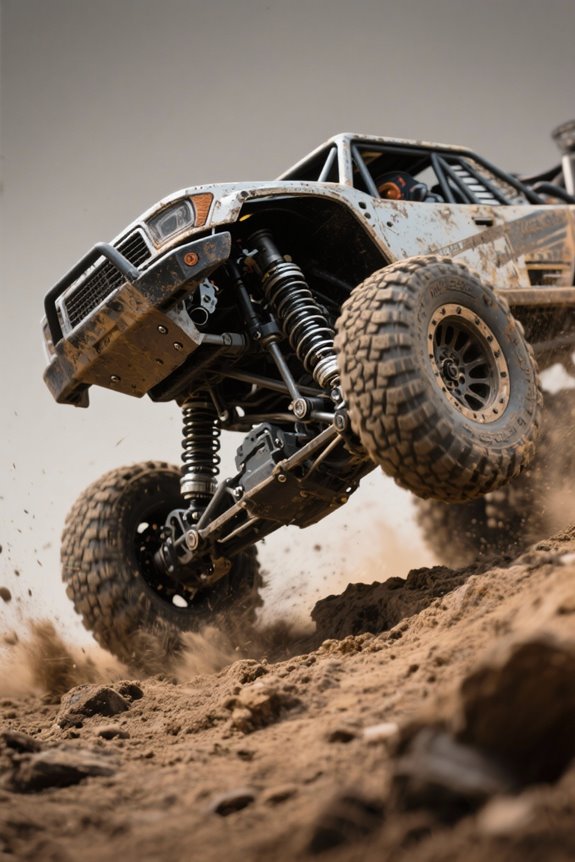
When it comes to durability factors, off-road vehicles like monster trucks feature robust chassis and heavy-duty suspension systems that endure typical beginner mistakes, like flipping. This forgiving nature allows us to gain confidence while preserving our investment for consistent practice. Additionally, the use of high-quality nylon plastic construction in these models contributes significantly to their resilience against wear and tear.
Learning Curve for On-Road and Touring RC Cars

Learning to operate on-road and touring RC cars can be both exciting and challenging, as we traverse the nuances of these precision machines. Beginner Assembly & Initial Setup is where our journey typically begins; even though many models come ready-to-run (RTR), constructing a kit can deepen our understanding of individual components and enhance our ability to customize. Selecting the best RC batteries is vital, as it affects performance. We’ll need essential tools for assembly, such as screwdrivers and wrenches, which aid in maintenance. Practicing on flat surfaces allows us to master control and handling. By focusing on throttle modulation and steering accuracy, we build essential skills for confidently traversing more complex tracks and obstacles. Understanding speed and performance specifications can further enhance our ability to choose the right model suited to our skill level.
Learning Curve for Drift RC Cars
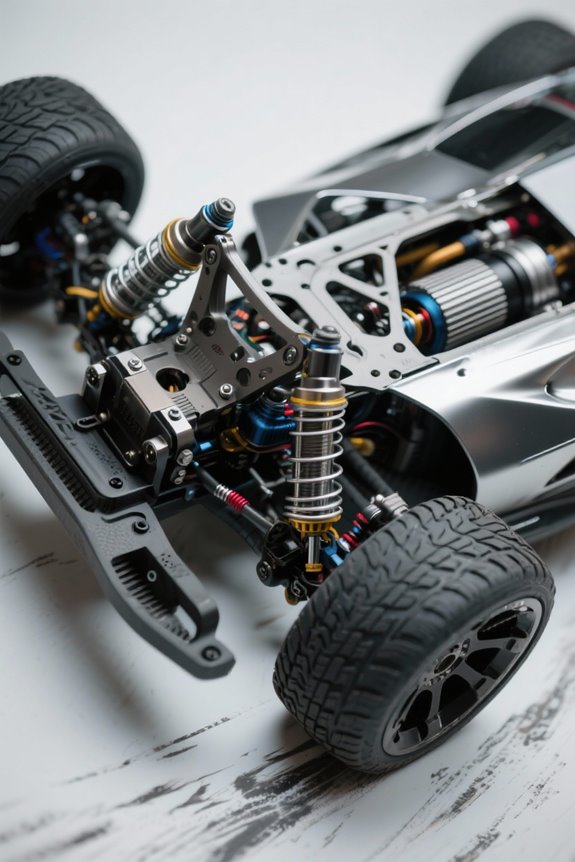
Drifting RC cars offer a unique challenge, as they require precise control over throttle and steering to maintain the desired drift angle. Drifting Techniques involve initiating a slide by approaching corners at high speed, where we must brake momentarily to disengage the rear wheels. Mastering drift dynamics is essential; we must understand the trajectory, including the steering point, apex, and exit point of the turn. Utilizing throttle modulation allows us to maintain control during the slide, while countersteering helps keep the car’s nose directed toward the apex. Gyroscopes, often used in beginner models, provide automatic corrections, reducing the learning curve and allowing for more extended, controlled drifts. Additionally, selecting models with adjustable sensitivity settings can further enhance maneuverability and assist in skill development. Ultimately, consistent practice will refine our skills and enhance our drifting experience.
Skill Progression for Beginners to Intermediate Levels

Progressing through skill levels with RC vehicles involves clear stages, specifically designed to enhance our control and responsiveness. Rookie pilots typically start with basic models that feature stabilizers and 2 to 3 channels, facilitating limited flight experience and helping us grasp fundamental controls. Skill building emphasizes mastering throttle, elevator, aileron, and rudder, ensuring coordinated turns, takeoffs, and landings become critical milestones. As we advance to intermediate levels, we graduate to 4-channel planes, allowing more control with less reliance on stabilizers. In RC buggies, we learn throttle and steering control at moderate speeds, focusing on stability, while crawlers teach us precise slow maneuvering. Throughout this progression, safety practices remain essential to prevent damage to ourselves and our vehicles. Additionally, understanding the importance of performance optimization is crucial as it enhances overall driving experiences and vehicle longevity.
Learning Curve for Electric vs. Nitro RC Vehicles
Maintenance Requirements: Nitro vehicles demand regular, detailed mechanical maintenance, such as engine tuning and air filter care, creating a steeper learning curve. In contrast, electric models primarily require battery care, facilitating easier upkeep. Additionally, electric trucks often have high-performance capabilities that can enhance the driving experience without extensive tuning.
Setup Time: Nitro RCs generally take 5 to 15 minutes for setup, requiring engine warming and fuel preparation. Electric vehicles can be ready in under 2 minutes, allowing for more spontaneous playtime.
Driving Dynamics: Nitro offers a raw, mechanical feel that takes practice to master. Electric provides smooth, predictable acceleration, making it more approachable for newcomers. Each choice shapes our journey and proficiency in the RC world.
Impact of Scale on Learning Curve
When considering the impact of scale on the learning curve, it’s essential to understand how the size of the RC vehicle influences various aspects of operation. Scale Advantages: Larger vehicles (1/8, 1/5) offer durability and speed control due to powerful motors, but handling precision increases in complexity. Size Disadvantages: Smaller models (1/24) provide agility and easier terrain management, making them ideal for beginners. handling precision: Larger RCs require advanced skills for control during turns and braking, while smaller ones enhance basic handling techniques. Weight Distribution: Bigger models need careful management of weight, affecting speed and maneuverability. Maintenance Complexity: Larger vehicles demand more maintenance, yet simpler, smaller ones are easier to repair, lowering barriers for newcomers. Furthermore, battery life is also a critical factor that can influence the experience and skill development when operating different scale RC vehicles.
Terrain and Its Influence on Driving Skills
Understanding how terrain impacts driving skills is essential for effective RC vehicle operation. Terrain Types: Each terrain type, such as dirt, sand, rock, mud, and snow, requires distinct driving techniques that challenge our control abilities. Dirt Tracks: Mastering controlled drifting on loose surfaces helps maintain speed without losing control. Sandy Terrain: Maintaining momentum prevents bogging down in loose grains, enhancing our skill adaptability. Rocky Surfaces: Careful throttle and steering are vital for maneuvering obstacles, promoting fine motor skills. Muddy Conditions: Smooth throttle inputs are necessary to avoid slipping, increasing our anticipation skills. Snowy Terrain: Delicate control manages sliding, requiring adaptive strategies. By practicing on diverse terrains, we enhance our driving skills and better respond to various terrain challenges. Moreover, understanding terrain suitability can help you choose the right RC vehicle for your skill development.
Choosing the Right RC Vehicle for Beginners
Choosing the right RC vehicle for beginners involves several key considerations that can greatly impact the learning experience. Vehicle Types: We should start by identifying beginner-friendly options, such as Ready-to-Run (RTR) models, which require no assembly and provide immediate enjoyment. Durability is also essential; vehicles like bashers are designed to withstand rough handling, making them ideal for novices who might crash as they learn to control their RC cars. Ease of Control is another factor; models that prioritize stability, like 1/10 scale short course trucks, have lower top speeds of 20-30 MPH. These features enhance our confidence, making them the best starter vehicles. With essential accessories included, we can immerse ourselves in the hobby without added confusion. Additionally, considering options with low top speeds can further enhance the learning experience by reducing the risk of accidents.
Essential Skills for RC Vehicle Operation
Mastering essential skills for RC vehicle operation is crucial to enhance our overall driving experience and performance. Basic Control Operations require us to become proficient with transmitter controls, including the throttle for acceleration and braking, and the steering wheel for directional changes. We should practice controller calibration frequently to guarantee safe and accurate responses. Terrain Familiarity enhances our ability to navigate various surfaces, adapting our techniques accordingly. For instance, understanding how our vehicle handles on mud versus pavement allows for better performance, especially in off-road conditions. Additionally, testing our controls regularly prevents miscommunications between the transmitter and vehicle, assuring smooth operation. By mastering these fundamental skills, we markedly improve both our driving comfort and control precision. Regular maintenance is also essential for optimal performance to ensure long-lasting enjoyment of our RC vehicles.
Maintenance and Repair Considerations
By adopting these repair tips, we can extend our vehicles’ longevity and enhance performance, helping us enjoy our hobby even more!
Common Challenges Faced by New RC Drivers
When starting our journey into the world of RC vehicles, we often encounter several common challenges that can hinder our progress. Basic Operational Mistakes typically arise from a lack of experience, such as turning on the RC vehicle before the transmitter; this mistake leads to uncontrolled movement, risking both safety and vehicle integrity. Signal and Controller Connection Issues, like low battery levels or damaged antennas, frequently disrupt communication, causing unresponsiveness. Steering and Handling Challenges occur when suspension isn’t properly configured, leading to unstable handling. Additionally, Environmental and Terrain Adaptation Difficulties arise when we overlook suitable surfaces for our vehicles. By following proper setup procedures and observing safety precautions, we can mitigate these challenges and enhance our overall RC experience.
Tips for Accelerating Your Learning Curve
To enhance our learning curve with RC vehicles, selecting the Appropriate RC Vehicle for Skill Level is essential. Choosing electric models over nitro offers easier maintenance and use. Ready-to-Run (RTR) Models come pre-assembled, enabling immediate use and faster skill acquisition. We should opt for vehicles with Speed Limiters to manage acceleration during practice, easing our learning process. Training Modes in programmable speed controllers help us gradually build confidence by limiting throttle response. Incremental Practice on flat surfaces allows us to master throttle control while minimizing accidents. Utilizing beginner resources, such as manuals or online tutorials, can deepen our understanding of Equipment Setup, ensuring our vehicle’s ideal performance. Together, these tips foster a supportive environment for all of us to grow as RC drivers.
Upgrading Your RC Vehicle for Enhanced Performance
We can further elevate performance through high-performance Electronic Speed Controllers (ESCs), offering customizable throttle response for tailored acceleration, or by enhancing our drivetrain with gears made from durable materials. These performance upgrades guarantee our vehicles not only race faster but also handle better, making each outing a more exciting experience. Customization options await us to explore!
Frequently Asked Questions
What Budget Should I Expect for a Beginner RC Vehicle?
When we’re talking dollars and cents, a beginner RC vehicle’s budget overview typically falls between $50 and $1,000. We should factor in initial costs for batteries and accessories to avoid any unwelcome surprises down the road.
How Do Weather Conditions Affect RC Vehicle Performance?
Weather conditions considerably affect our RC vehicle performance. Humidity impacts battery efficiency and electronics, while wind resistance can hinder our speed. We need to adapt our setups to guarantee we’re always ready for any environment.
What Safety Precautions Should I Take When Operating RC Vehicles?
When we operate RC vehicles, we should prioritize battery maintenance and practice good driving etiquette. Let’s guarantee a safe environment, respect others, and keep our vehicles in top shape for enjoyable and responsible fun together.
Can I Race My RC Vehicle Against Others as a Beginner?
Yes, we can definitely race our RC vehicles as beginners! Joining novice classes and following competition tips will help us build confidence and skills while enjoying the camaraderie of fellow racers. Let’s hit the track together!
How Do I Choose the Right Accessories for My RC Vehicle?
When choosing accessories for our RC vehicle, let’s prioritize accessory compatibility and consider performance upgrades that suit our skill level. This way, we can enhance our experience and enjoy our hobby together even more!


