As an Amazon Associate, we earn from qualifying purchases. Some links on this site are affiliate links at no extra cost to you. Our recommendations are based on thorough research and editorial judgment.

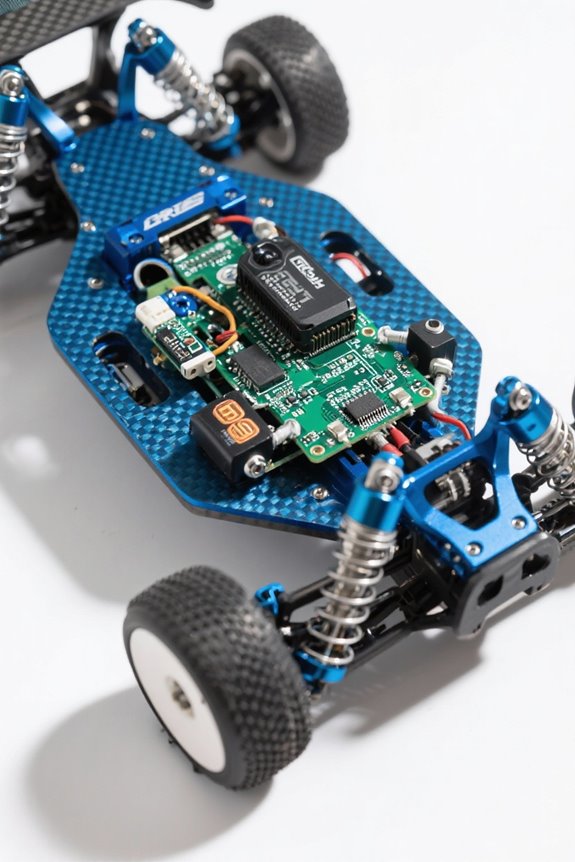
What Firmware Updates Do Modern RC Vehicles Need?

Modern RC vehicles need firmware updates to enhance security, improve performance, and guarantee compatibility. Security enhancements protect against vulnerabilities, while bug fixes resolve software issues for reliable operation. Compatibility updates help maintain hardware connections with new components. Battery management improvements optimize charging and extend battery life. Over-the-air (OTA) updates streamline the process, guaranteeing secure installations. By staying current with updates, we can maximize our vehicle’s capabilities and performance, allowing us to drive with confidence. Further details will follow.
Key Takeaways
- Modern RC vehicles need security enhancements to protect against vulnerabilities and ensure safe operation through updated encryption algorithms.
- Bug fixes are essential for addressing communication glitches and improving the overall reliability of the vehicle’s performance.
- Compatibility updates are necessary to maintain functionality with new hardware components and ensure seamless integration.
- Range extensions improve communication capabilities, allowing for better performance in diverse environments and reducing latency.
- Battery management improvements enhance cell longevity and safety by optimizing charging rates and monitoring cell conditions accurately.
Importance of Firmware Updates in RC Vehicles
Enhanced Security: Regular firmware updates patch known vulnerabilities, greatly reducing risk from cyber threats. By implementing improved encryption and security protocols, updates protect both vehicle control modules and our sensitive telemetry data.
Improved Performance: These updates fix bugs that cause erratic behavior, optimize motor control, and enhance battery management, enabling smoother operation and minimizing latency.
User Customization Options: With each update, new features often become available, adapting to our evolving user interface needs and technological advancements. Furthermore, updates may also improve operating conditions by enhancing system stability under diverse conditions.
Types of Firmware Updates Needed

When discussing the types of firmware updates needed for RC vehicles, one must acknowledge the critical role each update plays in ensuring peak performance and security. Security Enhancements are paramount, as updates implement new encryption algorithms that protect communications and prevent hacking during wireless firmware upgrades, ensuring our vehicle’s Electronic Control Units (ECUs) are less susceptible to malware. Bug Fixes and Stability Improvements enhance reliability by addressing software bugs and communication glitches, providing smoother operation. Compatibility and Integration Updates are essential for maintaining hardware compatibility with new components and ensuring effective communication protocols with external devices. Each update category supports our vehicles in running at their best, ensuring we can fully enjoy our hobby with confidence and control. Additionally, understanding the importance of weight and balance considerations can also play a role in optimizing performance through firmware updates.
Frequency and Range Enhancements

Firmware updates greatly improve Frequency and Range Enhancements for RC vehicles, optimizing communication capabilities and overall performance. Frequency Optimization enhances radio communication by utilizing advanced modulation techniques, like LoRa and FLRC, that boost signal clarity over long distances. This means we can enjoy reliable control at greater distances, often exceeding several hundred meters with less drop-off. Range Extension leverages increased transmission power and newly supported frequency bands such as 2.4 GHz, 900 MHz, and 433 MHz to adapt to various environments. These updates don’t just improve distance; they often lower latency considerably, allowing for quicker responses. By staying updated, we guarantee our vehicles perform efficiently, offering us an enhanced, seamless experience while operating in diverse settings. Additionally, incorporating waterproof electronics can further enhance durability and operating performance in challenging environments.
Security Patches and Their Necessity

Secure Authentication and Encryption for Firmware Updates** is essential to maintain the integrity of our RC vehicles. By using secure update mechanisms, we protect against security vulnerabilities that can compromise our systems. Firmware packages need to be encrypted and cryptographically signed, ensuring only authorized updates are applied. Additionally, employing secure communication protocols, like TLS, safeguards data during transmission. Rollback protection mechanisms are critical to thwart attackers from downgrading to vulnerable firmware versions. Continuous monitoring of update requests helps detect and mitigate suspicious activities, reinforcing our security. With these robust measures, we can enjoy our RC vehicles confidently, knowing our systems are resilient against potential threats, and we adhere to industry standards for secure firmware management. Moreover, integrating lessons from WWII vehicle model accuracy** into modern firmware practices can enhance our understanding of security measures necessary for protection.
Battery Management Improvements

Battery management improvements are essential for enhancing the performance and safety of our RC vehicles. Accurate Monitoring enables precise tracking of battery cell voltage and temperature, which prevents dangerous overcharge and overdischarge scenarios. Battery Cell Balancing utilizes active techniques to redistribute energy from stronger to weaker cells, improving longevity. This adjustment safeguards our battery’s health during use. Charge Optimization involves refining algorithms to adjust charging rates based on temperature and health metrics, which enhances performance and reduces stress on battery cells. Dynamic balancing adapts to different load conditions, ensuring efficient energy use. These advancements help us maximize battery cycle life, preventing premature degradation and ultimately providing a safer, more reliable driving experience for all enthusiasts. Additionally, the incorporation of specific LiPo balance chargers can further enhance safety during the charging process.
Bug Fixes for Optimal Performance
When we think about improving our RC vehicles, addressing bug fixes is essential for guaranteeing peak performance. Signal Stability updates resolve intermittent and lost signal issues between the transmitter and vehicle, enhancing control responsiveness. These signal enhancements eliminate lag in command execution and reduce interruptions caused by communication protocol bugs, making our rides smoother. Regular calibration checks correct sensor reading errors from gyroscopes and accelerometers, guaranteeing accurate balance and handling. Additionally, firmware patches optimize motor performance by fixing irregularities and enhancing throttle response. By addressing issues like overheating and erratic braking, we can guarantee our vehicles perform consistently under various conditions. Overall, these updates provide a more reliable and enjoyable RC experience, keeping us connected and in control. Furthermore, regular updates ensure compatibility with new performance features introduced in latest models, allowing enthusiasts to fully optimize their driving experience.
New Features and Additions
As we explore new features and additions in firmware updates for RC vehicles, we’re excited to see enhancements that improve overall functionality and user experience.
Lighting Features: The update introduces advanced lamp settings that enhance visibility while also adding style to your vehicle, making night runs safer and more visually appealing.
Telemetry Support: With new Telemetry Support adapters, real-time monitoring of vital vehicle stats like speed and battery life is now possible. This allows for immediate adjustments and better performance management during races.
Gear Ratio Settings: Revised gear ratio options aid users in fine-tuning speed and distance calculations, enhancing precision and performance overall. Furthermore, these updates may also improve throttle response customization, enabling users to tailor their driving experience to fit personal preferences.
These features combine to create a richer, more enjoyable experience, fostering deeper engagement with our RC vehicles.
Methods for Updating Firmware
Regardless of the method, ensuring firmware compatibility is vital, with online resources often guiding us through the process to avoid errors. By following these methods, we can enhance and maintain our RC vehicles effectively. Additionally, understanding customization options can lead to better performance and longevity of the vehicle after firmware updates.
Over-the-Air (OTA) Update Process
Over-the-Air (OTA) updates represent a modern method for enhancing the functionality of RC vehicles, streamlining the update process considerably. OTA Architecture involves a backend server that provides firmware images, an OTA master ECU managing updates, and target ECUs receiving firmware transfer in packets. This architecture allows for efficient and secure updates without physical access. Security Measures like end-to-end encryption and authentication protocols guarantee the integrity of updates. Data Management is optimized through chunked transfers and differential files, which reduce bandwidth usage. Monitoring Mechanisms help detect and rectify update failures swiftly. Together, these features not only improve performance but also enhance user experience by guaranteeing reliable, secure firmware updates on demand, fostering a more connected RC community. Ensuring high-quality materials in RC vehicle components can further optimize performance alongside firmware updates.
USB/SD Card Firmware Updates
When we consider USB/SD Card Firmware Updates, it becomes clear that this method provides a reliable alternative for enhancing the capabilities of RC vehicles. SD Card Requirements include ensuring compatibility with device bootloader recognition and specific firmware naming formats. We must remember that firmware files like .abin or .hex need to be correctly placed onto the SD card for successful updates. USB Compatibility Challenges arise when certain devices require specific drivers or modes, such as DFU, to initiate updates. Additionally, we often find that USB programming cards can facilitate updates seamlessly. This approach simplifies the update process, reduces the need for direct connections, and allows users to preload files, making firmware maintenance user-friendly, even for those less experienced with technology. Regular maintenance of RC vehicles, including monitoring battery health, ensures optimal performance and longevity during these updates.
Direct Connection Updates
Direct connection updates represent a straightforward method for upgrading firmware on RC vehicles. Direct USB Cable Connection allows us to use a standard USB, micro USB, or USB-C cable to connect our RC device, such as a transmitter or interface, directly to a computer. This method requires specific software tools, often provided by manufacturers, to manage the firmware flashing process. We must ascertain that our computer’s operating system meets the necessary requirements for smooth operation. It’s essential to use data transfer-capable cables for stable communication, as charging cables may not suffice. Before starting an update, we should confirm our firmware is compatible to avoid errors. Following verification, we can initiate the update smoothly and efficiently, enhancing our RC experience.
Mobile App Update Interfaces
Mobile app update interfaces offer an innovative approach to upgrading firmware on RC vehicles. Over-the-Air (OTA) Updates allow firmware to be wirelessly transmitted to our devices via apps installed on mobile devices. The user interface showcases progress indicators, like percentage complete and visual progress bars, providing us with essential user feedback during the update process. Apps typically require our vehicle to enter a specific firmware update mode, ensuring a smooth installation. For error recovery, mechanisms restart or resume failed updates, which helps safeguard our devices from bricking. Additionally, notifications alert us when updates are available, enhancing awareness. With multi-language support, these interfaces make updates accessible to users worldwide, fostering an inclusive community around RC vehicles.
Security Considerations During Updates
Guaranteeing the security of firmware updates is critical, as vulnerabilities in these systems can expose our RC vehicles to significant risks. Attack Surface Expansion occurs when we implement Over-The-Air (OTA) updates, increasing the potential for threat actors to inject malware or exploit weak points. Conducting a vulnerability assessment is essential; it helps us identify existing security gaps that may allow unauthorized access. Implementing cybersecurity protocols, like cryptographic signing, guarantees firmware authenticity and protects against unauthorized modifications. Additionally, employing rollback protection mechanisms prevents attackers from downgrading firmware to exploit previous versions. Finally, integrating intrusion detection systems into vehicle networks actively monitors for any suspicious activities, enhancing our overall security and helping protect our beloved RC vehicles from threats.
Best Practices for Successful Firmware Updates
Scheduling Updates during low-impact periods minimizes disruptions. We should manually check for updates instead of relying on automatic triggers, ensuring our devices are powered and connected for smooth installations. Together, these practices protect our investments and keep our RC vehicles running at peak performance.
Frequently Asked Questions
How Often Should I Check for Firmware Updates?
We should perform manual checks every three months for firmware updates. Curiously, about 70% of RC enthusiasts experience improved performance after updates, fostering our shared passion while ensuring our vehicles remain competitive and reliable.
Can I Downgrade Firmware After an Update?
Yes, we can downgrade firmware after an update, but we must carefully follow the downgrade process. It’s essential to take into account firmware safety, as older versions might lack recent fixes and could introduce risks.
What Happens if a Firmware Update Fails?
When a firmware update fails, about 30% of users face critical issues. We should always prioritize update troubleshooting and data backup to prevent device malfunctions, keeping our community safe and connected in this tech-driven world.
Do Firmware Updates Void the Warranty?
Yes, firmware updates can void the warranty if we don’t follow proper update guidelines. It’s essential we adhere to manufacturer recommendations to avoid warranty implications and protect our investment in these awesome RC vehicles.
Are Firmware Updates Different for Each RC Vehicle Model?
Yes, firmware updates differ for each RC vehicle model. Model compatibility’s vital, and we should stay informed about update frequency from manufacturers, ensuring our vehicles perform at their best and retain their unique features effectively.


