As an Amazon Associate, we earn from qualifying purchases. Some links on this site are affiliate links at no extra cost to you. Our recommendations are based on thorough research and editorial judgment.


What Features Matter Most In RC Vehicle Purchases?

When considering RC vehicle purchases, we prioritize vehicle type for best terrain use, such as on-road for speed or off-road for durability. The motor type greatly affects performance; brushless motors offer greater efficiency and speed. durability is essential, with metal alloys and reinforced plastics often ensuring longer lifespans against impacts. We also examine control systems, ensuring reliable 2.4 GHz signals for better handling. By focusing on these features, we enhance our overall RC experience and enjoyment.
Key Takeaways
- Motor Type: Opt for brushless motors for higher efficiency and power, especially if performance is a priority.
- Durability: Choose vehicles with metal chassis or reinforced plastics for enhanced impact resistance and longevity.
- Control Systems: Consider transmitter types and channel capabilities; advanced features like telemetry can enhance your driving experience.
- Terrain Suitability: Select on-road, off-road, or drift vehicles based on your preferred driving conditions and style.
- Price Range: Align your budget with the vehicle category, from entry-level models to high-performance options, to maximize value.
Types of RC Vehicles and Their Intended Use
When considering the various types of RC vehicles, it’s important to recognize their distinct characteristics and intended uses. On-Road RC Cars are engineered for smooth, paved surfaces, featuring streamlined bodies that enhance speed and racing performance. These cars boast on-road advantages like superior acceleration and precision handling, making them ideal for competitive racing. Conversely, Off-Road Vehicles excel with rugged terrains, offering enhanced ground clearance and specialized shock absorbers for durability. They handle dirt and gravel effortlessly, showcasing their off-road capabilities. Drift RC Cars, with their low center of gravity, specialize in controlled sliding, utilizing drift techniques for stylish maneuvers. Finally, Military RC Trucks deliver military realism, accurately modeled to reflect functional features, making them suitable for tactical scenarios and collectors alike. Additionally, many models like brushless motors can achieve impressive speeds, enhancing the overall driving experience.
Powertrain and Motor Types
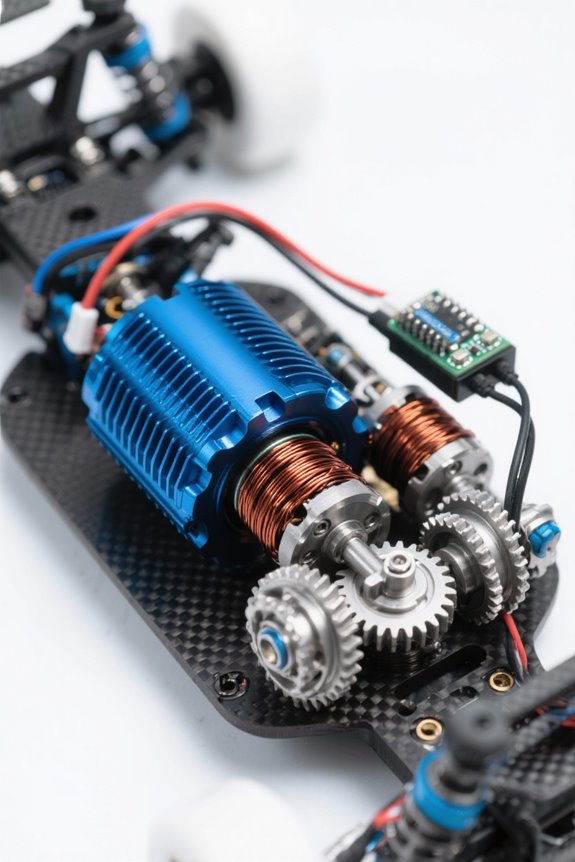
In the world of RC vehicles, understanding the Powertrain and Motor Types is essential for optimizing performance and enjoying an exhilarating driving experience. Brushed motors feature a simpler design with brushes that conduct current, making them common in entry-level models. These motors offer adequate motor efficiency, but friction leads to heat that diminishes power output, suitable for beginners. On the other hand, Brushless motors eliminate brushes, enhancing motor efficiency and increasing power output with less heat generation. Choosing between **inrunner and outrunner Brushless motors** depends on application; inrunners excel at high RPMs, while outrunners deliver superior **torque ratings for off-road use. Understanding these differences helps us select the right setup for our thrilling adventures in the RC world. Notably, many brushless models have significant upgrade potential** for increased performance, including enhancements to batteries and motors.
Durability and Build Quality
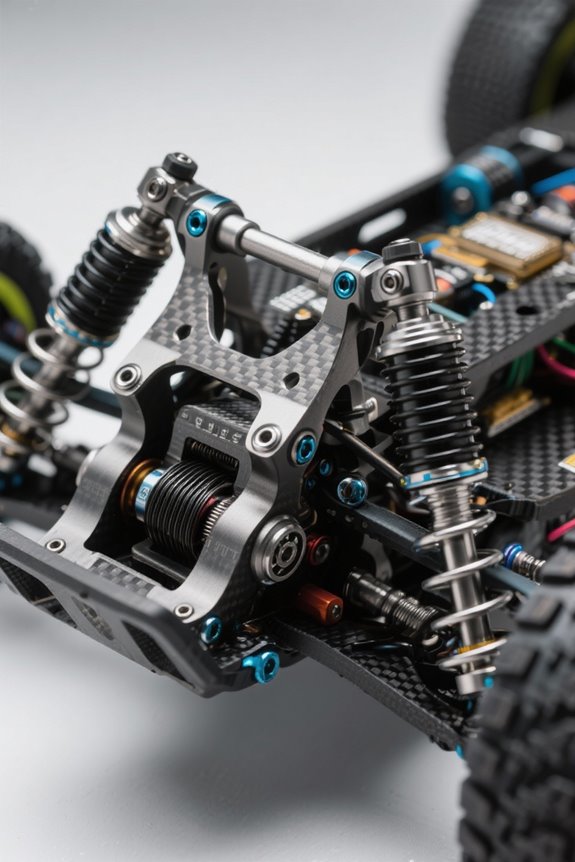
Understanding durability and build quality is pivotal for enhancing every RC vehicle experience. Material Quality and Construction play a significant role in overall resilience; vehicles with metal chassis typically withstand impacts better than those made from plastic. Opting for metal alloys or reinforced plastics strikes a balance between strength and weight, which is essential for high-performance setups. Impact Resistance is further improved with thick tires and robust bumpers that absorb crashes effectively, maintaining vehicle shape. Regular inspections of stress-prone areas, like axle joints, help guarantee build integrity, preventing potential issues. By prioritizing thoughtful material selection and construction techniques, we not only prolong the life of our vehicles but also enhance their ability to tackle challenging terrains without compromising performance. Additionally, upgrading components with high-quality materials can significantly boost both durability and performance.
Control Systems and Features
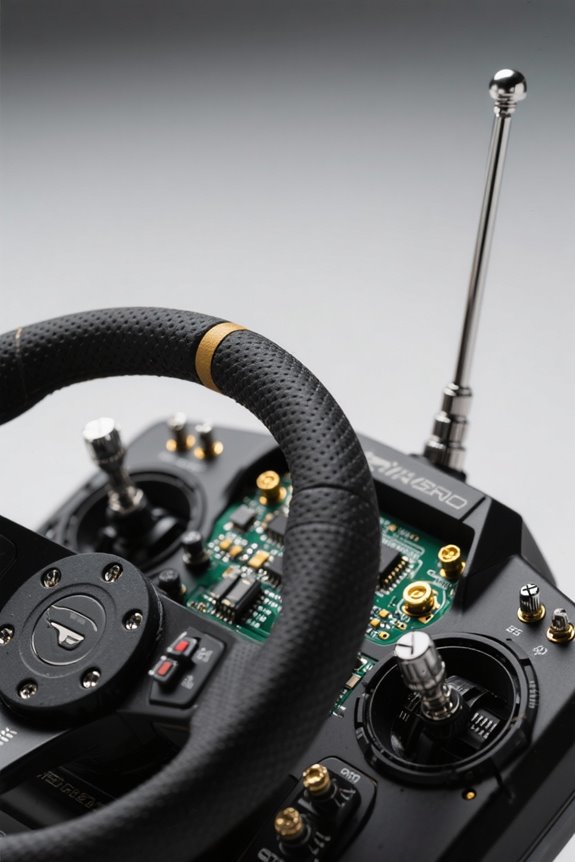
Transmitter Types: We typically choose between pistol grip and dual-stick transmitters. Pistol grips offer ergonomic designs for comfort, while stick transmitters allow for complex control schemes favored by pros.
Channel Capabilities: A basic 2-channel setup suffices for simple RC cars, but advanced models may utilize 4-6 channels for enhanced control.
Signal Reliability: Modern 2.4 GHz systems guarantee strong, interference-resistant signals, essential for safety through fail-safe systems.
Advanced Features: The integration of telemetry allows for real-time data, enhancing our control sensitivity and fine-tuning vehicle performance. Additionally, understanding the importance of battery specifications can greatly impact our choices for optimal performance. Overall, understanding these elements helps us enhance our RC experience.
Suspension and Handling Characteristics
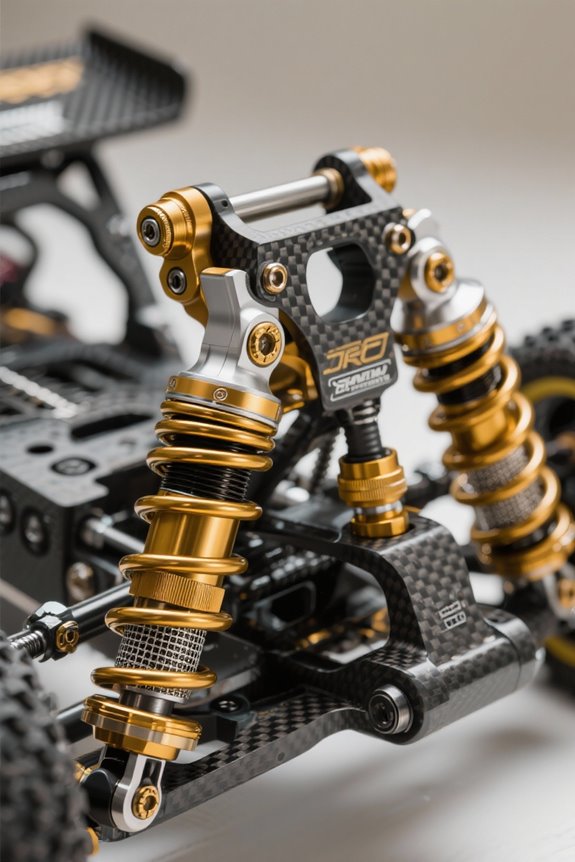
When evaluating Suspension and Handling Characteristics, we can appreciate how various systems impact our RC vehicles. Independent Suspension allows each wheel to move independently, improving off-road handling, while Solid Axle Suspension provides stability on flat terrains. Each utilizes different shock absorbers, with oil-filled shocks offering adjustable and smooth damping for diverse conditions, while coil-over shocks enhance durability. Suspension Tuning is vital; modifying spring tension and shock oil viscosity can optimize performance based on terrain types. For instance, lower spring tension is preferable for rough surfaces, while higher tension is ideal for smooth tracks. Properly adjusted suspension maintains tire contact, essential for traction and control, ensuring our vehicles perform reliably across various environments. Furthermore, features like Traxxas Stability Management significantly improve handling during high-speed operations, further enhancing our driving experience.
Price and Buyer Considerations
How do we determine the best RC vehicle for our needs? Pricing Tiers and Budget Ranges clearly outline our options, helping us make informed decisions. Understanding budget constraints is essential; entry-level vehicles range from $50 to $200 and cater to beginners. Intermediate models range from $200 to $500, offering better motors and durability for hobbyists. For seasoned enthusiasts, high-performance vehicles generally exceed $1,000, featuring advanced electronics. Analyzing buyer demographics is vital; those new to the hobby may prefer ready-to-run (RTR) models under $200 for simplicity. In contrast, seasoned users might seek robust options with more advanced specifications. This understanding enables us to align our needs with what the market offers, maximizing our enjoyment while remaining within budget. Additionally, consider the importance of durable construction when selecting an RC vehicle, as it significantly enhances playability across various terrains.
Brand Reputation and Community Support
In conclusion, a well-established brand reputation attracts us, while robust community support strengthens our confidence in purchases, leading to a more fulfilling and connected RC hobby experience. Additionally, considering factors such as durability and material quality can greatly enhance the overall performance and longevity of an RC vehicle.
Frequently Asked Questions
How Do I Choose the Right RC Vehicle for My Skill Level?
To choose the right RC vehicle for our skill level, we should assess our experience and start with beginner tips. Aligning our choice with our abilities guarantees enjoyable learning while minimizing frustration in this exciting hobby together.
What Maintenance Is Required for RC Vehicles?
Maintaining our RC vehicles is like tuning an instrument; it requires regular cleaning techniques and adherence to maintenance schedules. Let’s keep our rides in top shape together for the best performance and enjoyment out there!
Can I Modify My RC Vehicle After Purchase?
Yes, we can definitely modify our RC vehicles after purchase! There’re plenty of upgrade options and performance tweaks to explore. It’s all about personalizing our experience while enhancing speed and handling for that ultimate fun!
What Are the Common Replacement Parts for RC Cars?
Ever wondered which replacement part types we should keep handy? Together, we can explore common RC car upgrades like shock absorbers, motors, and tires—ensuring our rides stay performance-ready and fun on every adventure!
How Do I Connect My RC Vehicle to a Smartphone?
To connect our RC vehicle to a smartphone, we use Bluetooth connectivity with compatible smartphone apps, ensuring wireless control. Let’s check compatibility and pair the devices for an enhanced experience together!


