As an Amazon Associate, we earn from qualifying purchases. Some links on this site are affiliate links at no extra cost to you. Our recommendations are based on thorough research and editorial judgment.


How Much Should I Budget For My First RC Vehicle Setup?

When budgeting for our first RC vehicle setup, we should allocate $100 to $200 for a ready-to-run model. This amount typically includes essential components, ensuring we can start right away. Vehicle type, such as off-road trucks, generally influences costs due to different features. Additionally, we should consider maintenance costs, including spare parts and battery replacements, which could add $20–$50 over time. Understanding these factors will help us make informed decisions about our RC journey.
Key Takeaways
- Budget between $100 to $200 for a beginner-ready-to-run (RTR) RC vehicle setup.
- Expect to spend an additional $20 to $50 for essential spare parts and maintenance tools.
- Choose off-road vehicles for enhanced features, starting at $150, while on-road models are generally more affordable.
- Plan for ongoing costs like battery replacements and part upgrades every couple of years, ranging from $15 to $150.
- Consider the skill level and intended usage, as this may influence your investment in a vehicle setup.
Understanding the Budget Range for Your First RC Vehicle
When we consider entering the world of remote control (RC) vehicles, it’s essential to recognize the budget range that fits both our needs and aspirations. Entry-Level Models generally cost under $200, providing beginner-friendly, ready-to-run (RTR) options with everything we need for immediate use. Pricing Variances exist between on-road and off-road vehicles. On-road models typically offer simpler operations, making them less expensive, while off-road vehicles integrate enhanced suspension systems, which often leads to higher average costs. Budget Types for our first RC vehicle should align with the specific vehicle features we seek, such as durability and performance. By carefully balancing cost and quality, we can guarantee an enjoyable driving experience without overspending initially. Additionally, considering upgrade potential for performance enhancements is crucial as many brushless models allow for significant improvements over time.
Essential Costs Beyond the Vehicle

Essential Spare Parts include pins, nuts, and screws, typically costing a few dollars each. Investing around $20–$50 for initial spare parts and tools, like Allen wrenches and screwdrivers, guarantees we’re prepared for routine battery maintenance and repairs. This approach keeps our vehicles running smoothly and enhances our overall experience in the hobby. Additionally, considering the impact of upgrades on battery life will help ensure your RC vehicle performs at its best.
Cost Influences by Vehicle Type and Scale

Understanding the cost breakdown of different RC vehicle types and scales can greatly impact our budgeting decisions. Vehicle Type plays a pivotal role in pricing; for instance, entry-level off-road trucks and monster trucks start at approximately $150 to $200 for 1:10 scale Ready-to-Run (RTR) models, while premium options can exceed $500. Scale Differences impact cost appreciably; smaller 1:24 models are more affordable but may lack features. Brand Comparisons reveal that brands like Traxxas and FTX offer options across price ranges. Vehicle Features such as brushless motors or adjustable suspensions enhance performance but raise costs. As we budget, it’s essential to take into account terrain suitability and potential upgrade options, ensuring we choose a setup that meets our driving preferences. With the growing popularity of RTR RC Monster Trucks, these vehicles deliver thrilling experiences for both beginners and seasoned enthusiasts.
Skill Level and Setup Complexity Impacting Budget
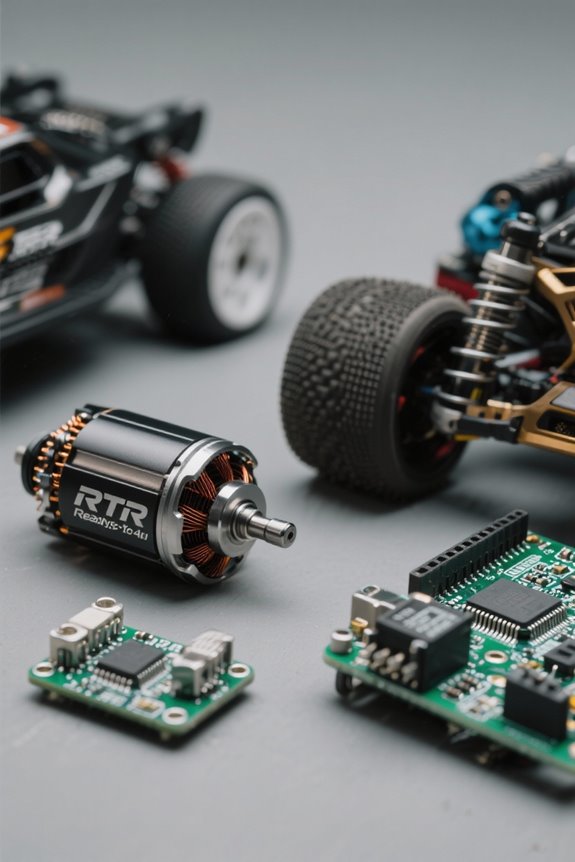
As we explore the nuances of Skill Level Categories, it becomes clear that investing in an RC vehicle needs to align with our experience. Beginner-level setups, typically costing $100 to $200, focus on ready-to-run (RTR) models, minimizing assembly and beginner mistakes. Intermediate users often budget $300 to $500, seeking customizing techniques and enhanced components for better performance. Advanced hobbyists, however, spend $500 and up, purchasing kits requiring individual part sourcing and extensive tuning knowledge. The complexity of setups influences our budget as RTR models reduce initial costs, while custom builds and upgrades demand a greater investment. Additionally, understanding user target age groups helps in making informed choices suited to specific skill levels. By selecting a vehicle that suits our skill level, we can enjoy gradual growth in our hobby without overwhelming financial commitment.
Long-term Cost Considerations

When considering the long-term costs of owning an RC vehicle, it’s important to account for several factors that can greatly impact our budgets. Battery and Power System Replacement Costs must be factored in, as most battery packs require replacement every 1 to 2 years, costing between $15 and $150, contingent upon type and capacity. Regular Maintenance Practices are essential; routine lubrication prevents wear, while cleaning supplies are necessary to minimize dirt accumulation. Parts Replacement and Repair Costs can add up, especially for fragile components, and upgrading parts may increase expenses by 20-70%. Finally, Consumables and Operating Materials like fuel for gas models or tires for electric ones need to be monitored for replacement frequency, ensuring our vehicles run smoothly over time. To enhance performance, upgrading to high-quality digital servos can significantly improve steering responsiveness.
Recommended Budget Allocation Summary
To make the most of our budgeting for an RC vehicle, we should establish a clear Total Budget Range, typically between $300 and $600 for beginners.
Vehicle Selection: We can allocate $150 to $400 for a beginner-friendly ready-to-run (RTR) model. For example, on-road vehicles are usually cheaper, while off-road models increase our costs.
Setup Maintenance: It is crucial to budget around 20-30% of our vehicle cost for accessories like batteries, chargers, and tools. Expect to spend $10-$30 per extra battery and $40-$100 for a charger.
Upgrades and Spare Parts: Allocating 10-20% of our initial vehicle budget for spare parts guarantees longevity and performance, allowing our vehicles to thrive in various terrains. Additionally, investing in high-speed brushless motors can significantly enhance the overall performance of your RC vehicle.
Frequently Asked Questions
What Is the Best Beginner RC Vehicle for Under $200?
As we plunge into the electrifying world of RC, our best budget options under $200 include the Traxxas Stampede and Axial SCX24. These vehicle types promise adventure, camaraderie, and skill-building for every beginner!
How Long Do RC Car Batteries Usually Last?
RC car batteries usually last between 150 and 500 charge cycles, depending on our choices. By managing battery life and charging times wisely, we can enjoy our adventures longer and keep the fun rolling!
Can I Use Regular AA Batteries in an RC Vehicle?
Imagine cruising down a winding road; we can use regular AA batteries in our RC vehicles. However, for better performance, exploring rechargeable battery options enhances our adventures, aligning with AA battery compatibility for a thrilling ride.
What Essential Tools Do I Need for Maintenance?
For maintenance, we need essential tools like hex drivers, quality screwdrivers, pliers, body reamers, and a soldering kit. Investing in these pieces of equipment guarantees our RC vehicles stay in top shape and ready for action!
Are There Any Beginner RC Racing Clubs to Join?
“It’s never too late to start!” We can easily find beginner clubs to join within our local racing community, like CAL Raceway and Huckleberry RC, where we’ll learn, connect, and experience the thrill together.


