As an Amazon Associate, we earn from qualifying purchases. Some links on this site are affiliate links at no extra cost to you. Our recommendations are based on thorough research and editorial judgment.


What Tools Do I Need To Start RC Vehicle Hobby?

To start the RC vehicle hobby, we need essential hand tools like precision hobby knives for cutting, side cutters for wire management, and metric nut drivers for securing components. We’ll also require electrical equipment including soldering irons with adjustable temperatures and heat shrink tubing for insulation. For accurate measurements, digital calipers will help with precise adjustments, while super glue and epoxy are key for reliable bonding. Continuing with us, you’ll discover even more critical tools and tips for this hobby.
Key Takeaways
- Acquire essential hand tools such as hobby knives, scissors, and various pliers for precise assembly and adjustments of RC vehicles.
- Invest in electrical equipment like a soldering iron and digital multimeter for making reliable electrical connections and troubleshooting.
- Utilize measurement tools like calipers and micrometers for accurate component measurements and alignment during builds.
- Stock up on adhesives such as cyanoacrylate glue for quick fixes and epoxy for stronger bonds in heavy-duty applications.
- Organize and transport your gear with durable totes and specialized hauler bags to keep everything neatly arranged and easily accessible.
Essential Hand Tools for RC Vehicles
When we’re working on RC vehicles, having essential hand tools can make all the difference in our builds and repairs. Cutting tools like hobby knives, such as the X-Acto knife with extra blades, are crucial for precise cutting and trimming of plastic and balsa parts. Scissors including lexan scissors, are designed specifically for cutting RC car bodies and masking tape. Side cutters efficiently cut wires and zip ties, ensuring clean trims without cracking. We also rely on reamers for creating or enlarging holes in lexan bodies. For grasping components, various pliers types like needle-nose pliers aid in manipulation, while adjustable pliers can handle different sizes of nuts securely. These tools enhance our cutting techniques and overall craftsmanship, particularly when installing high-grade aluminum upgrades that benefit performance and durability.
Recommended Products

Automotive Industrial Grade Strength Red Shop Towels, Machine Washable

Realistic BELL-412 Scale RC Helicopter: 470-class military helicopter with quick detachable propellers, ACE flight controller and GPS positioning delivers stable, true-to-life flying experience for advanced RC enthusiasts

World's First 8K@30fps Flying Action Camera: Capture stunning 8K@30fps videos with the HOVERAir X1 Promax Mini Camera Drone! 8K for the big screen, 4K vertical for the small screen – no compromises. Perfect for adventurers and content creators, this pocket-sized mini action camera delivers cinematic-quality footage effortlessly.Whether you're hiking, cycling, skiing or vlogging, its lightweight design and smart flight modes make every moment unforgettable.Your adventures, in 8K! (Horizontal: 8K@30fps, Vertical: 4K@30fps)
Tools for Assembly and Maintenance
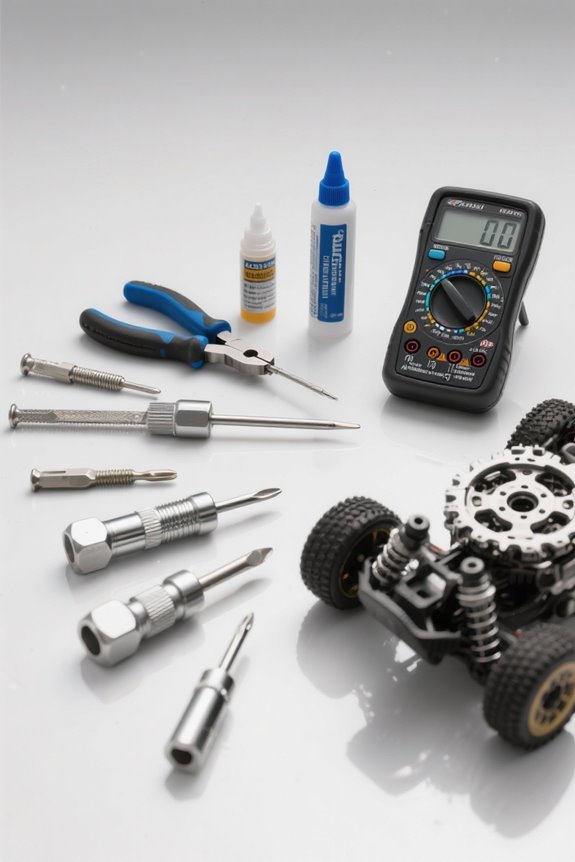
Effective assembly and maintenance of RC vehicles require a solid set of tools tailored for specific tasks. Metric nut drivers, typically in sizes like 5.5mm and 7mm, are essential for easily securing chassis and suspension nuts to guarantee stability during operation. Socket wrenches, designed for larger nuts such as the 17mm wheel nuts found on 1:8 scale models, provide the necessary leverage for tightening. Multi-size hex drivers cover a range of screw and bolt sizes, allowing for efficient assembly without stripping fasteners. Turnbuckle wrenches enable precise suspension adjustments, enhancing handling performance. Additionally, understanding the impact of material quality on durability ensures that you’re investing in tools that will support your RC hobby over the long term. By prioritizing thoughtful tool selection and practicing proper assembly techniques, we can make certain our RC vehicles operate reliably and efficiently, making our hobby even more enjoyable.
Recommended Products
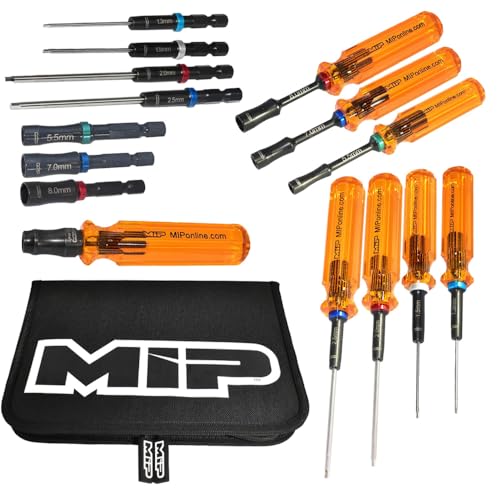
KIT INCLUDES: Hex Driver Wrenches (1) 1.3mm, (1) 1.5mm, (1) 2.0mm, (1) 2.5mm) - 1/4" Drive Bits Hex Driver Wrenches (1)1.3mm, (1) 1.5mm, (1) 2.0mm, (1) 2.5mm) - Nut Driver Wrenches (1) 5.5mm, (1) 7.0mm, (1) 8.0mm) - 1/4" Drive Bits Nut Driver Wrenches (1) 5.5mm, (1) 7.0mm, (1) 8.0mm - (1) Speed Tip 1/4" Drive Handle

KIT INCLUDES: Tool Bag, Hex Drivers: 0.9mm, 1.3mm, 1.5mm, 2.0mm, 2.5mm, 3.0mm, Nut Drivers: 4.0mm, 5.0mm, 5.5mm, 7.0mm, 8.0mm.

Complete 29 Piece RC Racing Tool Set Included.
Electrical and Soldering Equipment
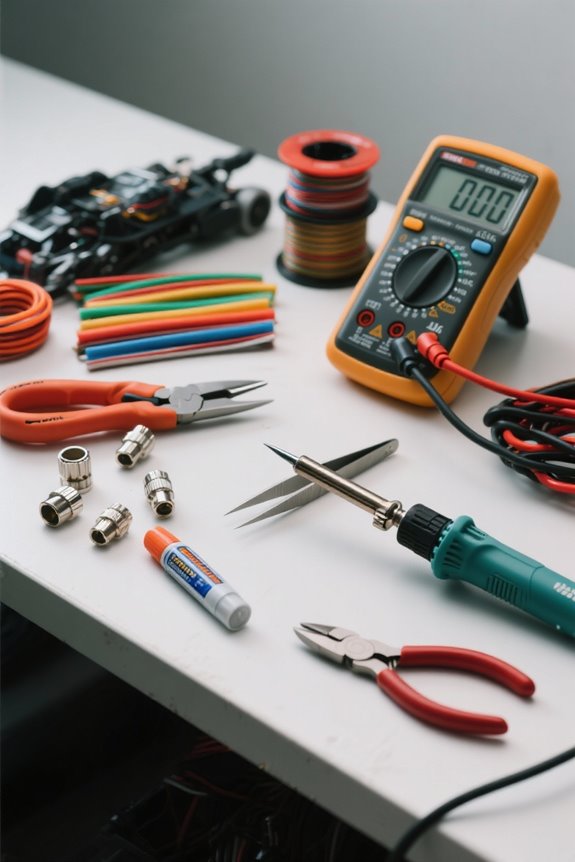
In our RC hobby, having the right electrical and soldering equipment is crucial for guaranteeing ideal performance and reliability. Digital Multimeters measure voltage, current, and resistance, making them essential for diagnosing electrical issues and verifying battery output. Using a soldering iron with temperature control allows us to create reliable connections, enhancing overall durability with proper soldering techniques. Pairing it with solder wire guarantees permanent joins between wires and connectors. Heat shrink tubing provides insulation while reinforcing solder joints. We also benefit from multi-purpose wire service tools for crimping and stripping, optimizing our workflow during electrical testing. Finally, alligator clips offer temporary connections for ease of testing and troubleshooting, guaranteeing our vehicles run smoothly and reliably. Additionally, understanding battery discharge rates is crucial for selecting the right batteries for our RC vehicles.
Recommended Products

The All-In-One Soldering Station for Every Soldering Task and Challenge

HAKKO FR870B-04 Preheater,Digital,120 Voltage,730 Watts
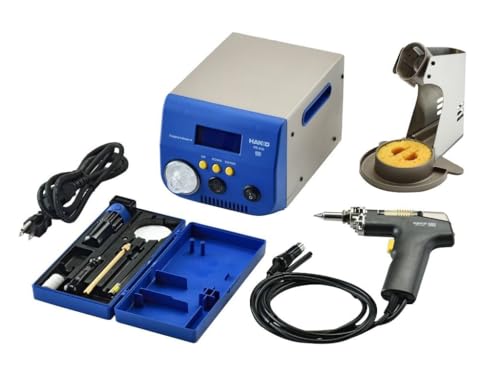
Desoldering station with gun style handpiece
Measurement and Precision Tools
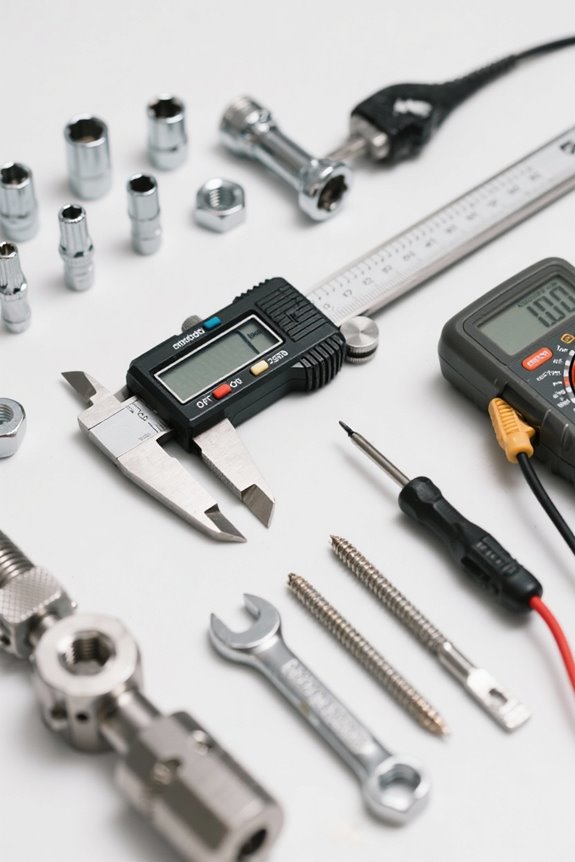
Precision in measurement can greatly enhance our RC vehicle builds and tuning processes. Micrometers allow us to measure thicknesses and diameters with resolutions down to 0.001mm, utilizing vernier or digital scales for high accuracy, critical for fit and alignment. Calipers are also indispensable, providing versatile internal and external measurements, often including both metric and imperial units for flexibility. Dial indicators help us measure small distances or deviations, ensuring components are perfectly aligned. For calibration techniques, gauge blocks serve as reference standards, ensuring consistency across all tools. Finally, digital linear scales and height gauges assist in accurately setting vertical dimensions, greatly improving component placement and overall performance, ensuring our RC vehicles perform at their best. Additionally, understanding torque ratings is essential as they play a significant role in the performance of our RC servos and overall vehicle efficiency.
Recommended Products

[6" Jaw Depth] - The 500mm digital caliper has a 6"/150mm long jaw. Absolute and incremental measurement with fine adjustment and preset function.

【Precise Measurement】Measuring range :0-600mm; Resolution: 0.0005in/0.01mm ; Accuracy: ±0.05mm

DURABLE DESIGN: Engineered to IP67 standards, this caliper tool operates reliably even when immersed in water, oil, or coolant, ensuring consistent performance in tough industrial environments.
Adhesives and Fluids
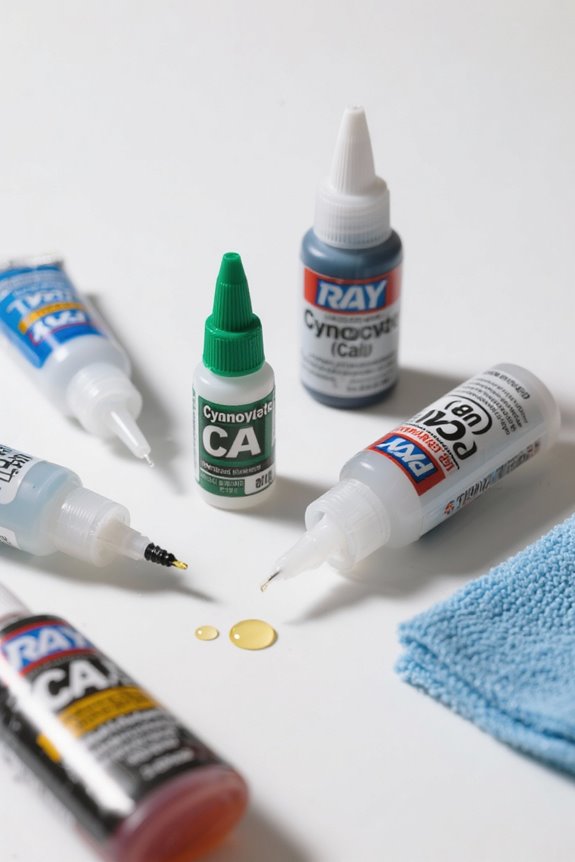
When it comes to our RC vehicle projects, choosing the right adhesive is essential for achieving strong and reliable bonds. Adhesive selection includes options like cyanoacrylate (CA) glue for quick fixes, foam-safe CA for delicate foam materials, and epoxy for heavy-load applications. Each type serves different needs, guaranteeing we match materials for peak strength. Fluid application tools enhance our adhesion process; using CA activators speeds up curing, while proper cleaning fluids, like isopropyl alcohol, prepare surfaces for bonding success. Employing clamps or tape during epoxy curing ensures tight joints, enhancing bond integrity. Additionally, considering the impact of upgrades on the overall longevity and performance of your truck can influence the choice of adhesive for repairs. Remember, testing compatibility on inconspicuous areas can prevent damaging materials. By understanding these choices, we can make informed decisions in our RC vehicle endeavors.
Recommended Products


Electrical resistivity: 0.006 Ω·cm, Thermal conductivity: 1.3 W/(m·K).

EASY TO USE, epoxy resin/hardener system for quick repairs, tooling and general bonding. May be used in spot applications to hold parts in position while standard epoxy bonds cure. One-to-one mix, no pumps required.
Storage and Organizational Tools
Organizing our RC vehicle tools and components greatly enhances both efficiency and accessibility. Storage Containers and Boxes should be chosen for clarity and functionality; transparent plastic tubs offer visibility, while compartmentalized organizers with adjustable dividers let us effectively separate small parts. Labeling and Identification are vital; using detailed, weatherproof labels helps us quickly identify contents, reducing time spent searching. Part Organization Techniques allow us to group spare parts by function, facilitating quick retrieval during repairs. For tool management, Tool Storage Solutions with custom compartments and portable tool rolls guarantee we have our essential tools ready for trackside use. Moreover, utilizing starter tools and maintenance kits ensures that all necessary components are easily accessible, further streamlining your RC vehicle hobby experience. Finally, maintaining a clean workspace promotes efficient assembly and repairs, contributing to a rewarding hobby experience.
Quality Screwdrivers
Quality screwdrivers form the backbone of efficient RC vehicle maintenance, ensuring we can tackle a wide range of assembly tasks effectively. Types of Screwdrivers available include flat head, Philips head, and hex head, all tailored for specific RC car fasteners. Each screwdriver type fits standard and metric sizes, accommodating most applications. Maintenance Tips emphasize the importance of using precision-machined tips to prevent stripping. Magnetic tips enhance screw retention, minimizing loss during assembly. Utilizing single-purpose or multi-bit sets from reputable brands, like ProTek or Tamiya, gives us versatility. Ergonomic handles improve our grip, making delicate tasks easier. Regular inspections and proper care will greatly enhance the lifespan and performance of our screwdriver types, keeping our RC vehicles in peak condition. Additionally, investing in a universal screw kit can help ensure you have the right fasteners on hand for ongoing maintenance and repairs.
Hex and Nut Driver Sets
Hex and nut driver sets are essential tools for anyone involved in RC vehicle maintenance, as they simplify tasks involving fasteners. Essential Sizes and Compatibility include common hex driver dimensions like 1.5mm, 2.0mm, 2.5mm, and occasionally 3.0mm, which effectively cover most screws found in RC cars. Nut driver materials should feature hardened steel for durability, and sizes often include 5.5mm and 7.0mm, ensuring broad vehicle compatibility. Design Features like thin-walled shafts facilitate access to recessed nuts without damaging surrounding components. Sets with quick-release mechanisms are user-friendly, allowing for fast tip changes. Combining metric sizes with compact storage enhances portability, making these sets indispensable for any hobbyist, streamlining repairs and enhancing overall efficiency during maintenance. Selecting the right tools, especially those designed for high-quality materials, can significantly impact the maintenance and performance of your RC vehicles.
Pliers for Gripping and Cutting
These pliers allow us to grip nuts and bolts firmly, snip wires cleanly, and adjust small parts that might be difficult to reach. By using high-quality pliers, we enhance our precision in building and maintaining our RC vehicles, ensuring durability and performance in our hobby. Additionally, the proper tools enable more effective maintenance and upgrades of RC truck electronics, which is essential for maximizing performance and longevity.
Hobby Knives and Scissors
Scissors functionality is equally important. Lexan scissors feature curved blunt tips for safe cutting of polycarbonate, while ergonomic handles reduce fatigue. Both curved and straight blades serve specific functions, from maneuverability in tough spots to achieving clean edges. Together, these tools enhance our building experience and foster creativity. Using the right tools is crucial for crafting and customizing RC vehicles, such as the high-performance capabilities found in competition crawlers.
Soldering Equipment for Wiring
When we consider working with RC vehicle wiring, having the right soldering equipment is essential for achieving reliable connections. Digital adjustable temperature soldering stations allow us precise control over the heat applied to our solder joints, with settings typically ranging from 200°C to 450°C (392°F to 842°F). This feature enhances solder joint quality and prolongs tip life. Power ratings between 60W to 80W provide sufficient heating without overheating sensitive components. Our solder materials selection should include rosin core solder (60/40 tin/lead) for optimal flow and strength. Additionally, using thin gauge solder wire around 0.7mm guarantees detailed work without excess buildup. With high-quality tools, we guarantee robust connections essential for our RC projects.
Digital Calipers for Accurate Measurements
By facilitating exact measurements during part modifications, digital calipers minimize waste and support consistent performance. For both beginners and experts, they’re essential in achieving excellence in our RC vehicle projects.
Super Glue and Epoxy for Bonding
Super Glue and Epoxy Basics: In the world of RC vehicles, having reliable adhesives is essential for maintaining structural integrity. Super glue, a cyanoacrylate-based adhesive, cures rapidly when it meets moisture, bonding surfaces in minutes. It’s ideal for quick fixes due to its fast setting, but its adhesive properties can become brittle over time. Conversely, epoxy is a two-part resin that requires mixing resin and hardener, offering superior bonding strength and durability. It withstands stress, vibration, and harsh environmental conditions, making it perfect for structural repairs. While using super glue for small parts and electronics is convenient, leveraging epoxy’s versatile bonding techniques enables us to achieve lasting repairs, particularly in load-bearing components, ensuring our RC vehicles perform effectively.
Transporting and Organizing Gear
Transporting and organizing our RC gear efficiently is essential for ensuring everything is in good condition when we reach our destination. Transport Containers and Protective Bags provide a range of options to suit our needs, from durable plastic totes with ample space for cars, batteries, and accessories, to specialized hauler bags by Integy or Atomik that feature compartments and wheels for easier transport despite their high cost and potential for handle damage. Tool Organization Systems like roll bags hold screwdrivers and hex wrenches, while compartmentalized boxes keep screws and oils separated. Battery Safety Cases are imperative, using fire-retardant LiPo bags for lithium batteries and ensuring electronics are powered off for safe transport. These strategies enhance our effective storage and transport solutions.
Frequently Asked Questions
What Is the Best Beginner RC Vehicle to Start With?
We believe the best beginner RC vehicle is a Ready-to-Run electric model. It’s hassle-free, affordable, and perfect for learning. While nitro’s exciting, electric offers easier maintenance and a supportive community to share our experiences.
How Much Should I Expect to Spend on Tools?
When we commenced our RC journey, we quickly realized budgeting for tools was essential. Expect to budget $50 to $100 for basic tools. Quality recommendations include hex drivers and rotary tools, ensuring our adventures thrive.
Are There Any Safety Precautions When Using These Tools?
Yes, there are important safety precautions. We should use safety gear, practice tool maintenance, and keep our workspace organized. By doing so, we protect ourselves and our equipment, ensuring a safer and more enjoyable experience together.
Can I Use Household Tools for RC Vehicle Maintenance?
Absolutely, we can use household tools for RC vehicle maintenance! With thoughtful household tool compatibility, we’ll find maintenance tool essentials that keep our vehicles running smoothly while giving us that shared sense of joy and community.
Where Can I Find Replacement Parts for My RC Vehicle?
We’ve found that online retailers offer extensive RC parts, including spare parts and upgrade options. Local hobby shops can also help, providing replacement kits and expert advice whenever we need support for our RC vehicles.


