As an Amazon Associate, we earn from qualifying purchases. Some links on this site are affiliate links at no extra cost to you. Our recommendations are based on thorough research and editorial judgment.


How To Extend RC Vehicle Battery Lifespan?

To extend our RC vehicle battery lifespan, we should follow Effective Charging Practices, using appropriate chargers and maintaining a charge rate of 1C for ideal health. With Best Storage Methods, we store batteries in fireproof bags at stable temperatures of +10°C to +30°C. Selecting the Right Battery enhances performance, prioritizing compatibility and energy density. Temperature Management keeps LiPo batteries within 20°C to 45°C, while Maintenance Techniques involve regular voltage checks and cleaning connectors. There’s more we can explore to enhance our battery care.
Key Takeaways
- Use the appropriate charger and settings for your specific battery type to prevent damage and ensure optimum charging.
- Store batteries in a stable environment between +10°C and +30°C, in fireproof bags or metal cases to ensure safety.
- Regularly monitor voltage levels and keep LiPo batteries charged between 40%-60% to maintain battery health and performance.
- Allow batteries to cool after use and avoid high power usage to reduce thermal stress and prolong lifespan.
- Conduct regular inspections for physical damage and clean connectors to improve performance and prevent issues.
Effective Charging Practices
When we focus on Effective Charging Practices, it’s essential to choose the right charger. Using a charger designed for your battery type, like a LiPo-compatible charger for LiPo batteries, prevents damage and overcharging. We must also select the correct battery size in the charger settings, ensuring an appropriate charge rate to reduce risks. Opting for a charge rate of 1C balances speed and battery health, while smart chargers can enhance safety by automatically detecting suitable charging parameters. Following safety measures is imperative; we should always charge batteries in fire-resistant bags and never leave them unattended. Monitoring battery temperature is important—if a battery feels hot or swollen, it should not be charged. Additionally, maintaining proper charging safety practices can significantly reduce potential hazards and extend our batteries’ lifespan effectively.
Best Storage Methods
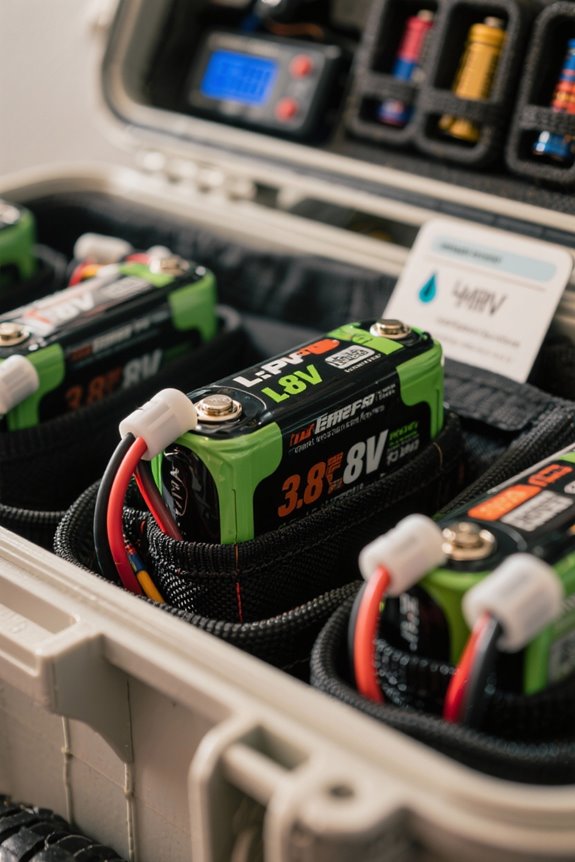
Proper battery storage plays a significant role in extending the lifespan of RC vehicle batteries that we’ve effectively charged. Storage Environment Conditions are paramount; they should be kept at a stable room temperature between +10°C and +30°C to minimize capacity loss and prevent damage. Use appropriate storage containers** like fireproof bags or metal cases. This not only guarantees safety against potential fires but also protects batteries from physical damage. Pay attention to terminal care by keeping terminals clean and insulated with electrical tape, preventing short circuits. Regularly check voltage levels to maintain the recommended charge, especially for LiPo batteries stored between 40%-60%. Additionally, consider battery discharge rates**, as they inform how well the batteries will perform under stress. Adhering to these practices not only prolongs battery life but also boosts our overall RC experience.
Selecting the Right Battery
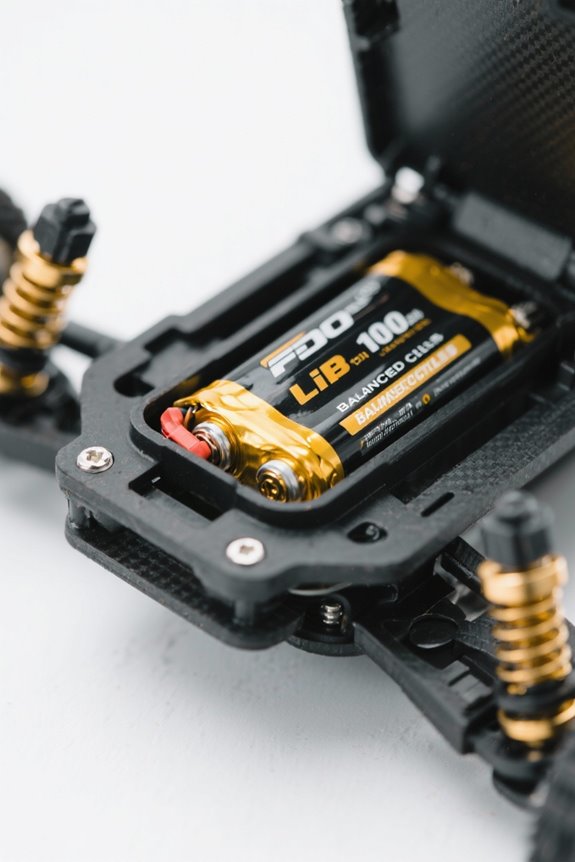
Selecting the right battery for our RC vehicles is essential for optimizing performance and ensuring safety. Battery Type varies widely, with options such as Nickel-Cadmium (NiCad), Nickel-Metal Hydride (NiMH), Lithium-Ion (Li-Ion), and Lithium Polymer (LiPo) available on the market. Voltage and Capacity directly impact our vehicle’s speed and run time; for instance, LiPo batteries typically offer 3.7V per cell, with higher series increasing output. Battery Compatibility is critical to prevent damage; using an incompatible battery can lead to performance issues. We should consider Performance Optimization by balancing energy density and weight. NiMH batteries are great for beginners due to their safety, while LiPo batteries excel in power for racing enthusiasts, as long as we handle them correctly. Additionally, understanding brushless motor technology can guide us in choosing batteries that maximize efficiency and performance in our RC vehicles.
Temperature and Usage Management
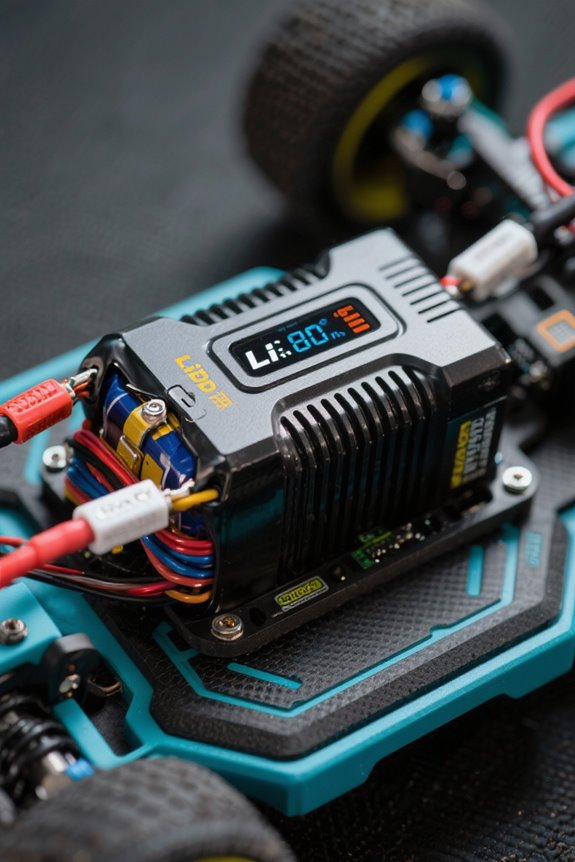
Understanding how temperature affects battery performance is fundamental for enhancing our RC vehicle’s battery lifespan. Temperature Management plays a significant role, as lithium polymer (LiPo) batteries operate best within 20°C to 45°C. Operating outside this range degrades capacity and lifespan. Battery Cooling strategies include passive methods, like airflow through a well-ventilated chassis, and active methods, such as fans directly wired to the battery. Implementing these techniques helps maintain ideal temperatures during operation. Thermal Control practices, such as avoiding sustained high power usage, allowing batteries to cool between runs, and minimizing extreme ambient conditions, further reduce thermal stress. By managing temperature effectively, we can maximize our battery’s cycle life and performance, ensuring longer, more enjoyable runs with minimal risk. Additionally, using batteries with high discharge rates can help mitigate the effects of heat during intense driving sessions.
Maintenance and Monitoring Techniques
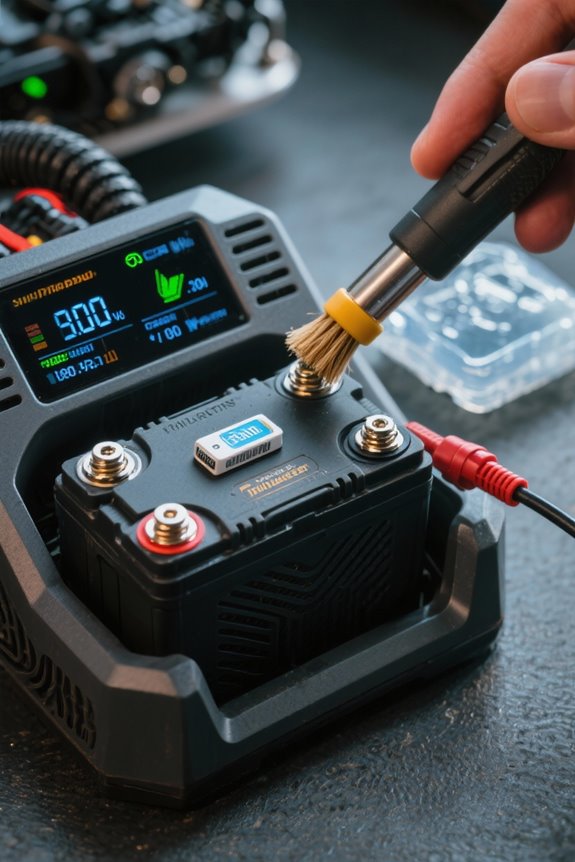
When it comes to extending the lifespan of our RC vehicle batteries, effective Maintenance and Monitoring Techniques are vital. Battery Inspection should be done regularly; we must check for physical damage like swelling or leaking to prevent hazards. Monitoring Schedules are important—checking the voltage every 3-4 months helps us understand battery health, while cleaning connectors guarantees peak performance. Utilizing Low-Voltage Cutoff Devices protects against over-discharging, which can result in irreversible damage. Furthermore, maintaining batteries in a cool, dry environment and using chargers suited to their chemistry contributes to longevity. By adhering to these practices, we can enjoy our RC vehicles longer, confirming they perform at their best while keeping safety a priority. Additionally, implementing dual protection mechanisms can enhance safety and improve battery longevity during operation.
Frequently Asked Questions
Can I Use a Different Brand Charger for My RC Batteries?
We’ve learned the hard way that using a different brand charger for our RC batteries is like baking without checking ingredients—it can ruin our battery’s performance. Charger compatibility and careful battery maintenance are key for lasting joy!
How Do I Know When to Replace My RC Batteries?
We can tell it’s time to replace our RC batteries when we notice reduced run time, swelling, or inconsistent power. Regular maintenance tips help, but if those indicators show up, it’s best to evaluate a replacement.
What’s the Ideal Temperature Range for Charging Batteries?
As we nurture our batteries like delicate flowers, let’s remember that the ideal charging temperature range is 50°F to 77°F. Temperature monitoring during charging cycles guarantees our cherished RC adventures flourish without risks.
Can Physical Damages Affect Battery Performance?
Absolutely, physical damages can greatly impact battery performance. By prioritizing battery maintenance and conducting an impact analysis after use, we can prevent hazardous failures and guarantee our batteries remain safe and functional for our RC adventures.
Is It Safe to Use Expired Batteries?
Using expired batteries is like playing with fire; it’s risky. Let’s prioritize our safety by following battery disposal guidelines and ensuring we don’t use those batteries. Replacing them keeps us all safer on the track.